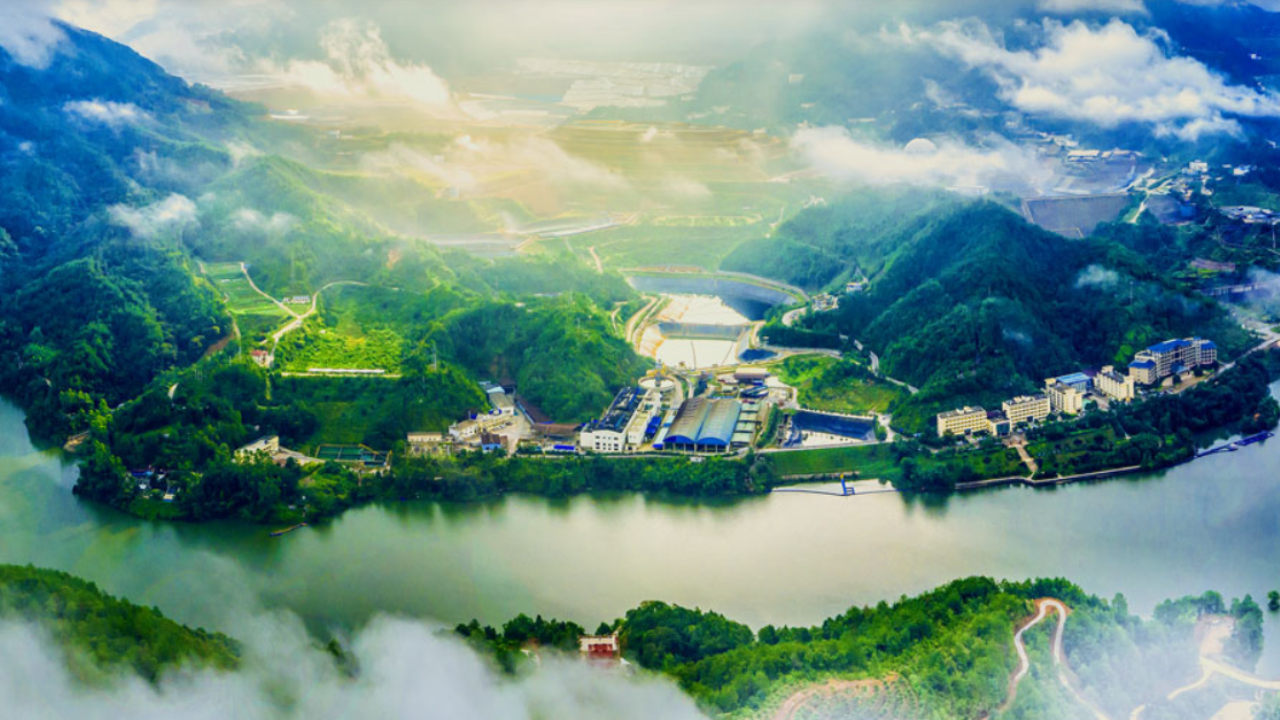
Heavy mining operations generate mountains of unwanted material. Most extraction sites treat this byproduct as an operational liability, piling millions of tons of crushed rock and chemical residue into tailing dams or waste dumps that require perpetual maintenance and massive capital expenditure. The environmental footprint grows larger by the day while space runs short. Yet at the massive Zijinshan copper and gold project in southeastern China, operators looked at the relentless stream of waste rock and decided to build roads out of it. Not temporary dirt tracks that dissolve under the seasonal monsoons, but high-performance haul roads engineered to withstand the crushing weight of one-hundred-ton mining trucks operating twenty-four hours a day.
The core premise behind this operational shift centers on turning liability into structural asset through advanced binder chemistry and granular optimization. When haul trucks carry payloads scaling past one hundred metric tons, the sheer kinetic and static load destroys standard aggregate surfaces. Routine maintenance drains millions from operating budgets every fiscal quarter, requiring constant grading, watering, and re-laying of imported stone. Zijinshan engineers bypassed traditional construction constraints by modifying the physical and chemical properties of the waste material itself. By incorporating specialized industrial additives and precise gradation matching, they transformed low-value mine tailings and waste rock into a concrete-like pavement capable of enduring heavy vehicle traffic without fracturing.
The Engineering Mechanics Behind Waste Utilization
Mining waste is rarely uniform. It consists of heterogeneous fragments ranging from fine silts to jagged boulders, each possessing different mineralogical compositions and structural weaknesses. Standard civil engineering textbooks dictate that such volatile material cannot serve as a foundation for heavy loads. However, the operational reality at Zijinshan demanded an unorthodox solution to rising transportation costs and waste management quotas.
The transformation starts with classification and processing. Waste rock from the open-pit stripping operations undergoes selective crushing. Instead of discarding fine tailings or treating them purely as slurry, engineers blend specific proportions of calcined waste with active mineral binders. This mixture triggers a pozzolanic reaction when compacted under heavy vibratory rollers. The chemical bonding locks individual particles into a dense matrix with minimal porosity.
Water infiltration remains the primary enemy of any unpaved or semi-paved road in a heavy extraction zone. Standard rock aggregate absorbs moisture, softens, and yields under continuous pressure, resulting in deep ruts and catastrophic surface failure. The modified Zijinshan compound exhibits near-zero permeability. Rainwater sheds off the running surface rather than penetrating the sub-base. Haul trucks can run through torrential downpours without gouging the road or kicking up hazardous dust plumes that impair operator visibility and choke local ecosystems.
Cost efficiency dictates survival in the modern minerals market. Hauling fresh aggregate from external quarries incurs massive logistics expenses, especially in rugged, mountainous terrains. By utilizing material excavated directly from the pit, the project eliminates external procurement costs entirely. The haul roads double as storage solutions, absorbing millions of tons of waste that would otherwise demand expensive footprint expansion for disposal facilities.
Scaling Hurdles and Geological Variables
Translating laboratory success into operational reality on a working mine site exposes unexpected friction points. What works in a controlled testing environment often encounters complex geological variables in the field.
Variations in ore body mineralogy mean that waste rock chemistry fluctuates week by week. A batch of waste high in clay content reacts differently to stabilizing additives than a batch dominated by quartz or granite. Operators had to develop real-time diagnostic protocols to analyze incoming waste streams and adjust binder ratios on the fly. Missing this adjustment leads to premature surface cracking under thermal expansion and heavy dynamic loading.
Equipment wear presents another persistent hurdle. Processing abrasive mine waste to strict grading standards chews through crusher mantles and conveyor belts at an accelerated rate. Maintenance downtime on the processing line threatens to bottleneck the entire road construction schedule. Mine management learned that the capital saved on aggregate procurement must be partially reinvested in high-durability processing equipment and predictive maintenance schedules.
Furthermore, regulatory compliance in environmental management introduces stringent oversight. Using industrial waste for civil infrastructure requires proving that toxic elements, such as heavy metal residues or processing chemical traces, remain permanently bound within the matrix. Long-term leachate testing is mandatory to ensure that seasonal groundwater infiltration does not dissolve stabilizing compounds and transport contaminants into local watersheds. Zijinshan addresses this by embedding monitoring wells along critical haul corridors, establishing an ongoing audit trail that satisfies regional environmental bureaus.
Economic Ripple Effects Across the Sector
The financial metrics of heavy haul road maintenance tell a brutal story for most mining operations. Road upkeep frequently constitutes up to fifteen percent of total site mobile equipment maintenance budgets. Suspension damage, tire wear, and fuel consumption skyrocket when trucks navigate poorly graded, rutted surfaces.
By implementing high-strength waste-derived roads, operations record immediate drops in rolling resistance. Lower rolling resistance translates directly to fuel savings across the haul truck fleet. Diesel consumption drops significantly when engines no longer fight against soft, yielding roadbeds. Tire life, often the single highest consumable expense for a heavy fleet manager, extends by double-digit percentages when sharp rocks and deep potholes are eliminated from the transit route.
Industry competitors are taking notice, though replication remains slow. Many sites lack the specific mineralogical profile required for self-cementing waste reactions, necessitating higher volumes of commercial binders that erode the economic advantage. Others remain anchored to legacy civil engineering mentalities, viewing waste management and road construction as entirely separate operational silos rather than an integrated puzzle.
The broader implications extend far beyond a single copper and gold project in China. As global mineral demand intensifies and high-grade deposits dwindle, extraction operations must handle exponentially larger volumes of waste rock per ton of refined metal. Traditional tailing storage facilities face mounting regulatory bans and safety concerns following high-profile disasters globally. Diverting a substantial fraction of this solid waste into internal infrastructure provides a viable pathway to reduce surface footprint while simultaneously optimizing operating expenditure.
The transformation of waste into heavy-duty transit corridors demonstrates that industrial efficiency and environmental reduction can align when driven by necessity. The model is far from universally applicable without site-specific adaptation, but it shatters the long-held assumption that mining waste has nowhere to go but down.