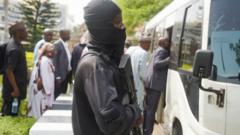
Six men stood before a judge in Abuja this week, pleading not guilty to the most serious crime in the book. They stand accused of plotting to overthrow the Nigerian government. This isn't some distant historical footnote. It’s happening in real-time, right now, in Africa’s most populous nation.
The government alleges these men conspired to "levy war against the state." That’s the specific legal language they used in a 13-count charge sheet. It sounds heavy because it is. You have a retired major general, a retired naval captain, a serving police inspector, and three others facing treason and terrorism charges. The scale of these allegations suggests a major security breach, one that reportedly dates back to a plot hatched in 2025.
Why This Case Is Different
Most people dismiss coup rumors as political noise. That's a mistake. Nigeria hasn't seen a successful military takeover since it embraced democracy in 1999. Nearly three decades of civilian rule are on the line here. When you see military officers—even retired ones—linked to an alleged plot to "overawe the president," you aren't looking at routine crime. You're looking at a fundamental challenge to the stability of the entire region.
The government initially denied these rumors back in January. They brushed off reports of arrests as mere "breaches of service regulations." Now, the tone has shifted entirely. By bringing formal treason and terrorism charges, the administration is signaling that this was never just an internal military disciplinary issue. They are making a massive, public statement.
The Players And The Charges
The list of defendants is bizarrely specific. You have high-ranking military figures mixed with active law enforcement. Then there’s the odd man out: former Bayelsa State Governor Timipre Sylva. He is listed as a defendant but remains at large. The charges range from direct treason to failure to disclose security intelligence and money laundering linked to terrorism financing.
Think about the implications of "failure to disclose." It means the government is casting a wide net. They aren't just targeting the people who allegedly planned the action. They are targeting anyone who knew about it and stayed quiet. If you’re a mid-level officer or a political associate, that reality is terrifying. It creates an environment where loyalty is forced through the threat of prosecution.
The Regional Context Of Military Takeovers
It's impossible to look at this without considering what's happening elsewhere in West Africa. We’ve seen a wave of coups in countries like Guinea-Bissau and Benin. There’s a pattern: disputed elections, broken security, and massive youth discontent. Nigeria is the regional heavyweight. If the bedrock of democracy here cracks, the ripple effects will hit every neighbor.
Critics of the current administration often point to the economy and rising insecurity as the fuel for this fire. When the price of basics skyrockets and people feel unsafe in their homes, the rhetoric of change—even violent change—finds an audience. That doesn't justify treason. It does, however, explain why these trials are so politically charged. The government isn't just fighting a legal battle in court. They are fighting for the legitimacy of their vision for the country.
What Happens Next
The court adjourned until April 27 to hear bail applications. That date is crucial. If the court grants bail to figures with this kind of military background, it signals a level of confidence from the state. If they are denied, it suggests the government views them as an active, ongoing threat.
Don't expect a quick resolution. Treason trials in Nigeria are notorious for moving at a glacial pace. You’ll likely see a long, drawn-out process where every piece of evidence becomes a flashpoint for political debate. The focus will stay on the courtroom, but the real story is playing out in the streets and the barracks. Keep an eye on how the military establishment reacts as the trial progresses. Their silence or their vocal support for the prosecution will tell you more than any legal filing ever could.
Watch the April 27 hearing closely. That’s the first real indicator of how the judicial system plans to handle the pressure. For now, the accused remain in the custody of the secret police. The government has drawn its line in the sand. Now, the burden of proof is on them to show they can maintain stability without creating more resentment in the process. This is a fragile moment for the nation, and it’s far from over.