Military rhetoric between Tehran and Washington rarely stays confined to press releases. When the General Staff of the Armed Forces of the Islamic Republic of Iran issues a formal statement declaring that Washington's doctrines of aggression have failed, Western pundits usually brush it off as routine political theater. That's a mistake. Having tracked Middle Eastern security dynamics and asymmetric deterrence strategies for years, I've seen how easy it is to misread Tehran's public messaging if you ignore the operational reality backing it up.
You don't need a security clearance to see the pattern. Every time tensions spike in the Persian Gulf, the Red Sea, or the broader Levant, Iranian military commanders pair sharp ideological language with concrete shifts in force posture. They're not just talking to domestic crowds. They're signaling specific red lines to Pentagon planners, regional U.S. allies, and global energy markets. For a different view, consider: this related article.
Why Tehran Calls Out Washington's Doctrines of Aggression
To understand why Iran's Armed Forces keep hammering the phrase "doctrines of aggression," you have to look at how Tehran views the last two decades of U.S. foreign policy in West Asia. From the perspective of Iranian military strategists, American interventionism—spanning the 2003 invasion of Iraq, prolonged deployments in Syria, "maximum pressure" economic sanctions, and naval buildups in the Persian Gulf—was designed to isolate and contain the Islamic Republic.
It didn't work. At least, that's the core thesis of Tehran's messaging. Further analysis on this trend has been published by NPR.
When Iranian military officials state that U.S. doctrines have failed, they're pointing to three measurable shifts on the ground:
- The limits of conventional superiority: Aircraft carrier strike groups and advanced stealth fighters carry enormous firepower, yet they've struggled to deter low-cost asymmetric tactics like drone swarms, fast-attack naval craft, and precision ballistic missiles.
- Regional pushback: Washington's efforts to build an integrated regional security architecture have repeatedly run into diplomatic friction, with Gulf states hedging their bets through normalization talks with Tehran.
- Erosion of deterrence: Direct and indirect confrontations across multiple theaters have shown that high-tech military hardware doesn't automatically translate into political compliance.
Honestly, dismissing this framing as mere propaganda misses the strategic logic. Military institutions don't publish formal warnings unless they're trying to shape an adversary's risk calculation before a crisis spirals out of control.
How Iran's Armed Forces Structure Their Deterrence Messaging
There's a big difference between a politician giving a fiery speech in parliament and an official communique from Iran's Armed Forces General Staff or the Islamic Revolutionary Guard Corps (IRGC). In Iran's dual-military structure—which includes both the conventional army (Artesh) and the IRGC—public statements follow a strict hierarchy.
The Role of the General Staff
The Armed Forces General Staff coordinates overarching defense policy across both branches. When it releases a warning aimed at the United States, the language is deliberately calibrated to project institutional unity. They emphasize readiness, indigenous defense manufacturing, and the vulnerability of fixed American military bases across the region.
Operational Signaling vs. Political Rhetoric
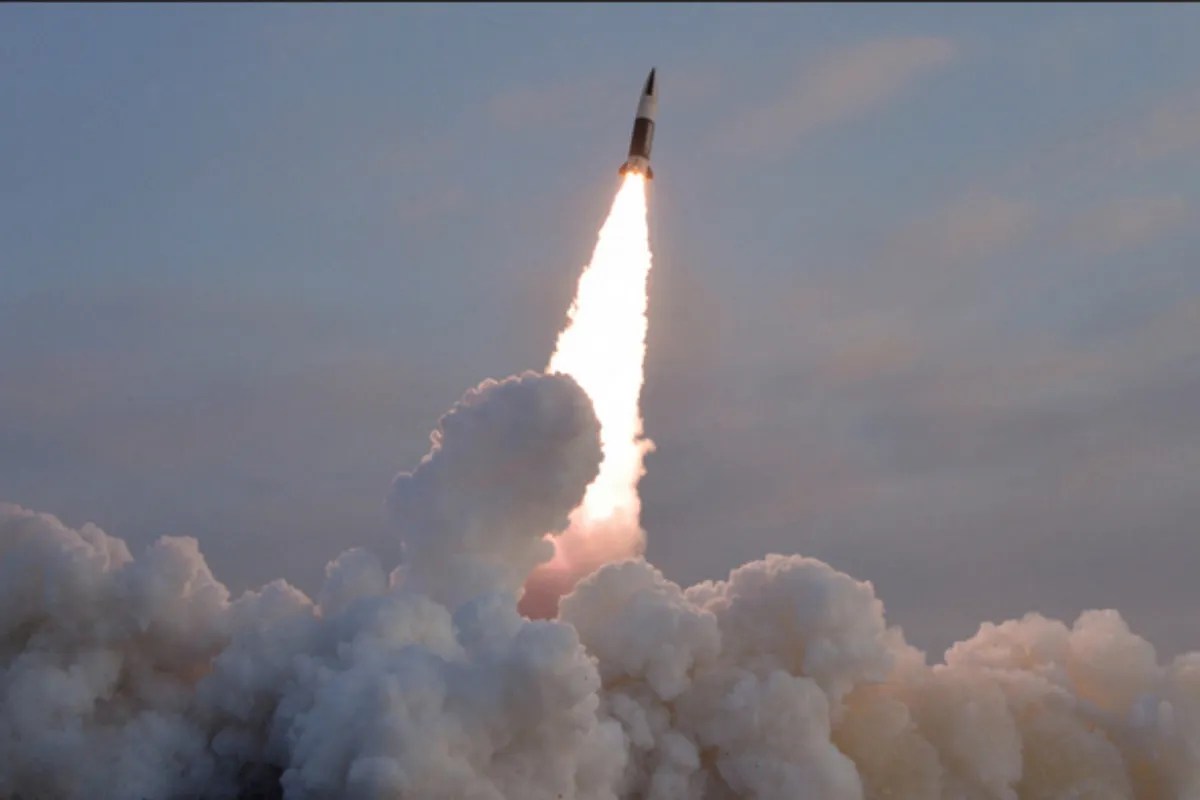
Watch what happens right before or right after these statements drop. Usually, you'll see an announcement regarding underground missile cities, a naval drill in the Strait of Hormuz, or the unveiling of a new long-range drone system. The words and the hardware are two halves of the same deterrence equation. Tehran wants U.S. Central Command (CENTCOM) to know that any direct strike on Iranian territory won't stay localized.
Think about the geography. Roughly one-fifth of the world's petroleum liquids consumption passes through the Strait of Hormuz, according to data from the U.S. Energy Information Administration. Iranian commanders know they don't need to match the U.S. Navy ship-for-ship to impose unacceptable economic costs on the global economy. They just need to make the threat of disruption credible.
What Western Coverage Often Misses About Asymmetric Warfare
If you read mainstream coverage of Iran's warnings to Washington, you'll notice a predictable blind spot. Analysts love comparing defense budgets and hardware specs. On paper, the mismatch is staggering. The United States spends hundreds of billions of dollars annually on defense, maintaining global power-projection capabilities that no other nation comes close to matching.
Compare that to Iran's defense budget, which is a tiny fraction of Washington's spending.
So why does Tehran sound so confident? Because asymmetric warfare isn't about winning a symmetrical slugfest. It's about changing the rules of the fight so your opponent's biggest strengths become liabilities.
Consider the cost-exchange ratio. Shooting down a cheap, one-way attack drone using a multi-million-dollar surface-to-air interceptor missile drains stockpiles and budgets fast. Military researchers at institutions like the Center for Strategic and International Studies (CSIS) have extensively documented how Iran's missile and unmanned aerial vehicle (UAV) programs give Tehran a survivable, dispersed strike capability. Even under heavy sanctions, Iranian engineers built a domestic supply chain capable of producing systems like the Shahed-series drones and precision-guided ballistic missiles at scale.
That's the real subtext behind the warning that Washington's doctrines have failed. Sanctions were supposed to starve Iran's military-industrial base. Instead, isolation forced Tehran to become self-reliant in the exact categories of weaponry that complicate modern air and missile defense.
The Regional Equation and Gulf Security Dynamics
No warning from Iran's Armed Forces exists in a vacuum. Every statement aimed at Washington is also meant to be overheard in Riyadh, Abu Dhabi, Doha, and Baghdad.
For years, U.S. security guarantees formed the bedrock of defense planning for Gulf Cooperation Council (GCC) states. Yet recent history has made Gulf leaders skeptical about how far Washington will go to absorb retaliatory strikes on their behalf. When regional infrastructure comes under threat, neighboring capitals bear the immediate fallout—not voters in the American Midwest.
This reality explains why several Gulf states have pursued pragmatic de-escalation with Tehran, including the landmark 2023 diplomatic restoration between Saudi Arabia and Iran. When Iran's military warns the U.S. against adventurism, it's subtly reminding regional neighbors that hosting foreign military assets carries real risks if hostilities break out.
It's a classic wedge strategy. By raising the perceived cost of alignment with Washington's more hawkish policies, Tehran encourages regional actors to push for diplomatic restraint behind closed doors.
Misconceptions About Escalation Control
People often assume that sharp military warnings mean war is imminent. In reality, the opposite is frequently true.
In international relations, clear red lines actually reduce the odds of accidental miscalculation. Trouble starts when one side thinks it can push without facing a response, or when intelligence agencies misinterpret routine troop movements as an imminent attack. By explicitly stating its doctrine and warning against missteps, Iran's Armed Forces are attempting to establish predictable boundaries.
Of course, deterrence is a fragile game. It relies on both sides reading the signals accurately and maintaining tight command-and-control over field units. One rogue drone strike, one misidentified radar signature in a crowded waterway, or one intelligence failure can turn calibrated posturing into a full-blown crisis.
That's why experts who follow nuclear and conventional deterrence—such as analysts at the International Crisis Group—consistently emphasize the danger of absent diplomatic off-ramps. When direct communication channels between Washington and Tehran remain frozen or indirect, public military warnings become the primary medium of conversation. And public statements leave very little room for quiet compromise.
How to Read Future Military Statements From Tehran
Next time you see headlines quoting Iranian commanders warning the United States, don't just skim the quote and move on. Look beneath the surface to see whether the statement signals routine posture or a genuine shift in threat levels.
- Check who issued the statement: Warnings from the Armed Forces General Staff or the commander-in-chief of the IRGC carry far more institutional weight than comments from individual parliamentarians or mid-level clerics.
- Track accompanying military exercises: Look for concurrent naval maneuvers in the Persian Gulf, air defense drills near nuclear or industrial sites, or missile tests reported by credible defense monitors.
- Watch regional diplomatic reactions: Pay attention to immediate travel advisories, emergency consultations among Gulf foreign ministries, or shifts in commercial shipping insurance rates around the Strait of Hormuz.
- Separate ideological framing from operational red lines: Phrases like "doctrines of aggression" are standard ideological vocabulary, whereas explicit mentions of specific bases, maritime chokepoints, or retaliatory proportionality signal concrete military planning.
Reading geopolitical tension accurately requires looking past loud headlines to the incentives driving both capitals. Washington wants to maintain regional stability and freedom of navigation without getting dragged into another open-ended Middle Eastern conflict, while Tehran wants to prove that pressure campaigns carry steep, unavoidable costs. Until both sides find a durable diplomatic framework to manage their competing interests, expect these sharp military warnings to remain a permanent fixture of regional security.