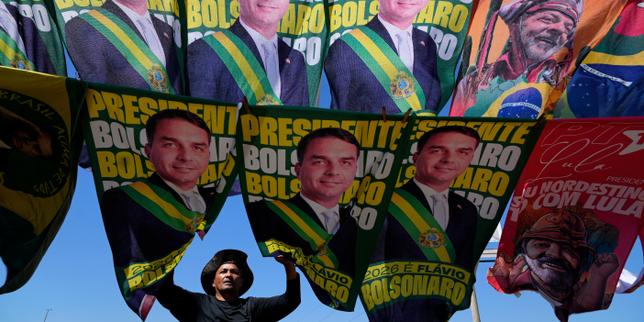
The ground in Brasília shifted long before the ballots were cast. When Luiz Inácio Lula da Silva secured a historic fourth term as president of Brazil, defeating conservative challenger Flávio Bolsonaro in a bruising October runoff, international observers framed the contest as a predictable collision between the left and the right. That framing misses the structural undercurrents that defined the race. This was not merely an echo of past ideological wars. It was a calculated war of succession, institutional survival, and generational realignment that fundamentally altered the architecture of Brazilian democracy.
To understand why this specific electoral duel eclipsed all other political alternatives, one must look past the superficial noise of daily campaign stops. Former president Jair Bolsonaro was legally barred from the ballot, leaving a massive ideological vacancy on the Brazilian right. Rather than allowing a moderate conservative coalition to rebuild from the center, the Liberal Party engineered a dynastic transfer of power. They positioned Flávio Bolsonaro, a senator from Rio de Janeiro, as the standard-bearer for the movement. This move effectively suffocated alternative centrist challengers like Romeu Zema and Ronaldo Caiado, reducing what should have been a multi-polar ideological debate into a binary referendum on the two dominant political dynasties of modern Brazil.
The strategy worked with ruthless efficiency during the first round of voting. Flávio Bolsonaro capitalized on widespread voter fatigue, economic anxieties, and anti-incumbent sentiment, capturing forty-seven percent of the valid vote to edge out Lula in October. For three agonizing weeks, progressive factions faced the very real prospect of an unprecedented electoral reversal. Never in the history of Brazil's post-authoritarian democracy had a first-round runoff leader and incumbent been unseated from behind.
Lula's subsequent comeback—clinching fifty-one point seven nine percent of the vote against Bolsonaro's forty-eight point two one percent—demonstrated the enduring resilience of his political machine, yet it exposed deep geographic and social fractures. The polarization is no longer fluid. It is calcified. Urban centers, rural agricultural hubs, and regional working-class populations voted from entirely different factual universes. The campaign discussions were routinely overshadowed by judicial controversies, legislative maneuvering over work schedules, and intense legal battles involving digital media regulation, turning the ballot box into an arena of total institutional warfare.
When the final tallies were certified by the Superior Electoral Court, the immediate rejection of the results by the Bolsonaro camp signaled that the end of voting was merely the prologue to a prolonged constitutional crisis. Brazil has survived the high-stakes theater of 2026, but the structural conditions that allowed two figures to consume all available political oxygen remain entirely unaddressed. The institutions bend, but they do not break. And the shadow of the dynastic divide looms heavier over Brasília than ever before.


