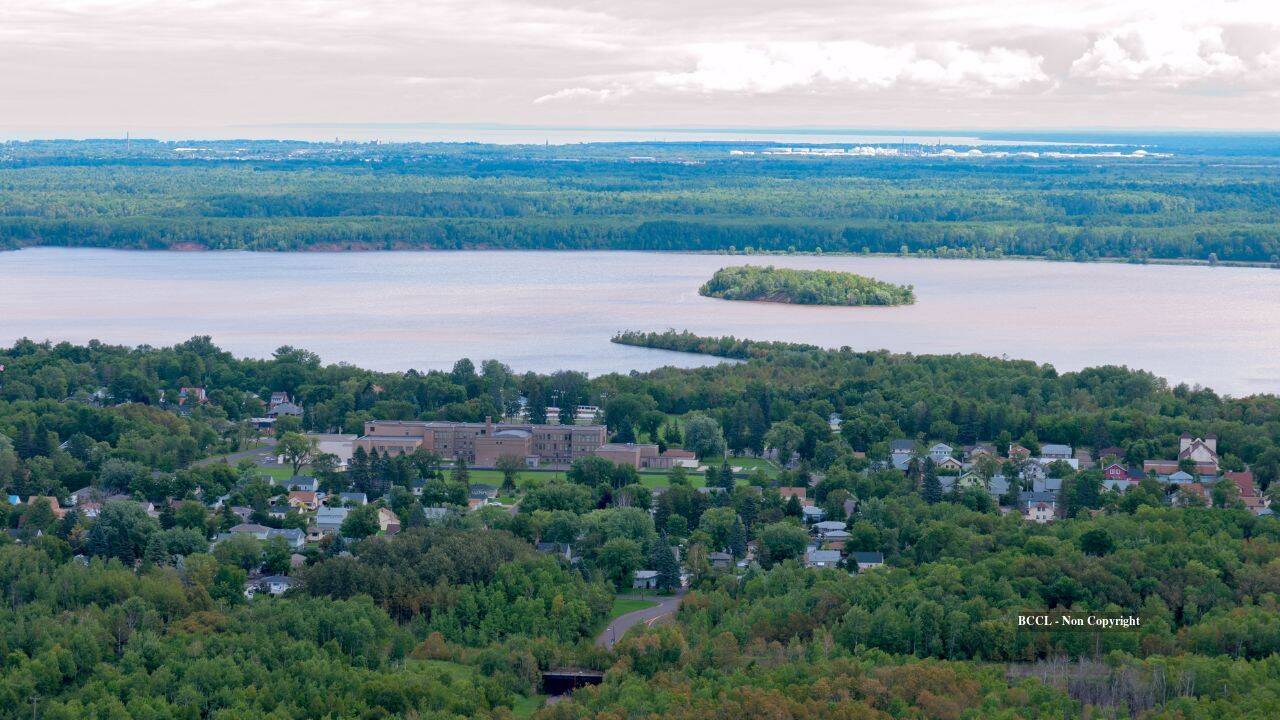
For more than a century, the industrial machinery of Minnesota's Iron Range dictated the economic pulse of Duluth. Raw ore hauled down from the northern ranges fed massive manufacturing plants lining the shore, driving local prosperity while silently writing a toxic bill for future generations. At Spirit Lake, a broad, deceptive expanse of the St. Louis River just upstream from Lake Superior, that bill finally came due. What appeared from the highway as a serene, blue-gray body of water was actually a sub-surface repository for a century of heavy manufacturing waste.
The $186 million cleanup and habitat restoration project orchestrated by the U.S. Environmental Protection Agency and U.S. Steel represents a monumental engineering triumph. It also serves as a glaring monument to corporate abandonment and regulatory failure. A total of 1.3 million cubic yards of contaminated material was ultimately remediated, 460,000 cubic yards of toxic sediment were mechanically dredged, and protective multi-layered caps were anchored over 96 acres of aquatic floor. A newly sculpted 14-acre shallow sheltered bay now provides dedicated fish spawning grounds, while two miles of public waterfront trail invite walkers back to a shoreline once branded too hazardous to touch.
Yet looking past the ribbon-cutting ceremonies reveals a harder, less comfortable truth. This was not an act of corporate altruism or sudden regulatory vigilance. It was the forced correction of a multi-generational environmental liability that sat unaddressed for decades after the blast furnaces went cold.
The Anatomy of a Century-Long Industrial Slip-Up
To understand why Spirit Lake required an intervention of this magnitude, one must look at the operating footprint of the historic U.S. Steel Duluth Works plant. Operating from 1915 until its closure in 1981, the facility was a vertically integrated titan that turned iron ore and coal into steel. The byproduct of that high-heat processing was a steady, unmonitored rain of polycyclic aromatic hydrocarbons (PAHs), heavy metals like lead, copper, and zinc, and various organic toxins.
These compounds did not wash harmlessly down into Lake Superior. Because Spirit Lake functions as a wide, low-velocity pool within the river basin, the current slackens, allowing heavy particulates to settle into the soft, silty lakebed. Year after year, decade after decade, an impermeable layer of industrial sludge accumulated.
Bottom-feeding fish and macroinvertebrates absorbed these persistent toxins directly into their tissue, establishing a bioaccumulative loop that poisoned the local food web. For decades, state agencies issued strict consumption advisories and body-contact warnings, effectively cordoning off a major ecological asset from the public. The city lived next to an open-air chemical archive, and for a long time, institutional momentum favored looking the other way.
The Mechanics of Reversing a Century of Damage
When the Great Lakes Legacy Act finally forced a reckoning in 2020, the logistical hurdle was staggering. Cleaning up a toxic lakebed without accidentally fracturing the containment or releasing a plume of mobilized poisons downriver requires surgical precision on an industrial scale.
Contractors utilized specialized mechanical dredges that scooped impacted mud from the bottom without churning the water column. This sludge was piped directly into two custom-engineered upland containment facilities constructed safely away from the active shoreline, permanently locking the pollutants away from the aquatic ecosystem.
Where dredging was structurally unfeasible—due to the risk of destabilizing adjacent railway lines and steep banks—engineers deployed sub-aqueous capping strategies. Specialized barges dropped alternating layers of clean sand, gravel, and graded armor stone across 96 acres of lakebed. This physical barrier entombed the legacy toxins beneath feet of inert material, effectively resetting the floor of the lake.
Complementing the heavy engineering was a biological recovery effort. Crews installed more than 400,000 native plants along the newly stabilized shorelines. Furthermore, earthmovers carved out a 14-acre shallow sheltered bay, engineering precise depth gradients specifically tailored to the biological triggers of native fish species like walleye, yellow perch, and northern pike.
The Danger of Declaring Victory Too Early
Federal administrators and state regulators are eager to point to Spirit Lake as proof that the Great Lakes Legacy Act works. On paper, the numbers are undeniably impressive. Water clarity has improved, sediment toxicity is suppressed, and recreational access has returned to a community that was locked out for generations.
However, environmental remediation is rarely a permanent, set-it-and-forget-it affair. Capping toxic sediment is a containment strategy, not a destruction strategy. The PAHs and heavy metals trapped beneath those layers of sand and stone remain chemically active; they are simply walled off from the biosphere.
If future extreme weather events—driven by shifting regional climate patterns—produce unprecedented flood stages and scouring velocities in the St. Louis River, those protective armor caps could face stress tests far beyond their original engineering parameters. Furthermore, urban stormwater runoff from surrounding municipal areas continues to introduce new, modern pollutants into the watershed every time it rains. Microplastics, road salts, and residual agricultural chemicals do not care about historical cleanups. They accumulate steadily, threatening to degrade the newly restored habitat through a death of a thousand cuts.
The Unresolved Question of Accountability
The financial architecture of the Spirit Lake project relied on a cost-sharing model where the federal government—courtesy of the Bipartisan Infrastructure Law—covered roughly half of the $186 million tab, while U.S. Steel footed the remainder as the non-federal sponsor.
While partnerships between regulatory bodies and private corporations are often the only practical way to fund multi-million-dollar environmental revivals, they prompt an uncomfortable structural question. Why should taxpayers subsidize the cleanup of industrial sites abandoned by profitable corporate entities that profited fully from the original degradation?
When corporations can walk away from an exhausted asset, leave behind an invisible wasteland, and decades later negotiate a cost-share agreement to fix it, the economic incentive to practice preventive environmental stewardship during active operations remains weak. The true cost of steel production in Duluth was never fully captured on the corporate balance sheet. It was outsourced to the sediment of Spirit Lake, paid for eventually by federal appropriations, and endured by generations of local residents who could not safely eat a fish from their own backyard.
The new waterfront trail at Spirit Lake is quiet now. Walkers tread across ground that was once forbidden, peering out over water where fish are finally returning to spawn in engineered shallows. The transformation is real, visible, and objectively beneficial. Yet beneath the clean sand caps and the newly planted native rushes, the historical weight of a century of industrial convenience remains buried, watched over by automated monitors that will spend the next century checking for leaks.