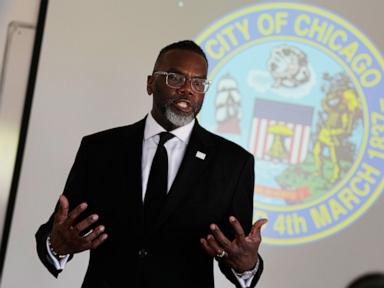
Chicago Mayor Brandon Johnson just traveled to the Vatican to hand-deliver an invitation to Pope Leo XIV for a 2027 hometown visit. The move is a transparent attempt to lean on the historic status of the first American pontiff—born Robert Prevost on Chicago's South Side—to patch over deep local political divisions and a brutal municipal budget deficit. By dangling the prospect of a massive, unifying open-air Mass in Grant Park, the administration wants to recreate the legendary spirit of John Paul II’s 1979 visit. The reality on the ground is far more transactional, involving an expensive 50-member delegation of corporate executives, union bosses, and local politicians looking for their own piece of the Roman spotlight.
A papal visit is never just about faith. It is about capital, influence, and the projection of power. For a city currently wrestling with escalating migrant costs, a commercial real estate slump, and tense labor negotiations, the journey to Rome represents a high-stakes distraction.
The Fifty Headed Delegation to Rome
The invitation was not delivered in a quiet, solemn moment of pastoral reflection. Johnson arrived in Rome flanked by an enormous entourage organized by World Business Chicago. The roster reads like a directory of the city's power elite, featuring United Airlines executives, developers, corporate attorneys, and major civic players like Chicago Teachers Union President Stacy Davis Gates.
Bringing corporate titans to the Vatican reveals the true architecture of this trip. The administration is trying to repair its fractured relationship with the Chicago business community. By offering executives access to the Holy See, the mayor is using international diplomacy to smooth over domestic policy disputes.
The presence of major university presidents from DePaul and Loyola underlines the institutional weight behind the push. These Catholic universities face their own enrollment and financial headwinds. A papal homecoming would provide an unprecedented marketing and branding opportunity for the local Catholic infrastructure, which has seen decades of parish consolidations and school closures across the Archdiocese of Chicago.
A Soft Power Tug of War
If Pope Leo XIV accepts the invitation to return to Bronzeville and the wider city, he will be stepping directly into a political minefield. The American-born pontiff has already established himself as a distinct moral voice on the global stage since his election last year. His recent encyclical, Magnifica humanitas, offered a sharp critique of artificial intelligence and its displacement of human labor. He has consistently broken with traditional American conservative political rhetoric on immigration, environmental regulations, and global conflict.
This has put the pope on a collision course with national figures, including Vice President JD Vance, who previously extended his own official invitation for a papal visit. By jumping into the queue, Johnson is trying to hijack the narrative. The city wants to frame a potential visit around progressive themes of immigrant rights and economic justice, aligning the mayor’s local platform with the Vatican’s global messaging.
Yet, this alignment ignores the fundamental friction between the local government's performance and the pope's stated priorities. While the pope calls for the dignified treatment of migrants, Chicago has struggled to manage its own asylum-seeker crisis, leaving thousands in substandard shelter conditions while burning through hundreds of millions of dollars in emergency funding.
The Logistics of a Financial Mirage
The administration’s letter to the Vatican deliberately evokes nostalgia, referencing the 1979 Grant Park Mass where 1.5 million people gathered.
“Your Holiness, you were a young priest-in-training at the time. Perhaps you were there. Perhaps you would consider a repeat Papal visit nearly 50 years later to share your own message of hope, unity and service.”
Nostalgia, however, does not pay for municipal overtime. The cost of hosting a modern papal visit is astronomical. Securing a major American city for a global religious figure requires unprecedented coordination between the Secret Service, state police, and local law enforcement.
Consider the financial reality of the city today.
| Civic Pressure Points | Financial and Social Reality |
|---|---|
| Municipal Budget Deficit | Facing a massive structural deficit heading into the next fiscal cycle. |
| Police Overtime | The Chicago Police Department regularly exceeds its overtime budget just maintaining daily operations. |
| Public Transit Crises | The CTA is staring down an unprecedented fiscal cliff with service cuts looming. |
| Corporate Flight | Multiple high-profile corporate headquarters have departed the loop over the last four years. |
Staging a multi-day international event in Grant Park would cost millions of dollars that the city simply does not have. While business leaders argue that tourism revenue and hotel occupancy would offset the initial expense, those windfall profits largely benefit downtown hospitality corporations, not the neighborhoods suffering from disinvestment.
The Contradiction of the Counter Argument
Proponents of the trip argue that a papal homecoming is exactly what the city needs to restore its global reputation. They point to the potential for historic unity, suggesting that an historic figure like the first Chicago-born pope could bridge the gap between the city’s affluent downtown and its historic Black and Latino neighborhoods.
This argument misreads both the modern papacy and the modern state of urban politics. Pope Leo XIV has explicitly warned the Church against trying to make itself more attractive by "watering down its content or softening its demands." He is unlikely to allow his presence to be used as a convenient backdrop for local political public relations.
If the pope does return to his native city, his focus will likely be on the very systemic failures the current administration has failed to fix. A visit to the South Side would shine a global spotlight on gun violence, poverty, and the stark economic segregation that defines the city. Instead of a celebration of local leadership, a genuine papal visit would serve as a severe indictment of decades of civic failure.
The 50-member delegation will return across the Atlantic with photos and diplomatic pleasantries, but the structural realities of Chicago remain entirely unchanged. High-minded appeals to spiritual history cannot substitute for sound fiscal management and functional local governance.
For more context on the political implications of this trip, look at this local news coverage of the Chicago delegation arriving in Rome which details the specific political and business figures who accompanied the mayor on this journey.