A red telephone sits on a polished mahogany desk, completely silent. It does not ring. It does not buzz. Yet, the lack of sound vibrating from its receiver carries a weight heavy enough to shift the trajectory of global history.
When international diplomacy stalls, the silence is deafening. We often view geopolitics as a series of loud events—explosions, passionate speeches at podiums, or signed papers held up for flashing cameras. But the real danger lives in the quiet spaces between those moments, when communication breaks down and threats become the only currency left to trade.
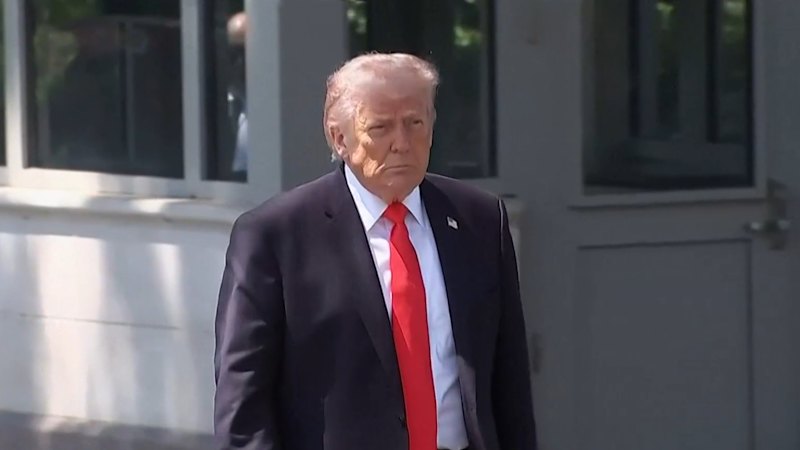
Recently, the fragile architecture of Middle Eastern diplomacy shuddered. Donald Trump issued a sharp, public warning to Iran, signaling that a highly anticipated peace deal had hit a wall. To the casual observer scanning a news feed, it was just another headline in a lifetime of headlines. Another ripple in a distant ocean.
But consider what happens next when the ink dries up before it ever hits the paper.
To understand the stakes, we have to look past the political theater and focus on the human beings caught in the crosshairs of a stalled pen. Imagine a shopkeeper in Tehran, stacking saffron and dates, watching the currency fluctuate by the hour. Across the Persian Gulf, imagine a young family in Haifa, looking at the sky every time a siren wails in the distance. They do not care about the optics of a press conference. They care about predictability. They care about tomorrow.
When negotiations freeze, uncertainty thaws.
The Illusion of the Reset Button
Every new diplomatic push promises a clean slate. It is a comforting fiction. We like to believe that complex, decades-old animosities can be wiped away by a single, dramatic summit.
History tells a different story. The relationship between Washington and Tehran is not a whiteboard to be erased; it is a Jenga tower. Every statement, every sanction, and every broken promise is a block pulled from the foundation. The warning issued from Mar-a-Lago was not just a reaction to a single bad week of talks. It was the culmination of a structural collapse.
The core facts are straightforward, even if the emotions surrounding them are chaotic. A deal was on the table—a framework designed to trade economic relief for verifiable nuclear restraint. For months, backchannel diplomats traded drafts, arguing over commas and compliance clauses in anonymous hotel conference rooms in Europe. They drank stale coffee. They grew tired. They genuinely believed they were close.
Then, the machinery jammed.
The friction points are always the same: trust and timing. Iran demands immediate, sweeping relief from the sanctions that have strangled its domestic economy. The American administration demands immediate, sweeping concessions on uranium enrichment and regional proxy networks before a single dollar is unfrozen. It is a classic standoff. Two drivers approaching a single-lane bridge, both refusing to back up, both convinced the other will blink first.
But what happens when neither blinks?
The warning served as a reminder that patience is a luxury the current administration has no intention of granting. By signaling that the clock is running out, the rhetoric shifts from negotiation to coercion. It is a high-stakes gamble based on the assumption that pressure forces capitulation.
Sometimes, it just forces a cornered animal to bite.
The Human Toll of a Stalled Pen
It is easy to get lost in the vocabulary of statecraft. We talk about "strategic deterrence," "enrichment caps," and "multilateral frameworks." These words are designed to be cold. They sanitize the reality of what is actually happening.
Let us speak plainly instead.
When a peace deal stalls, a cancer patient in a provincial Iranian hospital cannot get access to specialized Western pharmaceuticals because Swiss banks are too terrified of secondary sanctions to process the transaction.
When a peace deal stalls, an American drone operator sits in a dark room in Nevada, staring at a thermal image of a desert highway thousands of miles away, wondering if a sudden escalation means they will have to pull a trigger before their shift ends.
This is the lived experience of geopolitics. It is anxiety. It is the steady, corrosive drip of waiting for the other shoe to drop.
The economic fallout is immediate. Markets hate silence even more than they hate bad news. The moment the warning went public, oil futures twitched. Speculators began calculating the probability of a blocked Strait of Hormuz, the narrow chokepoint through which a fifth of the world’s petroleum passes. If that strait closes, the price of gasoline at a pump in Ohio spikes three weeks later. A trucker loses his margin. A grocery store raises the price of milk.
Everything is connected by an invisible wire. When you yank it in Washington or Tehran, the vibration travels across the entire globe, rattling the teacups in ordinary kitchens.
The Psychology of the Ultimatum
Why resort to warnings when negotiation is still technically possible? The answer lies in the psychological makeup of modern leadership.
The current American approach relies heavily on the art of the leverage play. It is a philosophy forged in the private sector, where threatening to walk away from the closing table is a standard tactic to force a concession. If the other party believes you are crazy enough to abandon the deal entirely, they might offer a discount to keep you there.
But a nation-state is not a commercial real estate development. You cannot liquidate a country. You cannot file for bankruptcy protection if the war goes badly.
The danger of using ultimatums as a primary diplomatic tool is that they leave no room for face-saving. In Persian political culture, just as in Western political culture, prestige is a vital national asset. No leader can afford to look like they bowed to a public threat. It invites internal rebellion. It signals weakness to regional rivals.
Therefore, a public warning often produces the exact opposite of its intended effect. Instead of softening the opponent's position, it hardens it. It forces the Iranian leadership to dig into their trenches, wrap themselves in the flag, and declare that they will never negotiate under duress.
So, the circle continues. The Americans increase the pressure because the Iranians refuse to yield. The Iranians increase their enrichment levels because the Americans refuse to lift the pressure.
We are left watching a slow-motion train wreck, where both engineers can see the headlights of the oncoming locomotive, yet both are pulling the throttle forward out of sheer pride.
The Empty Room
The true tragedy of this stalled agreement is that both sides actually need it.
The Iranian economy is a tinderbox, fueled by high inflation and a young, frustrated population that longs for integration into the modern world. They want high-speed internet, global travel, and stable careers. They do not want to live in an ideological fortress forever.
Conversely, the American administration needs a foreign policy victory that does not involve boots on the ground. The domestic electorate is weary of endless commitments abroad. There is no appetite for another conflict in the Middle East, a reality that every strategist in the Pentagon knows intimately.
The pieces of the puzzle are all there on the floor. They fit together. The tragedy is the lack of a hand willing to assemble them without demanding an absolute surrender from the other side.
Diplomacy is not about winning. It is about managed dissatisfaction. It is a grueling, unglamorous process of finding a compromise that leaves both parties slightly unhappy, but alive.
For now, the conference rooms are empty. The diplomats have packed their briefcases and returned to their respective capitals to brief their superiors. The statements have been issued to the press, parsed by analysts, and converted into television talking points.
Away from the microphones, in the quiet corridors of power, the real work has stopped. The red phone remains on the desk, cold and unmoving. Outside the window, the world keeps spinning, unaware of how thin the ice beneath its feet has become, waiting for someone to finally pick up the receiver.