The Australian power grid is currently locked in a high-stakes wrestling match between two opposing forces: the relentless, 24/7 thirst of artificial intelligence and the volatile unpredictability of a warming climate. In the final quarter of 2025, underlying demand across the National Electricity Market (NEM) climbed to a staggering average of 24,271 MW. While much of the public conversation focuses on household air conditioners humming through sweltering summer nights, a more permanent and aggressive consumer has moved in. Data centres are no longer just supporting the economy; they are reshaping the very physics of the energy market.
This surge in demand, up 2.2% from the previous year, represents a fundamental shift in how Australia consumes power. We are moving away from a grid defined by human rhythms—boilers in the morning, televisions at night—to one dominated by the silicon heat of hyperscale server farms. These facilities do not sleep, they do not care if the sun is shining, and they are currently expanding at a rate of 25% year-on-year. In similar developments, read about: Stop Suing the Mirror for Reflecting a Broken Society.
The Invisible Load
If you look at a map of New South Wales or Victoria, you won't see the massive energy drains hidden in plain sight. These data centres already account for roughly 2% of the national grid's total draw, but that number is a deceptive floor. By 2030, analysts expect this share to hit 6%, and in concentrated hubs like Sydney, it could reach 11% of the entire state's demand. To put that in perspective, a single 100MW hyperscale facility consumes as much electricity annually as 100,000 Australian homes.
The problem is the profile of this load. Unlike a residential neighborhood that scales back its usage at 3:00 AM, a data centre is a "flat" load. It demands the same massive volume of electrons every second of every day. This creates a terrifying floor for the Australian Energy Market Operator (AEMO). As we retire the aging coal fleet—with 70% of it expected to vanish by 2035—replacing that "always-on" power with intermittent solar and wind is like trying to fill a bucket that has no bottom. MIT Technology Review has analyzed this important subject in extensive detail.
We are seeing a literal arms race for grid priority. Tech giants are no longer just renting space; they are proposing their own gas generators and scouting for small modular reactor sites to ensure their AI models don't flicker. This is the "why" that often gets buried: the energy transition isn't just about replacing old coal with new wind; it's about trying to outrun a digital furnace that is growing faster than we can build the fire escapes.
Why Prices Haven't Exploded Yet
Despite this record demand and the inherent strain on the system, wholesale electricity prices didn't follow the upward trajectory many feared. In Q4 2025, prices actually cratered, averaging $50 per MWh—a 44% drop compared to the year prior. This seems like a paradox. How can we use more power than ever, under more heat stress, yet pay less?
The answer lies in the massive, coordinated deployment of big batteries.
Australia has quietly become the third-largest utility-scale battery market in the world. In the last three months of 2025 alone, 1 GW of utility-scale storage came online. These are not the small units sitting in your garage; these are industrial-scale shock absorbers like the Waratah Super Battery. These systems do one thing exceptionally well: they engage in price arbitrage. They soak up the massive glut of solar power during the day when prices are often negative, and they vomit that energy back into the grid during the evening peak.
This "quelling" of prices is a mechanical victory, not an economic one. The batteries are masking the underlying scarcity. They are the only reason the evening peak hasn't become an unaffordable luxury for the average household. However, this relies on a perfect sequence of events. If the wind stays still and the clouds linger for more than two days, the battery buffers vanish, and the grid is forced back onto expensive gas and the remaining, wheezing coal plants.
The Cannibalization of the Transition
There is a darker side to this digital boom that the industry is hesitant to discuss. The sheer volume of capital and labor being sucked into building data centres is actively slowing down the renewable build-out they claim to support.
Building a massive server farm requires the same high-voltage electricians, the same specialized transformers, and the same grid connection approvals as a new wind farm. Currently, the wait times for grid connections in Queensland are stretching toward 37 months for wind projects. Every crane used to lift a server rack is a crane not used to lift a turbine blade.
We are seeing a phenomenon where the "new demand" is effectively cannibalizing the "new supply." If we build enough renewables to cover the growth of data centres, we haven't actually moved the needle on decarbonization. We are simply running faster to stay in the same place. Some developers are even proposing the return of mothballed gas turbines specifically to service data centres, a move that would have been unthinkable five years ago.
The Regional Pressure Cooker
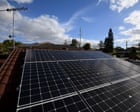
The stress isn't distributed evenly. In NSW, operational demand actually fell slightly because of the sheer volume of rooftop solar, but the underlying pressure remains. When the sun goes down, the gap between "zero cost" solar and "high cost" dispatchable power is widening. This volatility is what makes the grid fragile.
- NSW: Saw a 12% surge in distributed solar, helping hit a record low in daytime operational demand.
- Victoria: Faced a 3.7% increase in underlying demand, driven by morning heating and data centre growth, proving that solar alone can't solve the winter problem.
- South Australia: Frequently hits periods where 100% of its power comes from renewables, but it remains the canary in the coal mine for system stability when those renewables drop off.
The Mirage of Efficiency
Proponents of the AI boom point to massive gains in hardware efficiency. It is true that the energy cost per AI task is dropping. But the Jevons Paradox tells us that as a resource becomes more efficient to use, we simply use more of it. We aren't using AI to do the same amount of work; we are using it to do a million more things we never thought of before.
The federal government has pledged to set out "data centre principles" in early 2026. This is a polite way of saying they are going to start demanding that tech companies bring their own power to the party. The era of plugging a hyperscale facility into the public grid and expecting the taxpayer to fund the transmission upgrades is likely ending.
The Next Bottleneck
The next crisis won't be about electrons, but about water. These facilities generate heat that would melt the hardware if not for massive cooling systems. Some large Australian centres are already using up to 40 million litres of water a day. In a country defined by drought, the choice between cooling a server farm and watering a suburb is a political landmine that hasn't fully detonated yet.
We have managed to stabilize the grid for now through a combination of sheer luck with weather patterns and a frantic, last-minute dash to install big batteries. But the buffer is thin. We are building a digital civilization on a power grid that was designed for a different century and a different climate. The record demand we are seeing now is the new baseline.
The hard truth is that batteries are a bridge, not a destination. If the rate of data centre expansion continues to outpace the actual commissioning of new wind and solar generation, the "price quelling" we saw in 2025 will be remembered as a brief anomaly before the real bill arrived. The grid is no longer a public utility; it has become the life-support system for an intelligence that never sleeps. Either we radically accelerate the construction of transmission lines and generation, or we accept that the cost of our digital future will be the stability of our physical one.
Stop looking at the thermostat. Start looking at the server room next door.