The deadline expires at 8:00 p.m. in Washington. By the time the sun sets over the Potomac, Donald Trump has signaled that a 7,000-year-old culture could face "complete demolition." This is not the standard rhetorical bluster of a campaign trail; it is the calculated, apocalyptic signaling of a presidency that has moved past "maximum pressure" and into the territory of existential erasure. When Trump took to social media to warn that a "whole civilization will die tonight," he effectively tore up the international rulebook on proportional warfare.
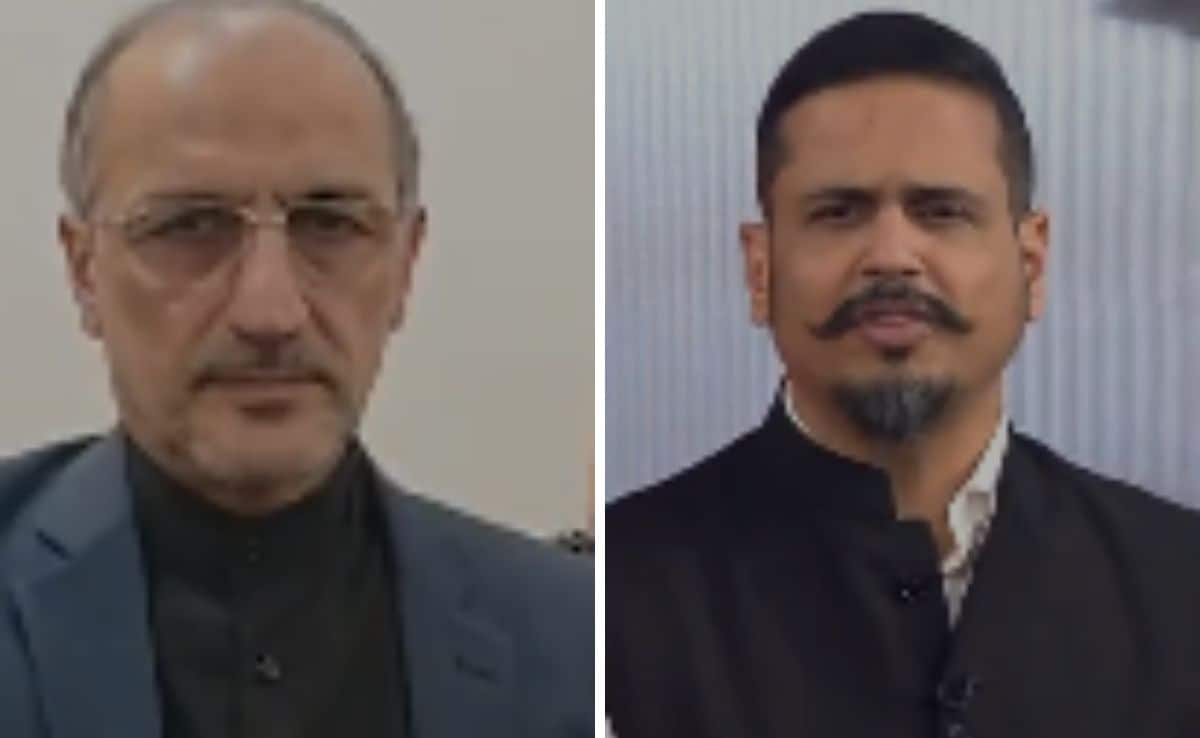
The Iranian response was swift and chillingly formal. Amir-Saeid Iravani, Tehran’s envoy to the United Nations, did not just dismiss the comment as hyperbole. He characterized it as a public confession of intent to commit war crimes and genocide. In the hushed halls of the Security Council, the message was clear: if the United States follows through on its threat to liquidate Iran’s power grid, bridges, and civilian infrastructure, the response will not be a measured military exchange. It will be the permanent closure of the Strait of Hormuz and the systematic targeting of energy and desalination plants across the region.
We are no longer discussing a "surgical strike." We are looking at the potential for a regional "dark ages" scenario.
The Logic of the Ultimatum
At the heart of this crisis is the Strait of Hormuz, a narrow chokepoint through which 20% of the world’s petroleum flows. Trump’s demand is singular: reopen the waterway immediately or face the "Stone Age." This ultimatum follows months of escalating skirmishes known as Operation Epic Fury, a U.S.-led campaign that has already crippled much of Iran’s navy and its missile production facilities.
Trump’s strategy rests on a brutal premise. He believes that by threatening the very foundation of Iranian society—its electricity, its water, its connectivity—he can force a regime collapse or a total surrender. Unlike previous administrations that targeted specific military wings like the IRGC, this doctrine views the entirety of the Iranian state’s infrastructure as a legitimate target.
Critics argue this is a fundamental violation of the Geneva Conventions, which forbid attacks on objects indispensable to the survival of the civilian population. However, the administration’s "Secretary of War" Pete Hegseth has remained steadfast, framing the mission as a "laser-focused" effort to neuter the regime’s ability to project power. The White House view is that the Iranian government has used its civilian infrastructure as a shield for its nuclear and missile ambitions, thereby forfeiting its protected status.
The Envoy’s Stinging Retort
Amir-Saeid Iravani’s rebuttal at the UN was designed to do more than just protest; it was meant to isolate the United States diplomatically. By labeling Trump’s remarks as "incitement to genocide," Tehran is attempting to force the hand of the International Criminal Court and the UN Security Council.
Iravani’s core argument is that the U.S. is "shamelessly and brazenly" announcing its intent to murder millions through the destruction of life-sustaining systems. Iran has spent decades preparing for this exact moment. The "retort" mentioned in headlines wasn't just words—it was a strategic outline of "reciprocal measures."
Tehran’s counter-threat includes:
- The "Total Darkness" Protocol: Simultaneous strikes on regional power grids.
- Water Scarcity: Targeting desalination plants in the Gulf, which would trigger a humanitarian crisis for U.S. allies in days.
- Energy Blockade: A long-term closure of the Strait of Hormuz that would send global oil prices into an uncontrollable vertical climb.
The Humanitarian Calculus
What does it actually mean for a "civilization to die"? In modern terms, it starts with the grid. If the U.S. executes the "complete demolition" of Iran's power plants, the cascading failures would be instantaneous.
- Hospitals: Backup generators only last so long. Without a primary grid, intensive care and surgical units become morgues.
- Water: Iran’s water pumping and filtration systems are entirely dependent on electricity. A week without power leads to a national thirst crisis.
- Food Supply: Refrigerated storage and transport cease to function, leading to the rapid spoilage of the national food reserve.
Iran’s domestic response has been equally grim. The government has called on its youth to form "human chains" around power plants and petrochemical facilities. They are gambling that the U.S. will not pull the trigger if it means broadcasting the deaths of thousands of civilians live to a global audience. It is a macabre standoff where the "shield" is the population itself.
The Paradox of Coercive Signaling
There is a fundamental flaw in the "End of Civilization" rhetoric. For a threat to work, the target must believe there is a way out. If the Iranian leadership perceives that Trump intends to destroy them regardless of their concessions, they have no incentive to negotiate.
History shows that when a nation is pushed into a corner where its very existence is at stake, it does not typically surrender; it lashes out with every available asset. This is the "Samson Option"—the willingness to pull down the pillars of the temple, even if it means dying in the ruins.
The U.S. intelligence community is reportedly divided on whether Trump’s rhetoric is a masterclass in brinkmanship or a dangerous slide into a war that cannot be won. While the U.S. military can undoubtedly destroy Iran’s physical infrastructure, it cannot "win" a conflict that results in the total collapse of the global energy market and the displacement of 90 million people.
The Global Oil Shock
If the 8:00 p.m. deadline passes and the missiles fly, the economic fallout will be felt in every gas station and grocery store on the planet. Analysts at major firms have already warned that a full-scale war in the Gulf could see oil prices exceed $250 per barrel. This isn't just a "business" problem; it's a "civilization" problem for the West as well.
The Strait of Hormuz is the jugular vein of the global economy. If Iran follows through on its threat to seed the strait with sophisticated mines and use its remaining shore-to-ship missiles, the U.S. Navy would face a months-long clearing operation under fire. During those months, the global supply chain would effectively snap.
The Final Hour
As the clock ticks toward the deadline, the diplomatic channels are nearly silent. Pakistan has made a last-ditch effort to extend the window by two weeks, but the White House has signaled that this is the final "final" deadline.
The standoff is a collision of two irreconcilable worldviews. On one side, a President who believes that the threat of total annihilation is the only language a "rogue state" understands. On the other, a regional power that believes its only path to survival is to make the cost of aggression too high for the world to bear.
The "End of Civilization" remark was not a slip of the tongue. It was a declaration that the era of limited war is over. If the strikes begin tonight, the debate will no longer be about who was right or wrong, but about whether anyone will be left to write the history of what followed. The world is holding its breath, waiting to see if this is the ultimate bluff or the first chapter of a global catastrophe.
The lights in Tehran remain on for now, but the shadow falling across the city is longer and darker than it has been in a generation.