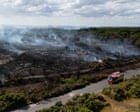
Summer heatwaves used to be a distant worry for British policymakers. Now, they are a terrifying regular visitor. Yet, while temperatures break records and parched moorlands turn into tinderboxes, the official response from Westminster has been nothing short of reckless avoidance. Reports recently surfaced revealing that the government quietly dropped a vital strategy designed to prepare England for the escalating threat of wildfires.
You’d think that after the apocalyptic scenes of grass fires creeping into suburban back gardens during past heatwaves, emergency preparedness would be ramping up. Instead, crucial plans were shelved behind closed doors. It's a staggering failure of foresight. When you look at how climate change is actually reshaping rural and urban interfaces across the UK, abandoning a national wildfire framework isn't just bureaucratic negligence. It's an active invitation for disaster. Don't forget to check out our recent post on this related article.
The Reality of British Wildfires Has Changed Forever
We still cling to the romantic notion that the British Isles are too damp, too green, and too temperate to burn seriously. That myth died a few years ago during the unprecedented 40-degree heatwaves. Fire services were stretched past their absolute breaking point. Whole neighborhoods came under threat as dry grass fields went up in smoke within minutes.
The problem isn't just about hot weather. It is about accumulated fuel, changing land management practices, and a complete mismatch between local council resources and national risk assessment. When dry peatlands and unmanaged scrubland catch fire, traditional hose-and-engine tactics don't work. You need specialized equipment, coordinated air support, and proactive controlled burns. If you want more about the background here, NPR offers an informative summary.
Dropping the national preparation plan means local brigades are left guessing. They are fighting modern, high-intensity fires with outdated toolkits.
Why Bureaucracy Prefers Silence Over Action
Governments love reactive spending because it makes for good photo ops. Handing out sandbags or visiting evacuated homeowners lets politicians look compassionate in front of a camera. Prevention, however, is boring. It doesn't win daily headlines. Updating a national wildfire strategy involves spending money on unglamorous things like predictive modeling, cross-agency coordination, and landowner incentives.
When ministers quietly buried this plan, they gambled with public safety to save political capital and short-term budget line items. They basically rolled the dice, hoping the next few summers would be unusually rainy. That is not governance. That is a massive administrative cop-out.
Look at what happened when the strategy was evaluated. Experts warned repeatedly that England's critical infrastructure—from power grids running across rural moors to transport links cutting through dry countryside—is sitting in the crosshairs. Ignoring these warnings doesn't make them go away. It just raises the eventual body count and financial cost.
What Real Preparedness Actually Looks Like
If we want to stop sleepwalking into seasonal catastrophes, we have to demand accountability and operational competence. Fixing this mess requires three immediate shifts in how the country handles environmental risks.
First, the national wildfire strategy needs to be revived, funded, and legally enforced. Local fire and rescue services cannot be expected to shoulder a national climate crisis on council tax budgets. Second, land managers and farmers must be given clear financial backing to clear hazardous fuel loads and restore natural firebreaks, especially around peat bogs and dense forests. Third, public education has to change. Most grass fires in England start because of sheer carelessness—discarded glass bottles acting as magnifying lenses or illegal barbecues on parched moorland.
We can't control the weather. But we can control our readiness. Burying the paperwork won't stop the flames from spreading. It's time to drag this issue back into the open before the next heatwave makes the decision for us.