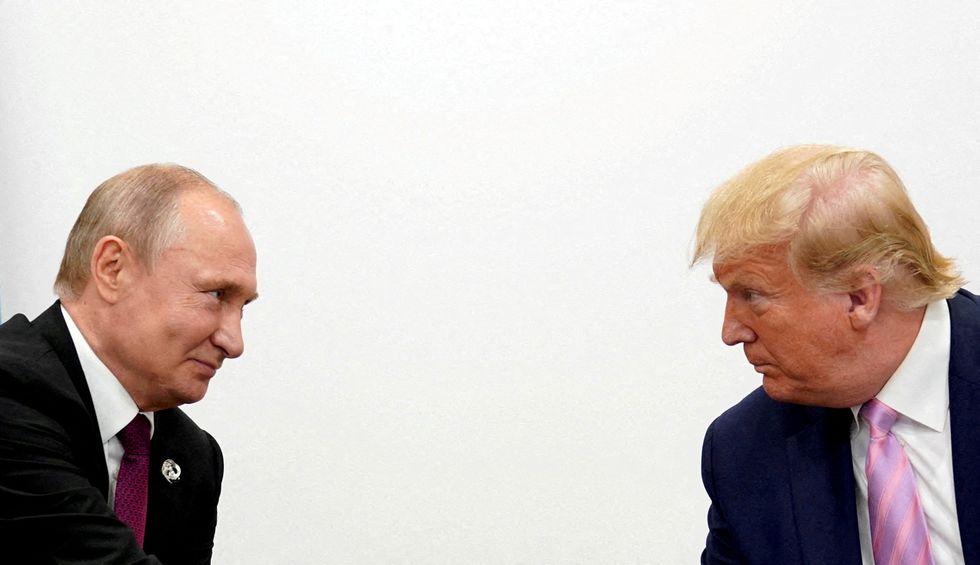
The era of the American security blanket is over. Honestly, it's been fraying for years, but we've finally reached the point where the seams are bursting. With Donald Trump back in the White House and his rhetoric toward NATO shifting from "skeptical" to "actively hostile," the "unthinkable" is now the daily agenda in Brussels, Berlin, and Paris.
You've heard the headlines. Trump is calling NATO a "paper tiger." He's threatening tariffs over Greenland. He's even suggesting that the US might sit out a Russian incursion into the Baltics if the bills aren't paid. For decades, Europe treated its defense like a subscription service it didn't really want to fund. Now, the provider is threatening to cut the cord in the middle of a cold winter.
Europe isn't just panicking; it's finally moving. But the transition from a US-dependent continent to a "Strategic Autonomy" powerhouse isn't going to be pretty. It's a messy, expensive, and politically radioactive process that is reordering the world before our eyes.
The death of the 2 percent myth
For a long time, the magic number was 2%. If European nations just spent 2% of their GDP on defense, everything would be fine. That was the theory. Trump 2.0 has turned that number into a joke. At the 2025 NATO Summit, members were pushed to a 5% pledge.
Think about that. Five percent. That's a wartime economy footing.
Germany, a country that spent decades trying to avoid being a military power, is now aiming to have the strongest conventional army in Europe by 2039. Chancellor Friedrich Merz is making moves that would have been political suicide five years ago. They're talking about bringing back conscription because the "freedom of choice" model just isn't putting enough boots on the ground.
But money alone doesn't buy security. You can't just print a satellite network or an integrated missile defense system overnight. Europe is realizing it has massive "vulnerability gaps." While they've taken over the checkbook for Ukraine, they still rely on the US for the "brains" of modern warfare: intelligence, surveillance, and heavy-lift logistics. Without the US, the European military is like a body with strong muscles but no nervous system.
Thinking the unthinkable with a nuclear twist
The most jarring shift is the talk about the "European Nuclear Umbrella." For the last half-century, the US nuclear triad was the ultimate deterrent. If Russia crossed the line, the American nukes were the final "no."
Now? Nobody is sure the US would trade New York for Tallinn.
Emmanuel Macron is stepping into the vacuum. France is expanding its nuclear arsenal and offering "dissuasion avancée"—advanced deterrence—to its European partners. This isn't just a French ego trip. Germany and Poland are actually listening. There are serious discussions about a joint nuclear steering group.
Imagine a world where the French and British—not the Americans—are the ones holding the nuclear keys for the continent. It sounds like a Cold War thriller, but it's the reality of 2026. The "Northwood Declaration" between the UK and France already signaled this shift, basically saying: "If the US walks, we're the ones left standing."
The Russia factor and the Iran distraction
While Europe tries to get its act together, Vladimir Putin is playing the long game. Russia’s economy isn't the juggernaut it was, but it's stubborn. Energy revenues are dropping, and Western sanctions have bitten hard, but they’re still betting on "erosion."
Russia's strategy for 2026 isn't a massive tank invasion. It's hybrid chaos. We’re talking:
- Sabotaging subsea cables.
- Shutting down power grids through cyberattacks.
- Drone sightings that paralyze major airports.
- Disinformation that turns European neighbors against each other.
These are "below the threshold" attacks. They don't trigger NATO's Article 5 automatically, which makes them perfect for a divided alliance.
Adding fuel to the fire is the war in Iran. The US is focused on "Operation Epic Fury," and Trump has branded European allies as "cowards" for not diving into that conflict headfirst. This distraction is draining US arsenals. European governments are being told that the air defense missiles they ordered won't arrive for years because the US needs them for the Middle East.
The Greenland crisis and the new American posture
If you thought the "unthinkable" was just about Russia, look at what happened in January 2026. The Trump administration's renewed pressure on Denmark to cede control of Greenland wasn't just a weird real estate play. It was a signal that the US no longer views Europe as a partner to be nurtured, but as a region to be leveraged.
Threatening tariffs against Copenhagen over a land mass is "America First" in its rawest form. It tells every European leader that no treaty is sacred and no ally is safe from transactional bullying.
Stop waiting for a savior
The hard truth is that even if Trump leaves office in four years, the "old NATO" isn't coming back. The US pivot to the Indo-Pacific and its internal fiscal struggles mean Europe is becoming a secondary theater for Washington.
So, what do you actually do?
If you're a business leader or a policy-maker, you have to plan for a fractured West. The "Plan B" for European security is becoming "Plan A."
- Watch the procurement rules. The EU is pushing for "European preference" in defense buying. If you're in the defense or tech space, the money is moving from US-made kit to home-grown European solutions.
- Harden your own infrastructure. Don't wait for a government-level defense. If the risk is hybrid attacks on the grid and digital systems, private sector resilience is the first line of defense.
- Follow the money. The shift to a 5% defense spend means massive budget reallocations. Education, social services, and green initiatives are going to feel the squeeze as the "Peace Dividend" finally hits zero.
Europe is finally waking up to the fact that it's on its own. It's a scary realization, but maybe it's the one the continent needed to finally become a grown-up power. The era of the "paper tiger" is over, and whatever comes next will be built in Paris, Berlin, and Warsaw—not Washington.


