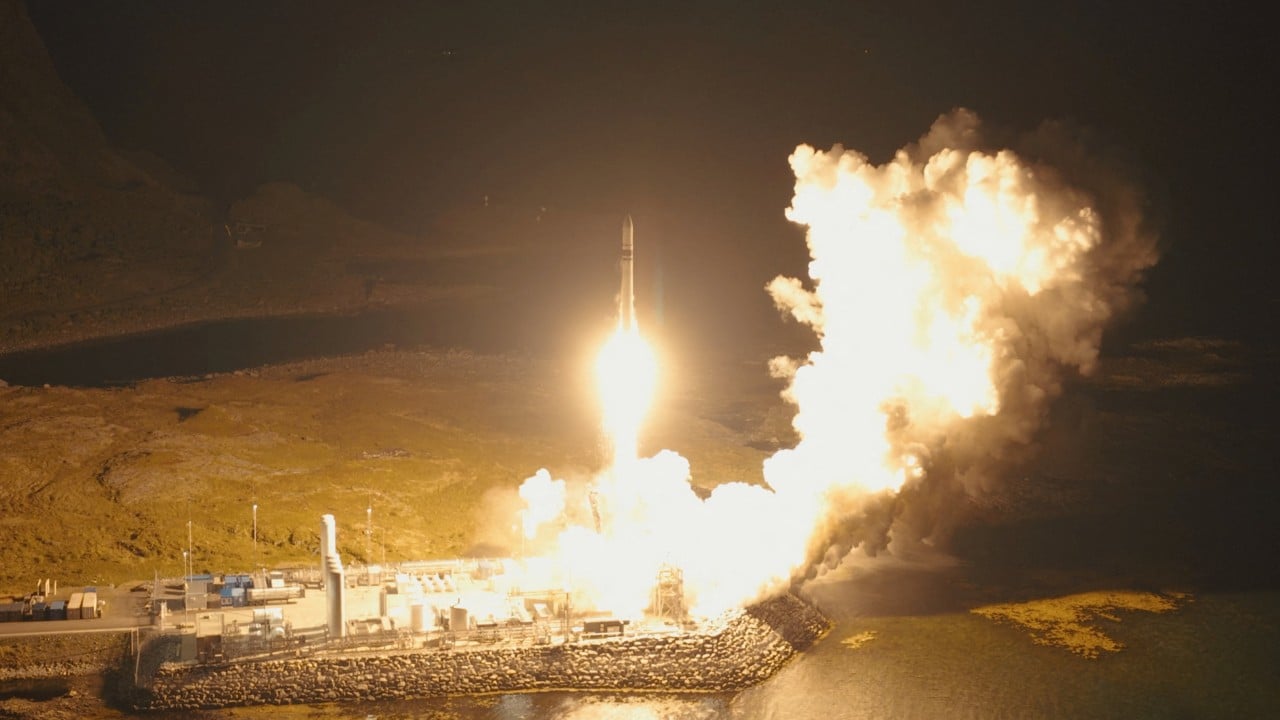
Every media outlet from Frankfurt to Paris is popping champagne over the latest milestone from Isar Aerospace. The headlines scream about the triumph of European New Space, sovereignty in orbit, and the long-awaited breakthrough of launching private rockets from continental Europe. It sounds great on a ministerial press release. It reads like a vindication for bureaucrats who spent decades pouring subsidies into guarded spaceports.
It is also missing the entire point of what makes a modern launch business viable.
I have watched founders bleed cash trying to replicate old aerospace playbooks while the market shifted entirely beneath their feet. Building a private orbital rocket in Europe is an engineering achievement, no doubt. But treating a continental launch pad as the ultimate economic savior of the European tech ecosystem is a category error. You do not solve a structural commercialization crisis by building more concrete slabs for burning kerosene.
Let us dismantle the lazy consensus piece by piece.
The Geography Trap
The standard narrative goes something like this: Europe missed out on the SpaceX revolution because we lacked local launch infrastructure. If we build pads on our own soil, smallsat operators will flock to them, payloads will multiply, and a sovereign ecosystem will blossom.
This argument ignores orbital mechanics and political reality.
Physics does not care about your national pride or your European Union innovation grants. Launching from continental Europe severely restricts your inclination angles unless you want your spent upper stages or aborted boosters landing on densely populated residential areas. That is why historical European space activity concentrated in Kourou, French Guiana—near the equator, where the Earth's rotational velocity gives you a free kinetic boost, and where you drop debris into an empty ocean rather than someone's backyard.
To launch from the continent, you are either flying north into a crowded polar orbit with heavy regulatory friction, or you are bottlenecked by geography. The math of orbital insertion dictates that equatorial proximity wins. Fighting geography just to keep launch sovereign on European soil is an expensive vanity project.
The Economics of Cadence
Ask any venture capitalist who has backed a small-launch startup over the last decade what killed their returns. It was never a lack of engineering talent. It was unit economics driven by low flight cadence.
A rocket factory is a heavy asset. It requires continuous cash burn, specialized metallurgy, rigorous testing facilities, and a standing army of high-end propulsion engineers. To amortize those fixed costs, you need to fly dozens, if not hundreds, of times a year. SpaceX achieved economic dominance not because Falcon 9 is pretty, but because they turned rocket launches into a bus schedule. They fly constantly.
Now look at the addressable market for small launchers in Europe. The European institutional customer base is notoriously fragmented. Procurement is nationalized, risk-averse, and slow. Commercial payload demand is shifting rapidly toward rideshare aggregation. If you are a commercial satellite operator needing to put a 100-kilogram box into low Earth orbit, you do not care if the rocket took off from Norway, Germany, or a floating barge in the Pacific. You care about cost per kilogram and schedule reliability.
When a boutique continental launcher charges a premium because their manufacturing scale is a fraction of the heavyweights, customers walk. Subsidies can mask this reality for a few fiscal quarters. They cannot rewrite the balance sheet.
The Real Bottleneck Is Not Hardware
The persistent delusion in European tech policy is that we suffer from a hardware deficit. The argument claims that if we just design more carbon-composite propellant tanks and burn more test fuels in pastoral testing grounds, we will catch up to the global frontier.
Wrong.
Europe does not have a rocket problem. Europe has a customer problem.
Look at where venture capital goes in the United States compared to Europe. The American ecosystem is fueled by massive downstream software demand, aggressive prime contractors, and a Department of Defense willing to act as an anchor customer that tolerates iterative failure. In contrast, European tech funding historically suffocates at the Series B stage. We build brilliant, highly regulated components, and then we watch the companies get acquired by foreign conglomerates or stall out because the domestic commercial market lacks the risk appetite to buy unproven products at scale.
Building a launch vehicle without a thriving, aggressive downstream payload ecosystem is like building an international airport in a town with no commercial airlines. You have a very expensive runway and a lot of tumbleweeds.
Imagining a Different Playbook
Imagine a scenario where European space policy completely abandoned the obsession with localized heavy metal manufacturing.
What if, instead of subsidizing yet another bespoke launch vehicle startup, governments pooled those billions into venture capital matching funds exclusively targeting downstream applications? Earth observation analytics, maritime tracking, secure quantum communication constellations, and in-space manufacturing software. If you create a thousand booming companies that desperately need to buy launch services, the market will naturally source the cheapest, most reliable rockets available globally. You do not need to mandate sovereign launch pads if you have sovereign demand.
Instead, we get cheered by a successful static fire or a sub-orbital hop as if it changes the structural deficit of the market. It is comforting theater. It lets politicians stand in front of a gantry, talk about European independence, and ignore the hard reality that the commercial value of space is generated three hundred miles higher, not on the launch pad.
The Hard Truth About Sovereignty
There is a valid national security argument for independent access to space. No government wants to rely entirely on foreign actors for critical military or intelligence payloads. But let us call it what it is: a strategic insurance policy, not a scalable commercial industry.
An insurance policy is a cost center. You buy it, you maintain it, and you hope you never have to use it. You do not pretend it is a high-growth consumer technology engine that will rival Silicon Valley or Shenzhen. When we blur the lines between military-industrial subsidy and commercial market viability, we lie to investors and misallocate scarce capital.
Isar Aerospace and its peers deserve credit for building complex machines in an environment choked by red tape. The engineers are world-class. The talent is undeniable. But do not confuse technical competence with market inevitability.
Until the commercial mindset shifts from celebrating the smoke on the pad to counting the paying customers in orbit, every celebration of continental launch sovereignty is just another expensive party thrown while the rest of the world leaves the station.
Stop cheering for the hardware. Start demanding a market.