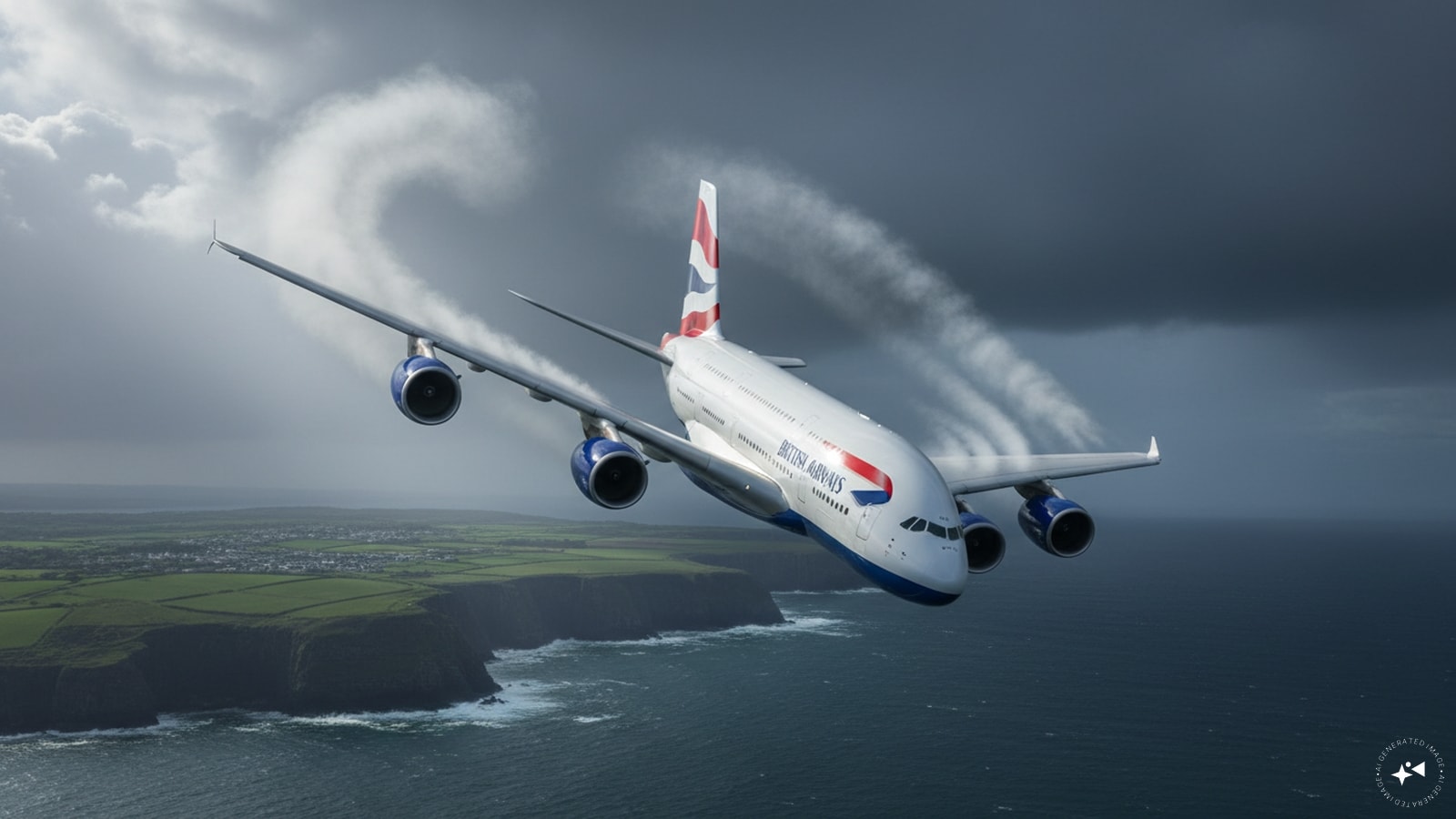
The headlines scream about terror in the skies. A British Airways flight climbs out of London, hits an unexpected hiccup, and plunges twenty-seven thousand feet in a matter of minutes. The public loses its collective mind. Social media fills with panicked reactions from people who think a rapid descent equals an imminent fiery grave. Passengers step off the tarmac kissing the concrete and swearing off commercial aviation forever.
It is mass hysteria born from complete aviation illiteracy.
I have spent decades watching armchair experts panic over the exact mechanisms designed to keep them alive. When a cabin loses pressure at cruising altitude, the aircraft does not fall out of the sky like a wounded duck. It executes a rapid descent. That twenty-seven thousand-foot drop is not a symptom of a catastrophe. It is the immediate, textbook cure for hypoxia.
Let us dismantle the lazy narrative that a sudden altitude loss means the pilots are wrestling with a dying machine.
The Physics of Staying Alive at Thirty Five Thousand Feet
Commercial airliners cruise in the stratosphere because the air is thin, efficiency is high, and weather is mostly bypassed. But the air up there contains nowhere near enough oxygen to sustain human consciousness. Your body requires atmospheric pressure to force oxygen across your alveolar membranes. Strip that pressure away, and you have roughly fifteen seconds of useful consciousness before you turn into a confused spectator watching your own blackout.
When a pressure hull compromise occurs, the altimeter unwinds for a reason. The flight crew drops that tube of metal down to ten thousand feet as fast as gravity and structural integrity allow. Ten thousand feet is the magic threshold where human lungs can pull breathable oxygen straight from the ambient air without a mask.
Think of it this way. If you are driving a car and your tire blows out on a busy interstate, you do not keep barreling forward at eighty miles per hour while you figure out the jack. You pull onto the shoulder. You decelerate. A rapid descent is simply an airliner pulling onto the shoulder of the sky.
Yet every time an airline flight dips from the upper flight levels down to breathable altitudes, the media treats it like an existential crisis. Passengers hyperventilate into yellow plastic cups, convinced the end is near, completely oblivious to the fact that the drop is saving their lives from hypoxia-induced brain damage.
The Myth of the Structural Failure Obsession
People love a good disaster movie. The cultural imagination is permanently warped by Hollywood tropes where a loud bang means the wings are about to snap off and the fuselage is peeling away like a tin can.
Modern commercial jets are engineering masterpieces designed to withstand loads that would liquefy human tissue long before the airframe yields. When an aircraft drops rapidly, pilots are managing kinetic and potential energy within strict operational limits. The descent profile is calculated to shed altitude without overstressing the airframe or exceeding maximum operating speeds.
I have watched nervous flyers stare at the wing flaps during a steep descent as if every rivet is about to pop. They confuse the roar of the engines rolling back and speed brakes deploying with structural disintegration. It is sheer projection. You are feeling deceleration and aerodynamic drag, not structural failure.
The real danger in a decompression event is never the altitude drop. The danger is human panic and delayed execution. The flight deck crew trains for this scenario until it is burned into their muscle memory. They do not panic. They put on their oxygen masks, verify the checklist, disconnect the autothrottle, deploy the speed brakes, and pitch the nose down.
While the captain is flying the airplane with absolute precision, the passengers in the back are drafting emotional goodbye notes on their smartphones because the plane went down a few thousand feet.
The Certification Standard Nobody Talks About
Let us talk about regulatory standards. The Federal Aviation Administration and the European Union Aviation Safety Agency do not guess when it comes to rapid descents. Every transport category aircraft must demonstrate its ability to clear emergency descent procedures under catastrophic failure conditions before a single paying passenger steps on board.
The design limits are brutal. Airframes are subjected to static load testing in massive warehouses where hydraulic rams bend wings upward until they snap—usually way past the point where any pilot could legally or physically push the aircraft in real life.
When a British Airways flight or any other commercial carrier drops thousands of feet, it is executing an automated or manual protocol that has been tested in simulators millions of times. The margin for error is razor-thin for the physics, but the engineering safety factor is astronomically high.
Stop treating routine safety procedures like catastrophic failures just because they feel violent to your inner ear.
The Real Threat Is Between Your Ears
The irony of modern air travel is that the safest mode of transportation in human history is being piloted through a storm of public ignorance. Millions of people board aluminum tubes every day while possessing zero understanding of how atmospheric pressure works, what an emergency descent actually looks like, or why yellow plastic cups drop from the ceiling.
When you fly, you are placing your life in the hands of pilots who train for engine failures, electrical fires, and rapid decompressions in full-motion simulators that replicate every terrifying variable short of actual fire. They do not care about your feelings. They care about physics, checklists, and the flight envelope.
The next time an airliner drops out of the sky to ten thousand feet, do not reach for your panic button. Check your oxygen mask, trust the math, and realize you are experiencing the most aggressively safety-obsessed industry on the planet doing its job.
If a rapid descent scares you that much, stay on the ground and see how you like highway statistics.