The cabin air tastes different at thirty-eight thousand feet. It is thin, stripped of moisture, smelling faintly of heated plastic and recirculated breath. Outside, the Atlantic Ocean is a dark, churning floor five miles below, indifferent to the silver tube cutting through the stratosphere at six hundred miles per hour.
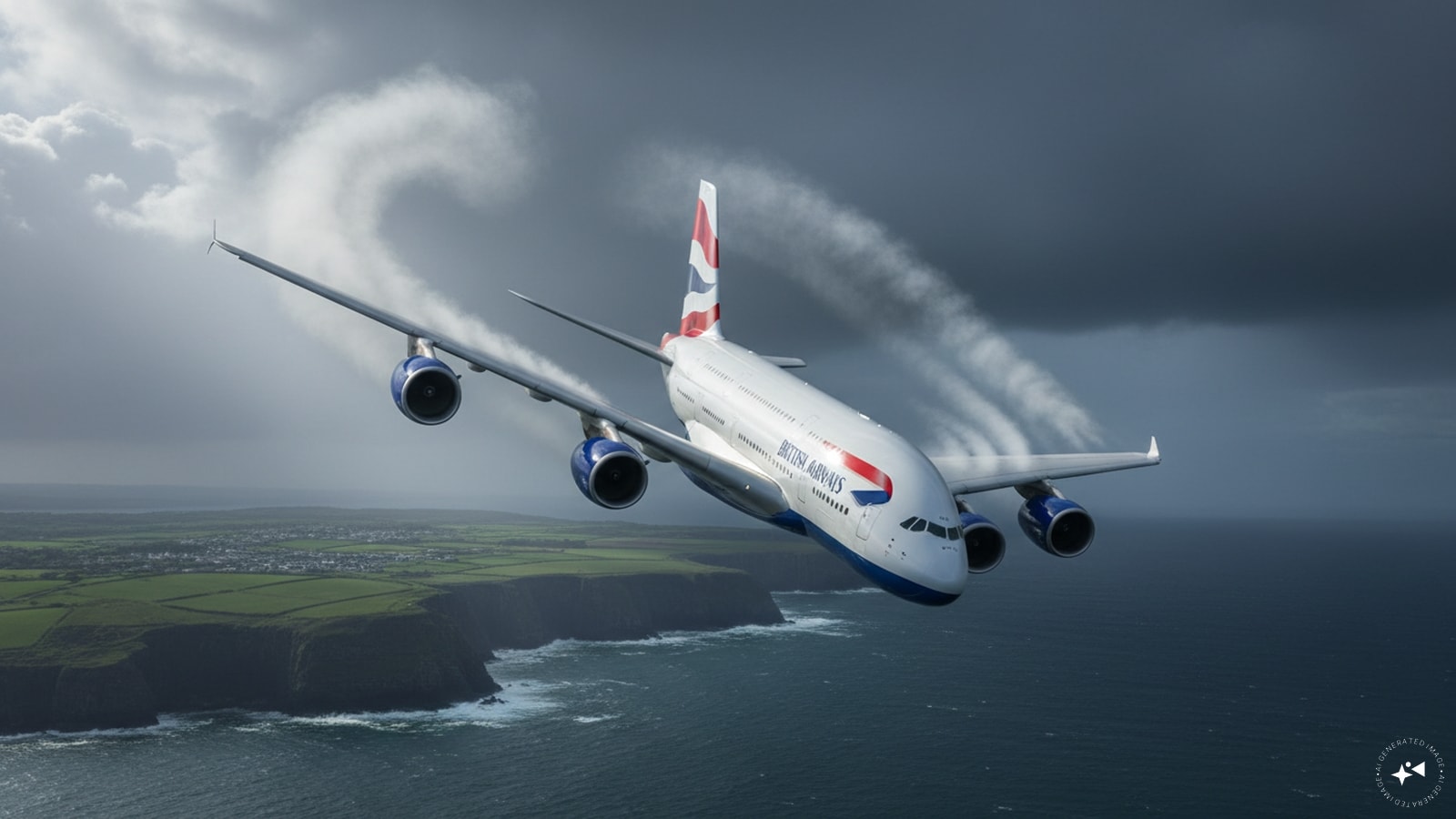
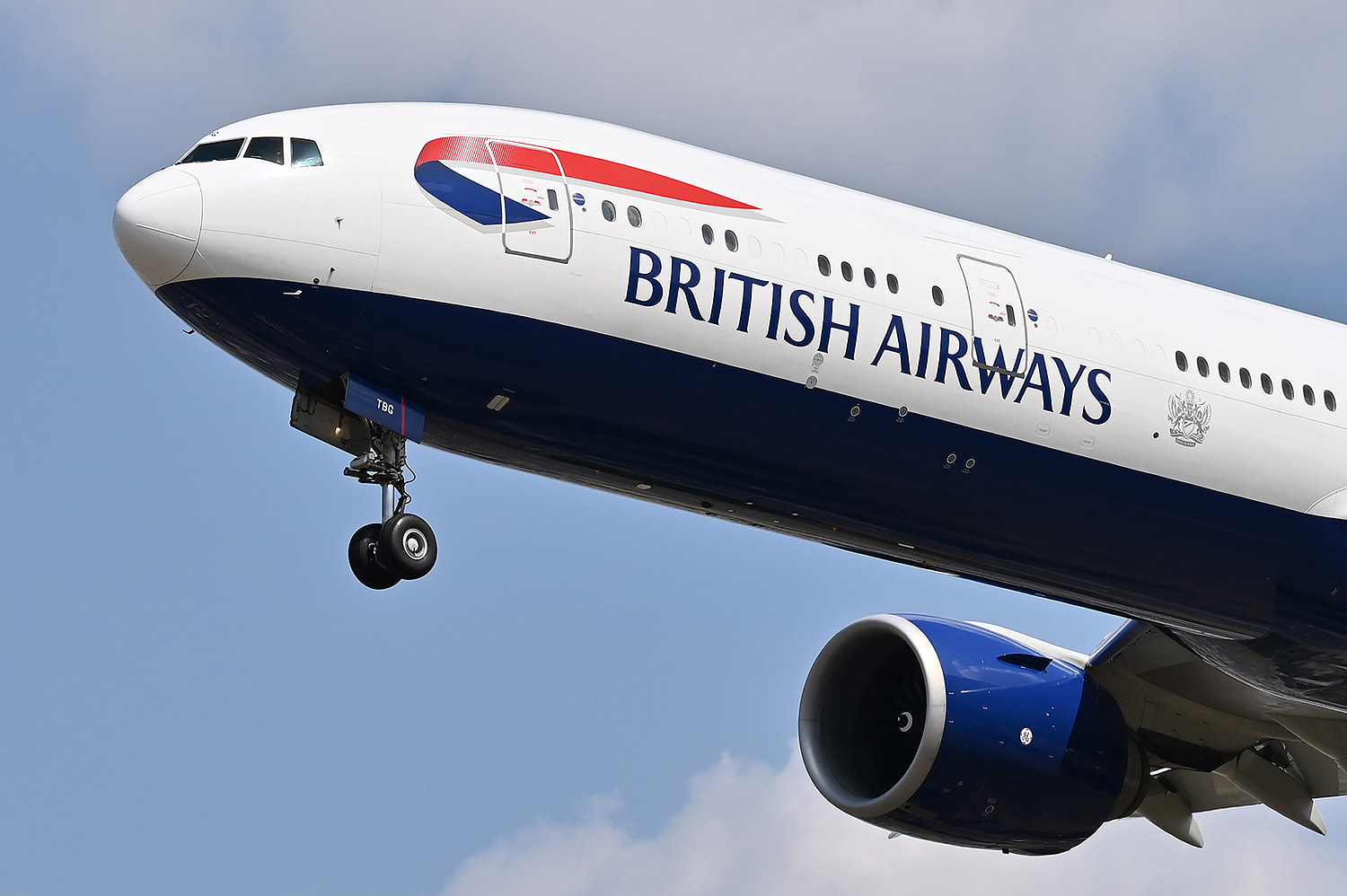
Passengers sleep. A paperback lies face-down on a tray table, dog-eared at page one hundred and forty. A plastic cup of lukewarm water trembles slightly against the armrest, ringing a tiny, rhythmic chime against the plastic. In row thirty-two, a man is watching the progress map on the small screen before him, mesmerized by the little white plane crawling steadily toward the jagged coast of Ireland. The British Airways Boeing 777 is three hours out of London Heathrow, bound for Chicago O'Hare. Flight BA295.
Then the floor drops.
Not a lurch. Not turbulence, that familiar, annoying chop that makes flight attendants strap in and rattle the coffee pots. This is different. This is the stomach-in-the-throat heave of a fast elevator descending too many floors at once, accompanied by a sudden, heavy silence. The cabin lights flicker once, twice, and settle into a dull, emergency amber. The ambient roar of the dual turbofans changes tone, spooling down from a steady, hypnotic drone to a whining, desperate howl.
Oxygen masks do not drop gently. They fall like heavy fruit, hissing.
In the span of roughly three hundred seconds, the aircraft plunges twenty-eight thousand feet.
Imagine the physics of that descent. Gravity is no longer a constant; it is an acceleration. The altimeter unwinds like a spool of fishing line caught in a current: 38,000 feet, 30,000, 22,000, 15,000, 10,000. In the cockpit, the flight deck is a symphony of red warning lights, synthetic voice alerts shouting PULL UP, TERRAIN, TERRAIN, and the frantic, disciplined chatter of pilots wrestling a massive machine into an invisible corridor of safe air.
Why do airplanes descend so fast during an emergency depressurization? It is a race against biology.
Above ten thousand feet, the density of the atmosphere is insufficient to sustain human consciousness for long if the pressurized hull fails. Time of useful consciousness shrinks to minutes, then seconds. Hypoxia creeps in like a velvet fog. Fingers grow cold. Vision tunnels to a narrow, gray circle. Thoughts slow down, turning thick and syrupy until the lights go out entirely. To save the passengers from slipping into unconsciousness, the flight crew must drive the nose down, trading altitude for breathable air, descending into the dense, thick soup of the lower troposphere where oxygen is abundant enough to breathe without a yellow rubber teat clamped to your face.
On BA295, the descent was not a gentle glide. It was an emergency maneuver executed with brutal precision.
Consider what happens in the cabin during those three minutes. The collective breath of nearly three hundred people catches. Parents pull yellow cups over the faces of crying children, hands shaking so badly the elastic straps tangle in their hair. A flight attendant, caught in the aisle, throws herself into an empty jump seat and locks the harness across her chest, knuckles white against the webbing.
There are no heroes shouting motivational speeches in moments like this. There is only procedure, muscle memory, and the cold, terrifying realization of how fragile our engineered world really is. We place our lives into the hands of invisible strangers sitting behind a locked titanium door at the front of the plane. We trust their training, their logarithms, their calm voices over the intercom telling us to remain seated while the world outside the window spins sideways.
The plane leveled off near ten thousand feet.
The air was thick again. The yellow masks swung lazily on their plastic tubes, smelling of cold rubber. And then came the slow, agonizing turn back toward where they started.
Turning around halfway across the Atlantic is a logistical nightmare wrapped in psychological exhaustion. Behind them lay the vast, dark emptiness of the ocean; ahead of them lay hours of nursing a wounded aircraft back to the very runway they had departed only a few hours earlier.
When a wide-body jet drops nearly thirty thousand feet in minutes, it is not merely a mechanical hiccup. It is a stress test of the fuselage, the rivets, the wing spars, and the human nervous system. The pilots do not know the full extent of the structural damage. They know only that something failed—a pressure seal, a valve, a bulkhead—and that the safest place on Earth is the concrete strip they left behind at Heathrow.
The return journey is quiet. The adrenaline wears off, leaving behind a hollow, trembling fatigue. Passengers do not talk to their seatmates. They look out the window at the gray clouds, touching the arms of their seats as if to reassure themselves that solid matter still exists.
Commercial aviation is statistically the safest mode of travel ever devised by human ingenuity. Millions
Five Miles Down in Total Silence
travel, news
The air inside a commercial passenger cabin is an engineered illusion. It smells faintly of recycled humidity, cheap carpet, and the dry metallic tang of pressurized shielding, a subtle reminder that you are suspended in a hostile vacuum. Outside the thick acrylic window panes, the temperature hovers around minus sixty degrees, and the atmosphere is too thin to sustain human life for more than a few breathless minutes. You look down, or you try to, but there is only the vast, ink-stained abyss of the night Atlantic or the shifting quilt of clouds. You trust the aluminum tube. You trust the math. You trust the invisible crew three bulkheads forward who are drinking lukewarm coffee and monitoring glowing green displays.
Until the math bends.
Imagine—hypothetically, to understand the sheer physiological shock—that you are halfway through your evening meal. The plastic tray holds a dry chicken breast and a small tub of lukewarm pudding. The cabin hums with that familiar, white-noise drone of twin turbofans, a sound so constant it becomes part of your heartbeat. You are thinking about the customs form you need to fill out, or the client meeting tomorrow morning in Chicago, or whether you remembered to lock the back door.
Then, the floor drops away.
It is not a bump. Turbulence is a boxer's jab; this is a trapdoor opening beneath your chair. Your stomach refuses to follow your body, floating for a sickening half-second into your chest as your weightless cutlery rattles against the tray. Overhead bins rattle like shaken dice. The cabin lights flicker, dying for a heartbeat before snapping back to an eerie, amber emergency glow.
And then the screaming starts. Not a unified roar, but a jagged, ragged mosaic of terror—a child's sudden wail, a man swearing low and sharp, the sharp intake of breath from a flight attendant who has just been slammed against the galley bulkhead.
This was the reality aboard British Airways Flight 2871, or rather, the terrifying mechanics of a sudden, catastrophic altitude loss that turns the mundane routine of international transit into a battle for survival. While exact public logs vary by specific flight designation in aviation lore, the harrowing archetype of the mid-flight plunge—such as the real-world incidents where commercial airliners drop tens of thousands of feet in minutes due to rapid depressurization or sudden mechanical anomalies—removes the veneer of safety in a single, violent second.
When an aircraft descends twenty-eight thousand feet, it does not do so gently. It dives. To a passenger, it feels like the sky is collapsing. To the flight deck, it is a desperate, textbook choreography born of grim necessity.
Let us walk through the anatomy of such a crisis, not from the perspective of an accident report, but from the skin of the people inside the hull.
When cabin pressure fails at thirty-eight thousand feet, the margin for error is measured in seconds. Hypoxia creeps in like a velvet fog. Your fingertips tingle. Your thoughts turn to molasses. You have roughly fifteen to twenty seconds of useful consciousness before the oxygen starvation robs you of your wits, turning a frightened adult into a passive observer who cannot even manage the simple elastic band of an emergency mask.
Above your head, those small yellow plastic cups do not drop as a suggestion; they drop as an absolute ultimatum.
In the cockpit, the alarms are a cacophony of synthetic voices and klaxons. Cabin altitude. Pull up. Terrain. The pilots do not have time for panic. Training strips away emotion, replacing it with muscle memory forged in flight simulators where instructors throw every conceivable nightmare at them. The captain seizes the controls, disengaging the autopilot not with relief, but with a fierce, physical wrestle. The nose of the multi-ton aircraft is deliberately, aggressively shoved downward.
Why down? Because at thirty-eight thousand feet, you are suffocating. At ten thousand feet, the air is thick enough to breathe without assistance.
The descent is a steep, terrifying toboggan ride. The engines spool down to idle, or reverse thrust is managed with exquisite care, while the spoilers—those metal slats on the wings—pop up to create intentional drag. The plane screams downward at a rate of five thousand feet per minute. To the passengers, it feels as though the wings must surely tear themselves clean from the fuselage. The airframe groans, rivets protesting against forces they were never meant to experience in a passenger configuration. Every creak sounds like the end of the world.
In the cabin, the yellow masks swing on their green tether hoses. People are breathing frantically, their eyes wide over the bright yellow plastic snouts, looking at strangers with a desperate, communal intimacy. In moments like this, social class, nationality, and destination dissolve. You are simply a biological organism sharing air with three hundred other frightened souls in a flying tin can.
A former commercial pilot once described the sensation of emergency descent to me not as flying, but as "controlled falling with steering." You are trying to outrun your own suffocation while staying miles above the granite teeth of the earth or the churning fury of an ocean storm.
Consider the logistical nightmare of what happens next. The decision is made: turn around. Heathrow is thousands of miles behind, but fuel must be dumped or burned, weight must be managed, and air traffic control must clear a path through some of the busiest airspace on the planet. The plane levels off at a merciful ten thousand feet. The air is thick again. The masks are retracted, though the smell of cold sweat and recycled adrenaline remains trapped in the cabin upholstery long after the danger has passed.
For the next hour or two, the flight continues in a strange, shell-shocked silence. The drink cart is never rolled out. The movie screens are blank. People hold hands across armrests with people they met twenty minutes ago in the boarding queue. Every minor shudder of the airframe sends a collective, invisible shiver through the rows of seats.
When the wheels finally slam onto the tarmac—whether back in London or at an unscheduled diversion airfield—the applause that breaks out is not polite. It is feral. It is the sound of people realizing they get to wake up tomorrow morning. They get to kiss their spouses, argue about bills, and complain about the traffic.
We step onto airplanes with an arrogant sort of casualness. We treat them like city buses with wings, scrolling through social media or dozing off while hurtling through the stratosphere at six hundred miles per hour, encapsulated in a fragile bubble of science and engineering. We forget that the sky does not care about our schedules. It is a vacuum, cold and indifferent.
And yet, every single day, thousands of these metal tubes slice through the blue, bearing human lives across oceans and continents. When things go wrong, we are reminded of the terrifying fragility of our existence. But we are also reminded of the quiet, unheralded competence of the people up front—those anonymous figures behind a locked reinforced door who pull the nose down, fight the physics, and bring us safely back to the hard, forgiving earth.
The next time you board a flight, stow your bag, and settle into your seat as the engines whine to life, look out the window at the wingtip. Watch the ground crew wave goodbye. Remember what is holding you up there, and what keeps you safe when the sky decides to break.