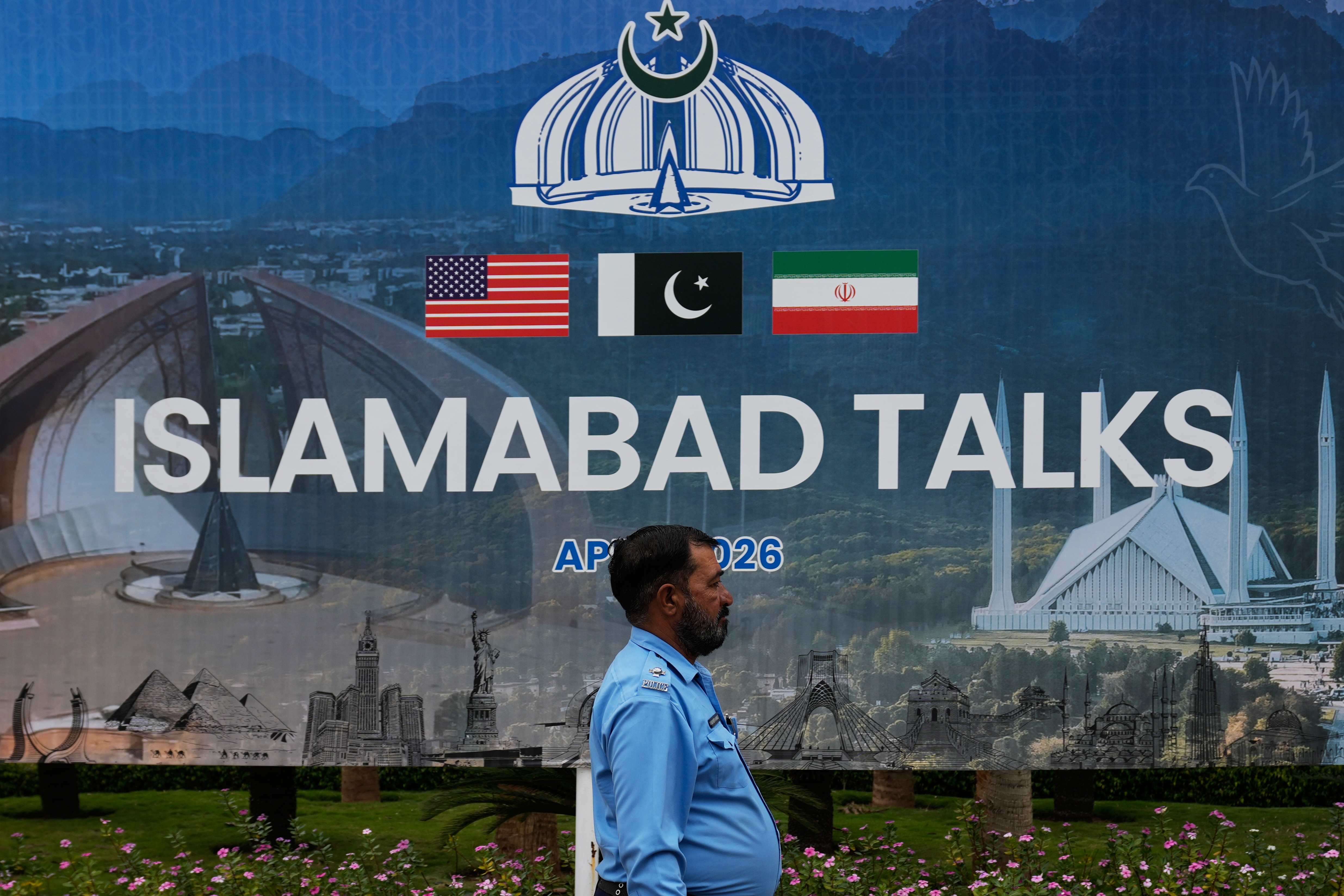
The machinery of global diplomacy is currently grinding toward a high-stakes face-off between Donald Trump and Xi Jinping, but the veneer of a "grand bargain" is thinner than most analysts care to admit. While financial markets obsess over the potential for a new trade ceasefire, the underlying reality is a calculated game of brinkmanship where both sides are playing to domestic galleries rather than seeking genuine stability. The relationship has moved beyond simple competition into a cycle of structural confrontation that a single meeting cannot resolve.
Expectations for this summit are being inflated by a desperate need for economic predictability. Beijing faces a mounting debt crisis and a stalling property market, making a reprieve from aggressive tariffs a strategic necessity. Washington, meanwhile, is balancing a desire to protect domestic manufacturing with the risk of sparking a renewed inflationary spike. This isn't a "reset." It is a tactical pause. If you liked this article, you might want to read: this related article.
The Tariff Trap and the Art of the Bluff
The primary engine of the current friction remains the threat of a universal baseline tariff. Trump has signaled a willingness to use trade barriers not just as an economic tool, but as a geopolitical cudgel to force concessions on everything from fentanyl precursors to military posturing in the South China Sea. However, the internal logic of this strategy assumes that China has no choice but to capitulate.
That assumption is dangerous. For another angle on this story, refer to the latest update from NPR.
China has spent the last four years diversifying its supply chains and fortifying its internal markets. While a 60% tariff on Chinese goods would be a massive blow to their export sector, Beijing has developed a sophisticated playbook for retaliation. They can weaponize their dominance in rare earth minerals—essential for everything from EVs to fighter jets—or allow the yuan to depreciate, effectively neutralizing the impact of the tariffs at the cost of global currency stability.
The "win-win" rhetoric of previous decades is dead. In its place is a zero-sum calculation where any gain for one side is viewed as an existential threat to the other. When these two leaders sit across from each other, they aren't looking for common ground. They are looking for a way to look strong while avoiding a total systemic collapse.
Institutional Skepticism and the UN Battleground
While the leaders grab the headlines, a more insidious conflict is playing out within the halls of international institutions like the United Nations. Washington has grown increasingly vocal about what it perceives as Chinese "manipulation" of UN agencies. This isn't just about voting blocs; it’s about who defines the rules of the road for the next century.
Beijing has been remarkably successful at installing its nationals in leadership positions across technical standards bodies. These are the quiet, bureaucratic corners of the UN that decide how 6G internet will work, how maritime law is interpreted, and how human rights are defined in a digital context. By the time a policy reaches a General Assembly vote, the technical foundation has often already been tilted in China’s favor.
This institutional capture is a primary driver of the hawkish turn in US policy. There is a growing consensus in DC that the post-war international order is being hollowed out from the inside. This makes the upcoming summit even more treacherous. How do you negotiate a trade deal with a partner you believe is fundamentally rewriting the global rulebook to suit an authoritarian model?
Comedy as a Subversive Metric
In an era of tightening censorship, stand-up comedy has emerged as an unlikely barometer for the health of Chinese civil society and its relationship with the West. The recent crackdowns on Chinese comedians—both at home and abroad—reveal a government that is increasingly hypersensitive to any narrative it cannot control.
When a comedian in Shanghai makes a joke that tangentially references the military or the party leadership, and the result is a multi-million dollar fine or a jail sentence, it sends a clear signal to the world: the space for cultural exchange is shrinking. This cultural cooling matters because it mirrors the economic decoupling. For decades, the "people-to-people" exchange was the safety valve of US-China relations. If that valve is welded shut by paranoia, the risk of miscalculation during a military or diplomatic crisis increases exponentially.
The crackdown on humor isn't just a human rights issue; it’s a data point for risk analysts. It indicates a leadership that values absolute internal stability over the "soft power" benefits of a vibrant, open culture. For Western businesses operating in China, this is a warning that the "Golden Era" of integration is over.
The Silicon Curtain
The most significant battleground of this decade isn't the South China Sea; it’s the semiconductor fab. The US strategy of "small yard, high fence" has evolved into a sprawling industrial policy aimed at cutting China off from high-end AI chips. This isn't just about military parity. It’s about who controls the computational infrastructure of the future global economy.
Beijing is pouring hundreds of billions of dollars into its "Big Fund" to achieve chip self-sufficiency. They are currently years behind, but history suggests that when the Chinese state identifies a singular strategic goal, they eventually close the gap through a mix of massive subsidies, domestic innovation, and industrial espionage.
The summit will likely see a performative agreement on "AI safety" or "cooperation on climate change." Don't be fooled. Beneath the surface, both nations are racing to build a tech stack that is entirely independent of the other. We are witnessing the birth of a bifurcated internet and a divided technological world.
The Debt Ceiling of Diplomacy
One factor that rarely makes the front page is the role of the US dollar. China remains one of the largest holders of US Treasury bonds, even as it tries to reduce its exposure. This creates a "financial suicide pact." If China dumps its holdings to tank the US economy, it devalues its own assets and destroys its largest market. If the US freezes Chinese assets—as it did with Russia—it signals the end of the dollar as a safe-haven currency.
This mutual vulnerability is the only thing keeping the relationship from a total break. However, the margin for error is getting smaller. As the US moves toward a more protectionist stance, the incentives for China to remain tethered to the dollar diminish.
The real danger isn't a planned war; it’s a financial or military accident that neither side can back down from without losing face. Domestic politics in both countries have become so nationalistic that compromise is increasingly seen as a form of treason. Trump needs to look like the ultimate dealmaker who put "America First," while Xi needs to project the image of a leader who finally ended the "century of humiliation" and stood up to Western hegemony.
Reality Check for the Private Sector
For CEOs and investors, the takeaway from the upcoming summitry should be one of extreme caution. Any "breakthrough" announced to the press will likely be a superficial agreement on low-stakes issues. The fundamental friction points—Taiwan, technology transfer, and the future of the liberal international order—are non-negotiable for both sides.
Supply chain "de-risking" is no longer a suggestion; it is a fiduciary duty. Companies that rely heavily on the Chinese market or manufacturing base are essentially operating in a war zone without a helmet. The political climate in Washington is now bipartisan in its distrust of Beijing. Even if a deal is struck tomorrow, the underlying legislative and regulatory pressure on China-linked businesses will continue to mount.
The era of the "global" corporation is being replaced by the era of the "aligned" corporation. You are either in the Western bloc or you are in the China-centric bloc. Trying to sit on the fence is becoming an increasingly expensive and dangerous position.
The Taiwan Shadow
Every discussion about US-China relations eventually hits the same wall: Taiwan. For Xi, "reunification" is a cornerstone of his historical legacy. For the US, Taiwan is a critical democratic partner and a vital link in the first island chain. It is also the home of TSMC, the world’s most important company.
The summit will likely produce the usual boilerplate language about the "One China Policy" and the "importance of peace and stability." But the military reality tells a different story. China is rapidly modernizing its navy and air force specifically for a Taiwan contingency, while the US is scrambling to harden its bases in the Pacific and arm the island to the teeth.
No amount of trade talk can erase the fact that the two largest powers on earth are actively preparing for a kinetic conflict over a piece of territory the size of Maryland. That is the ghost at the table during every summit. It makes every other agreement feel temporary and fragile.
A New Era of Tactical Instability
The goal of the next meeting isn't to fix the relationship. That ship has sailed. The goal is to establish a set of "guardrails" that prevent a full-scale catastrophe while allowing both sides to continue their systemic competition. We are entering a period of tactical instability, where the only constant is the friction itself.
The "7 reads" or "top takeaways" from mainstream media often miss the forest for the trees. They focus on the tone of the press conference or the specific wording of a joint statement. In reality, the most important developments are the ones that happen in the shadows: the quiet movement of capital out of Chinese tech, the secret testing of new hypersonic missiles, and the slow, grinding reorganization of global trade routes.
Success for this summit shouldn't be measured by the number of deals signed. It should be measured by whether both sides walk away with a clearer understanding of the other’s "red lines." In a world where total trust is impossible, the best we can hope for is a well-managed mutual distrust.
The real work isn't happening in the meeting room. It’s happening in the factories of Vietnam and Mexico, the research labs of Silicon Valley and Shenzhen, and the command centers of the Indo-Pacific. The summit is merely the theater we use to convince ourselves we are still in control of the forces we have unleashed.
Stop looking for a peace treaty and start preparing for a long, cold, and incredibly expensive competition. The "Big Deal" is a myth. The reality is a permanent state of high-stakes navigation where the price of a single mistake is a global depression or worse.
Inventory your risks. Diversify your assets. Watch the technical standards, not the handshakes.