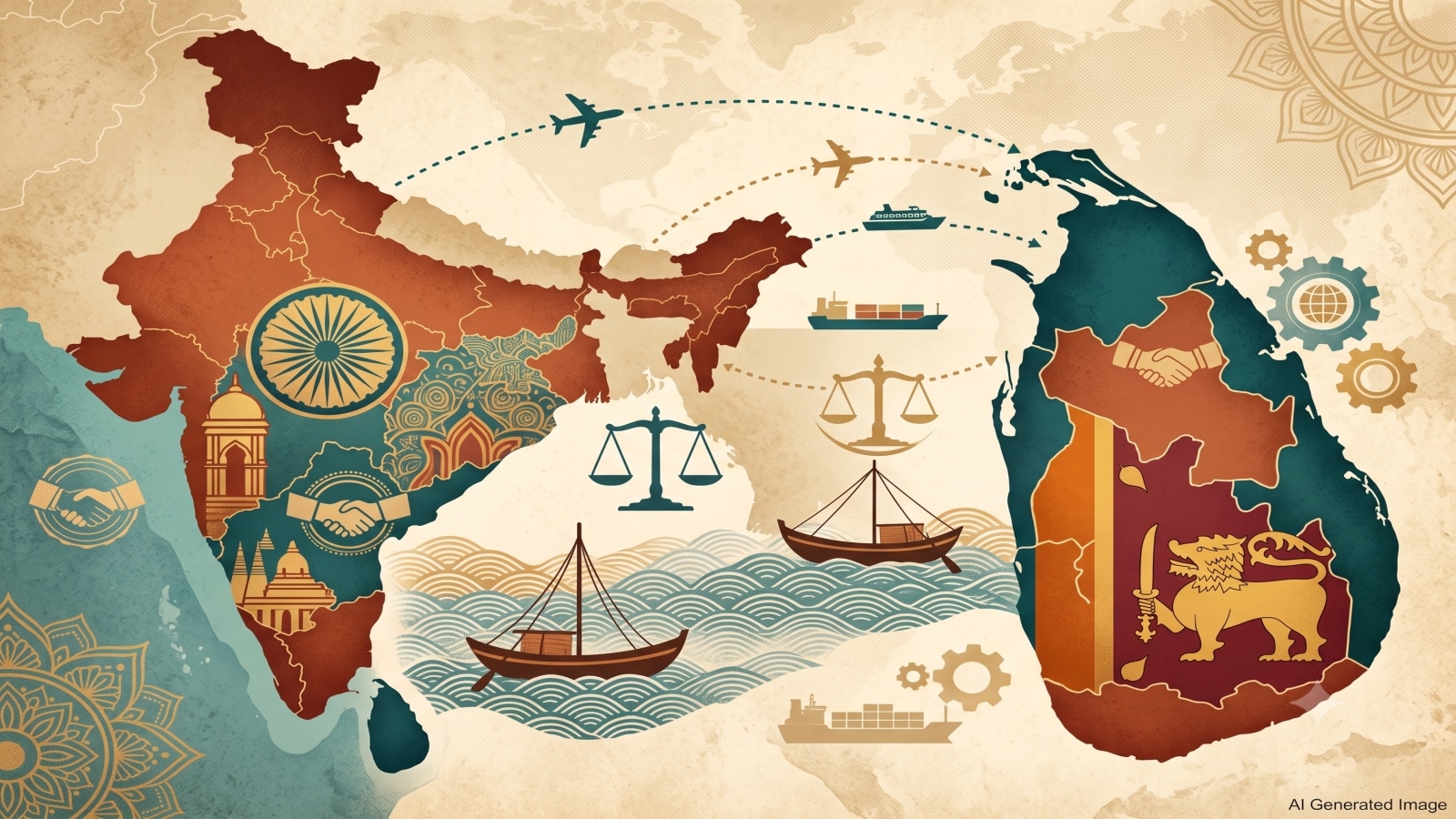
Diplomacy looks great on paper until you stand on the docks in Rameswaram. A parliamentary panel just urged India to deepen ties with Sri Lanka and finally resolve the long-running fishermen's disputes in the Palk Strait. It sounds sensible. Honestly, it sounds overdue. Yet anyone who has followed South Asian maritime politics over the past two decades knows that warm diplomatic communiqués rarely stop a coast guard patrol boat at three in the morning.
The core problem isn't a lack of goodwill in New Delhi or Colombo. It's a collision of livelihoods, depleted marine ecosystems, and a narrow stretch of water where borders mean everything to states and almost nothing to fish. When a parliamentary committee steps in to nudge the Ministry of External Affairs, they aren't just offering friendly advice—they're signaling that the current patchwork of emergency bailouts and high-level summits isn't holding the line.
What the Parliamentary Panel Actually Wants
Parliamentary standing committees on external affairs don't write their reports in a vacuum. When they urge the Indian government to deepen ties with Sri Lanka while resolving fishermen's disputes, they're looking at two interlocking realities. First, Sri Lanka's strategic geography in the Indian Ocean makes it irreplaceable for India's Neighborhood First policy. Second, recurring arrests of Indian fishermen and the seizure of their boats poison the political well in Tamil Nadu every few months.
You can't build a durable regional partnership when local headlines are dominated by impounded trawlers and grieving coastal families. The committee's push is basically a wake-up call to move beyond crisis management. Right now, the cycle is painfully predictable. Indian boats cross the International Maritime Boundary Line (IMBL), the Sri Lankan Navy arrests the crew and impounds the vessels, Tamil Nadu's Chief Minister writes an urgent letter to the Prime Minister, and diplomats scramble to negotiate releases.
That's not a policy. It's a treadmill.
The History Nobody Likes to Talk About
To understand why this issue refuses to die, you have to look back at 1974 and 1976. That's when India and Sri Lanka signed maritime boundary agreements that formally demarcated the Palk Bay and the Gulf of Mannar, including the ceding of Katchatheevu island to Sri Lanka. On maps, the lines looked clean. On the water, they sliced right through traditional fishing grounds that communities on both sides had shared for generations.
Then came the Sri Lankan civil war. For nearly thirty years, Sri Lankan Tamil fishermen in the north couldn't go out to sea because of naval restrictions and active conflict. Indian fishermen from Tamil Nadu filled that vacuum. With government subsidies encouraging modernization, Indian boat owners invested heavily in steel-hulled bottom trawlers.
When the war ended in 2009, northern Sri Lankan fishermen returned to their waters—only to find massive Indian trawlers scraping the seabed clean right off their coast. This is the single biggest misconception in mainstream Indian coverage of the dispute. Many people assume it's a fight between the Indian state and the Sri Lankan military. It's not. At its core, it's a bitter resource war between capital-intensive Indian trawler owners and small-scale, artisanal Tamil fishermen in northern Sri Lanka.
Why Bottom Trawling Is the Real Villain
If you talk to marine biologists or fisheries experts who have studied the Palk Bay, they'll tell you the same thing within five minutes. Bottom trawling is an ecological disaster in shallow waters.
The Palk Strait is narrow—at some points, less than 30 kilometers separate Dhanushkodi in Tamil Nadu from Talaimannar in Sri Lanka. Bottom trawlers drag heavy, weighted nets across the ocean floor, scooping up everything in their path. Juvenile fish, coral beds, breeding grounds, and sea grass all get wiped out in a single pass.
Because Indian trawlers have systematically depleted the catch on the Indian side of the IMBL, boat owners have little economic incentive to stay in their own waters. A single trawler costs tens of lakhs of rupees to build and maintain. Fuel alone eats up a massive chunk of every voyage. To break even, skippers push deeper into Sri Lankan waters where marine life had decades to recover during the civil war.
Sri Lanka banned bottom trawling outright in 2017. India hasn't enforced a comparable ban in Tamil Nadu, though both central and state governments have tried to incentivize a shift toward deep-sea fishing. The math simply hasn't worked out for the boat owners yet.
Deepening Ties Means Changing the Economics
So when the parliamentary panel talks about deepening India-Sri Lanka ties, what does that look like in practice? Over the past few years, New Delhi has poured billions of dollars into Sri Lanka—especially during Sri Lanka's catastrophic economic collapse in 2022, when India extended roughly $4 billion in credit lines, currency swaps, and humanitarian aid. From power grid connectivity and port infrastructure in Trincomalee to renewable energy projects, the macro-relationship is stronger than it has been in years.
Yet macro-diplomacy doesn't pay the crew of a seized trawler in Nagapattinam or Rameswaram. If India wants a permanent fix, the strategy has to hit three specific targets simultaneously.
1. Fixing the Deep-Sea Fishing Transition
India launched the Blue Revolution scheme and dedicated deep-sea fishing packages specifically to get Tamil Nadu fishermen off bottom trawlers and into long-liners and gillnetters capable of operating in the Exclusive Economic Zone (EEZ). On paper, the subsidies looked generous. In reality, uptake lagged because boats cost more than the subsidy caps, banks hesitated to finance high-risk vessels, and fishermen lacked training for multi-day deep-sea voyages.
The government needs to restructure those financing terms so boat owners aren't trapped in debt if they give up trawling. Without a profitable alternative on the Indian side, no diplomatic agreement will keep boats behind the boundary line.
2. Reviving Joint Working Groups With Teeth
India and Sri Lanka already have a Joint Working Group (JWG) on fisheries, alongside ministerial-level talks. The problem is that these meetings happen sporadically and rarely include actual fishermen's associations from both Jaffna and Tamil Nadu at the decision-making table.
When fishermen from Rameswaram and Jaffna met directly in the past, they actually came close to practical compromises—like phased reductions in trawling days per week. Bureaucrats killed that momentum by turning every meeting into a rigid debate over sovereignty and strict enforcement. Bringing community leaders back into a structured, quarterly bilateral mechanism would do far more than another round of formal diplomatic notes.
3. Addressing Boat Confiscation Policy
One of the sharpest friction points right now is Sri Lanka's practice of nationalizing or auctioning off impounded Indian boats even after releasing the crew. Losing a boat ruins a family financially for a generation. While Sri Lanka argues that returning boats simply puts them back in Sri Lankan waters a month later, seizing assets permanently guarantees political backlash in India.
A transparent, graduated penalty system—paired with verifiable GPS transponders funded by the Indian government on every registered fishing vessel—could give Colombo the assurance it needs without destroying Indian livelihoods overnight.
The Geopolitical Stakes in the Indian Ocean
India can't afford to let the Palk Bay dispute linger indefinitely. China's growing footprint in Sri Lankan ports and maritime research vessels has made New Delhi acutely sensitive to any bilateral friction with Colombo. Every time the fishermen issue flares up, it creates political space in Sri Lanka for critics who argue that India talks about regional brotherhood while ignoring Sri Lankan sovereignty and northern Tamil livelihoods.
At the same time, domestic politics in Tamil Nadu won't let New Delhi sweep the issue under the rug. Coastal constituencies hold real electoral weight, and state leaders across party lines consistently demand tough intervention whenever fishermen are detained.
The parliamentary panel's recommendation cuts right to the heart of this balancing act. India has the diplomatic leverage, the financial capacity, and the technical expertise to solve this. What it hasn't shown yet is the willingness to enforce painful transitions at home while negotiating realistic compromises abroad.
If you're tracking how this plays out over the coming months, watch three concrete indicators rather than official press releases. First, check whether the Ministry of Fisheries revises the unit-cost ceiling for deep-sea fishing vessels in Tamil Nadu—that tells you if New Delhi is serious about ending bottom trawling. Second, look for the installation rates of ISRO-developed two-way satellite transponders on Tamil Nadu boats, which alert crews before they cross the IMBL. Third, watch the outcomes of the next India-Sri Lanka Joint Working Group meeting to see if community representatives from Jaffna and Rameswaram are actually seated in the room. Until those three pieces move together, the Palk Strait will remain South Asia's most stubborn diplomatic flashpoint.