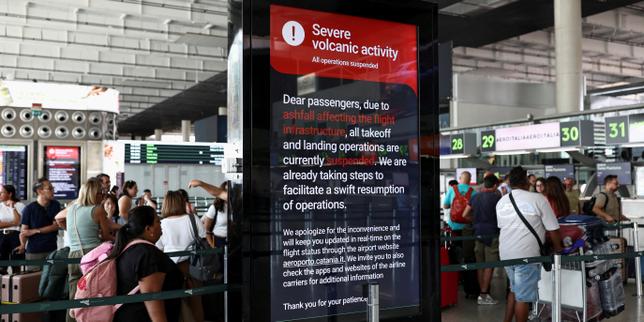
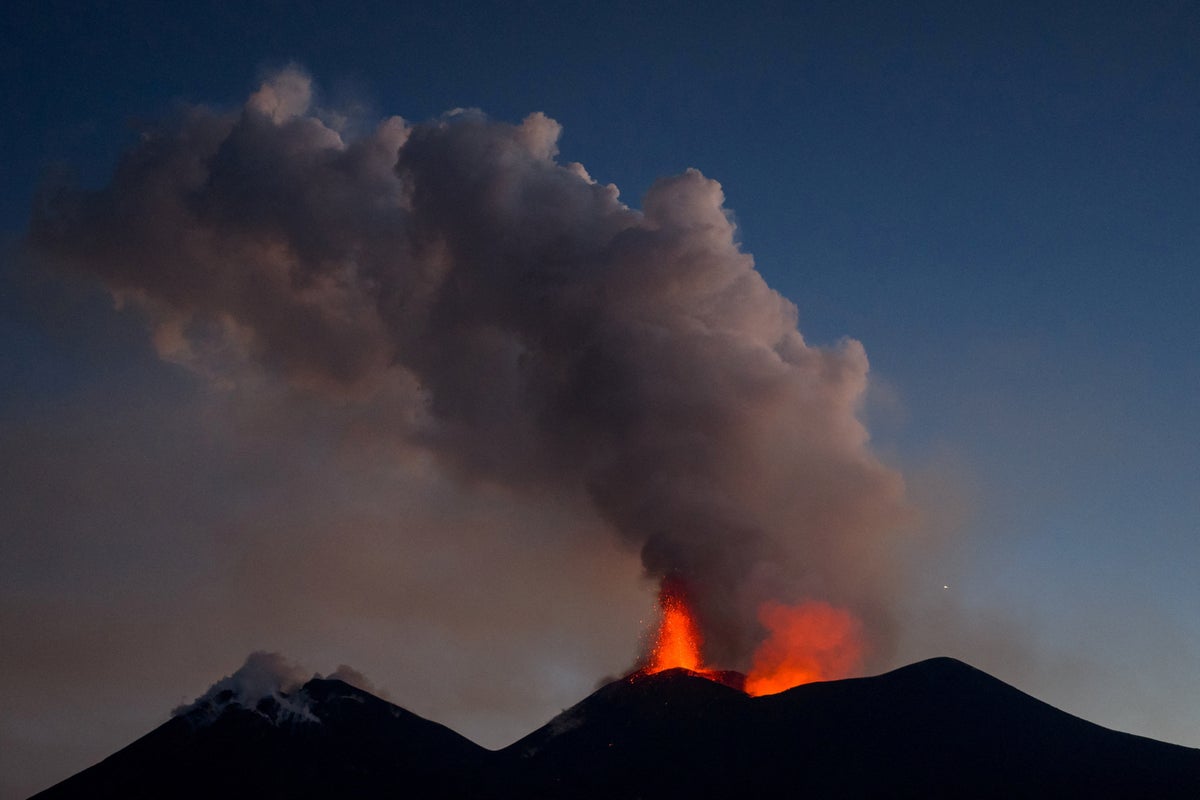
Flights at Catania-Fontanarossa Airport in Sicily remain suspended until early Saturday morning as a relentless stream of volcanic ash from Mount Etna continues to paralyze Europe's fifth-busiest aviation hub. This ongoing closure—the most severe disruption at the airport in over two decades—has grounded hundreds of flights and stranded thousands of travelers during the absolute peak of the summer holiday season.
Yet, looking at this simply as an act of nature misses the structural vulnerabilities that turned a routine geological event into an economic and logistical crisis.
The Anatomy of a Shutdown
Volcanic ash is an invisible, abrasive menace to aviation. Composed of pulverized rock, glass, and mineral crystals, it acts like a sandblaster inside a jet engine. The extreme operating temperatures inside a commercial turbine melt the silicate particles, which then resolidify on the cooler turbine blades, choking airflow and causing catastrophic engine stalls.
When Mount Etna shifted into a heightened state of continuous explosive activity in early August, prevailing northerly winds directed massive ash plumes directly over Catania's airspace. Società Aeroporto Catania (SAC), the airport operator, reported that over a third of the nearly 2,000 flights scheduled between August 6 and August 12 were outright canceled. Another 600 flights were forced to divert to alternative airports across Sicily, including Palermo, Trapani, and Comiso.
This is not a novel phenomenon. Etna is Europe's highest and most active volcano. Eruptions happen with regular frequency. But the sheer persistence of this particular cycle has exposed deep fault lines in how southern European regional infrastructure handles predictable natural hazards.
The Bottleneck of Island Logistics
When Catania goes dark, the strain immediately ripples across the entire island of Sicily.
Travelers diverted to Palermo found themselves three to four hours away by road from their original destinations. Ground transportation networks buckled instantly under the sudden influx. Rental car inventories vanished within hours, and taxi drivers capitalized on the distress by inflating rates—prompting consumer protection groups like Codacons to file formal price-gouging complaints with Italy's competition authority.
Trenitalia rushed to add six extra trains along the Palermo-Messina-Catania corridor to soak up the displaced passenger volume. But rail links across Sicily's mountainous terrain are antiquated, slow, and ill-equipped to substitute for wide-body and narrow-body commercial air traffic carrying tens of thousands of daily tourists during Ferragosto, the sacred heart of the Italian summer holiday.
The crisis also exposes the fragility of regional airport centralization. Sicily relies heavily on Catania-Fontanarossa to funnel international capital and tourism directly to the island's eastern coast. When that single gateway shuts down, the alternatives lack the gate capacity, ground handling staff, and baggage logistics to absorb the shock without severe operational degradation.
Regulatory and Industry Fallback Failures
Behind the scenes of crowded terminal floors where passengers have spent days sleeping on cardboard and playing cards to pass the time, a bitter blame game has erupted.
Italy's federation of travel agencies and tour operators, FIAVET, issued sharp rebukes regarding airline handling of cancellations and passenger assistance. While low-cost carriers like Ryanair, easyJet, and Wizz Air absorbed the brunt of the operational chaos, many passengers reported being left stranded without clear communication, accommodation support, or timely rebooking options.
Airlines routinely hide behind the "extraordinary circumstances" clause of European passenger rights regulations to evade paying cash compensation for weather and natural disasters. Legally, a volcanic eruption qualifies as force majeure. Practically, this exemption leaves passengers holding the financial bag for hotel rooms, inflated train tickets, and replacement flights.
Gian Mario Pilieri, president of FIAVET, noted that local operators cannot indefinitely bear the burden of structural shortcomings and management failures passed down by major carriers and infrastructure managers. Meanwhile, SAC itself is navigating a sensitive corporate transition, having launched the process to sell a controlling stake of at least 51 percent earlier this year. Private equity interest in regional airport infrastructure often prioritizes balance sheet optimization over capital-intensive redundancy planning.
The Looming Reality for Mediterranean Aviation
As climate shifts and geological activity remains unpredictable, the aviation sector faces a permanent adaptation problem.
Advanced Doppler radar and satellite monitoring have improved ash-cloud tracking, allowing for more precise, surgical airspace closures rather than blanket multi-day groundings. Yet, as volcanologists at the National Institute of Geophysics and Volcanology note, the deep, gas-rich magma driving Etna's recent pulses points to longer and more energetic eruptive phases ahead.
Aviation cannot treat Mount Etna as an unexpected emergency anymore. When the skies over eastern Sicily clear and flights resume following the Ferragosto weekend, the fundamental question will remain unaddressed: whether regional operators and European regulators will build true structural redundancy into Mediterranean travel corridors, or simply wait for the next plume to drop.