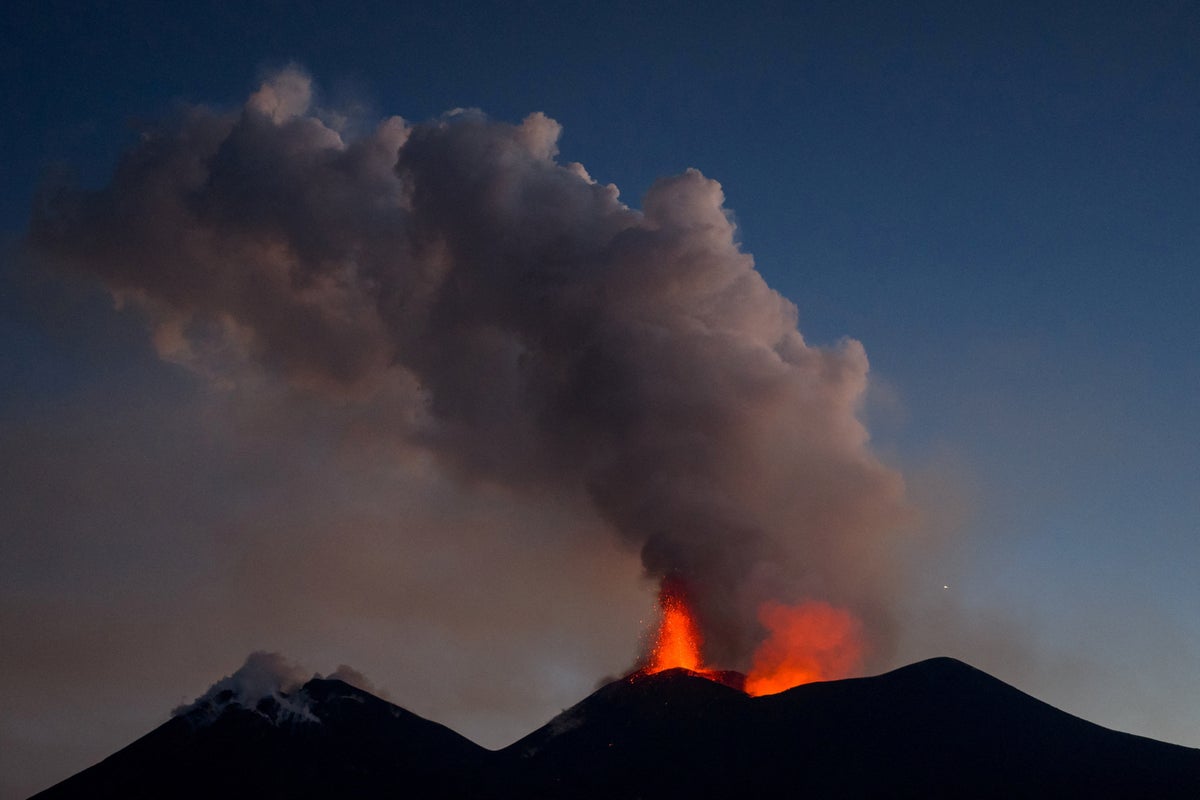
The espresso is still warm on the zinc counter of a café just off the Via Etnea in Catania when the first tremor hits. It is not the violent, shattering jolt of an earthquake that brings plaster crashing down into the street. It is a deep, subterranean sigh. A low rumble that you feel in the soles of your feet before you hear it in your ears.
Outside, the morning light does not break cleanly. Instead, a heavy, ocher dusk begins to swallow the cobalt Sicilian sky.
High above the city, Europe’s most active volcano has cleared its throat.
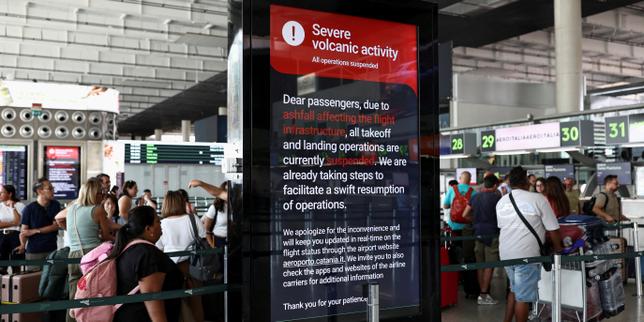
Mount Etna does not merely erupt; she performs. She is an ancient, unpredictable neighbor that the people of eastern Sicily have lived beside for millennia, a presence as constant as the salt air of the Ionian Sea. But majesty comes with a price. On this particular day, the mountain’s fiery temperament decided to rewrite the schedules of tens of thousands of lives, grounding over a thousand flights at Catania-Fontanarossa Airport and transforming a bustling international transit hub into a vast, sprawling dormitory of stranded dreams.
Consider what happens next: the quiet panic of the departure board.
Rows of glowing white letters flip, stutter, and turn red. Cancelled. Cancelled. Delayed. Cancelled.
In terminal buildings designed to process the orderly flow of vacationers, business executives, and students heading home, a different kind of reality sets in. Luggage becomes chairs. Floor tiles become beds. A young couple on their honeymoon sits cross-legged near a baggage carousel, splitting a dry panini and trying to laugh through the exhaustion of lost connections. A businessman paces near a charging station, his phone dying by percentages, watching his meticulously planned meetings dissolve into digital ether.
Behind these human moments lies a staggering logistical fracture. Catania-Fontanarossa is not a sleepy regional airstrip. It is the southern gateway to Italy, a vital artery feeding the island's tourism-dependent economy. When ash begins to rain down on the runways, safety protocols dictate a hard stop. You cannot land a commercial airliner through a blinding blizzard of abrasive volcanic grit. Engines ingest it like glass paper; visibility drops to zero. The skies must close.
And so, the numbers pile up.
More than a thousand flights vanished from the air traffic control screens. Tens of thousands of travelers found themselves trapped in a geographic bottleneck, watching the horizon turn the color of wet cement.
I remember standing in a similar crowd years ago, staring up at a board of unmoving red text in a foreign terminal. The helplessness is a physical weight. You are suspended between the life you just left and the destination you desperately need to reach. Time loses its linear shape. Hours stretch into formless blocks spent checking mobile apps that only offer more ambiguity.
Yet, something remarkable happens when thousands of stranded strangers are forced to share the same concrete floor.
The invisible walls of modern travel begin to crumble. An elderly Sicilian woman pulls out a bag of homemade almond pastries and passes them to a group of bewildered German backpackers. A polyglot chorus of frustrated sighs transforms, slowly, into shared commiseration. People swap stories of missed weddings, ruined holiday plans, and the sheer absurdity of trying to outsmart a restless planet.
We live in an era that worships efficiency. We expect our aluminum tubes to defy gravity on tight, algorithmic schedules, whisking us across continents as if geography were merely a suggestion. We treat travel as a transaction—buy a ticket, trade three hours of boredom, arrive on schedule.
Etna reminds us of the contract we implicitly sign with the earth.
The mountain does not care about your quarterly earnings report. It does not check the airline's departure matrix. It breathes when it needs to breathe, reminding the tiny coastal cities below that they are guests on a living, breathing crust of rock floating over an ocean of magma.
Outside the terminal doors, cleanup crews pull on heavy protective masks and goggles. They sweep the black volcanic sand from the tarmac with heavy-duty brooms, clearing the runway grain by microscopic grain. It is Sisyphean labor, beautiful in its stubborn dedication. The planes sit silent and grounded, wings dusted in gray powder, waiting for the sky to clear and the mountain to fall back into its uneasy sleep.
Inside, someone finally finds an open socket to charge a phone. A child chases a rolling plastic water bottle across the linoleum, breaking the heavy tension with a sudden, ringing laugh.
The volcano settles. The ash begins to drift out to sea. And somewhere in the darkening evening, a runway light flickers back to life, green and steady against the dark.