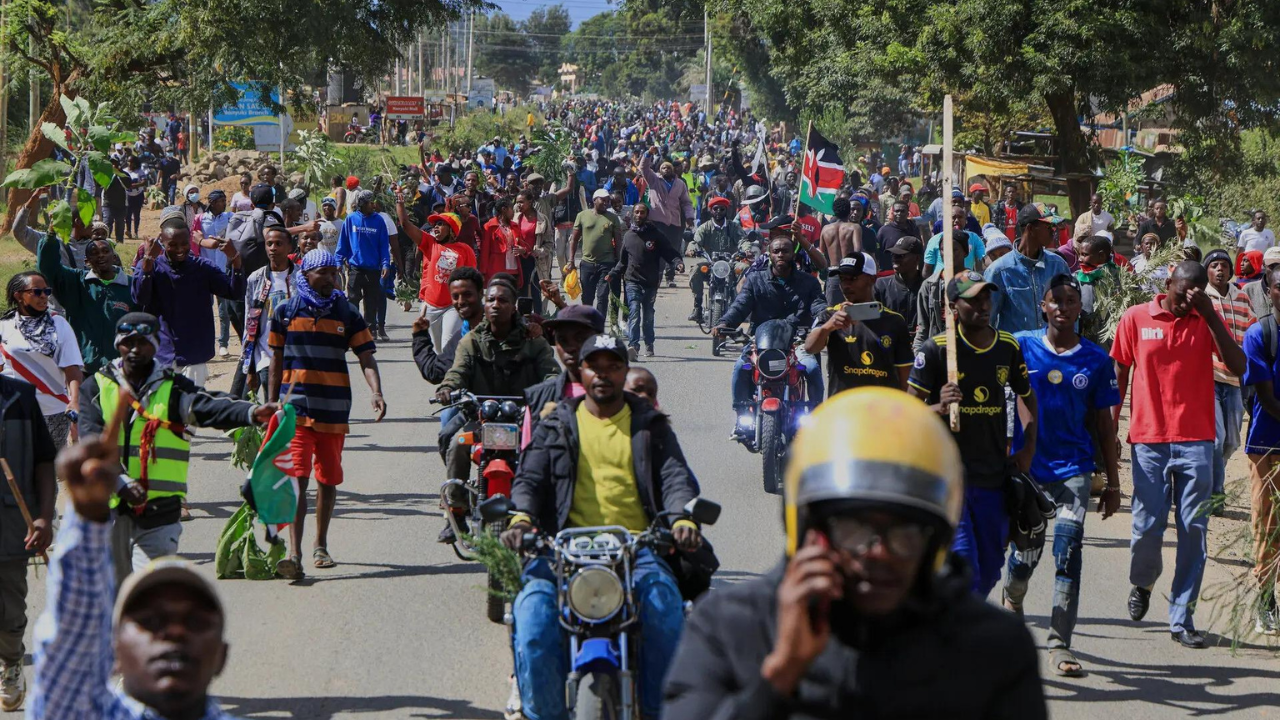
A severe diplomatic and public health crisis is unfolding in East Africa as a controversial United States plan to isolate its own citizens exposed to Ebola on Kenyan soil has triggered furious street protests, a high-stakes judicial freeze, and a national medical strike threat. By attempting to outsource the biosecurity risks of a lethal pathogen outbreak to an African nation, Washington has inadvertently sparked a volatile backlash over sovereignty and global health equity. The escalating confrontation exposes deep rifts in international health security strategies and raises hard questions about how wealthy nations handle high-consequence pathogens.
The Secret Deal Broken by Public Outrage
The controversy erupted into the open when United States administration officials revealed a plan to divert American citizens exposed to the Bundibugyo strain of Ebola in Central Africa to a freshly constructed 50-bed quarantine unit at the Laikipia Air Base in central Kenya. The facility was scheduled to become fully operational immediately. Washington made its underlying strategy clear. Exposed citizens would not be brought back to domestic soil if they developed symptoms. American Secretary of State Marco Rubio defended the strategy bluntly, stating that the administration would not allow any cases of Ebola to enter the United States.
The rationale offered by Washington centers on logistical efficiency. Officials argue that setting up a containment facility closer to the epicenter of the outbreak in the neighboring Democratic Republic of Congo allows infected or exposed individuals to receive rapid, specialized medical attention without enduring grueling, long-haul transatlantic flights. To sweeten the arrangement, the United States government pledged 13.5 million dollars toward Kenya's domestic Ebola preparedness efforts.
The backlash from the Kenyan public, legal professionals, and medical bodies was instantaneous and fierce. In the central town of Nanyuki, hundreds of angry youths marched directly to the gates of the Laikipia Air Base. They chanted anti-Ebola slogans and demanded an immediate reversal of the agreement.
Local political leaders quickly broke ranks with the central government. Laikipia Governor Joshua Irungu publicly opposed the installation, warning that the project would directly expose local workers employed inside the military facility to a deadly pathogen. The domestic panic is amplified by the nature of the specific threat. While Kenya has not recorded a case of Ebola during this current cycle, neighboring Uganda has already detected nine cases and shut down its border with the Democratic Republic of Congo, where over 282 confirmed cases and 1,000 suspected infections of the Bundibugyo variant are causing devastation. This particular strain currently lacks an approved vaccine or targeted therapeutic treatment.
Ebola Bundibugyo Outbreak Status (Regional Context)
+------------------------------+-----------------------+-----------------------+
| Country                      | Confirmed Cases       | Quarantine Status     |
+------------------------------+-----------------------+-----------------------+
| Democratic Republic of Congo | 282 (1,000 suspected) | Active Outbreak       |
| Uganda                       | 9                     | Border Closed         |
| Kenya                        | 0                     | Proposed US Facility  |
+------------------------------+-----------------------+-----------------------+
Judicial Intervention and the Apartheid Accusation
Faced with a rapidly growing political crisis, Kenya's independent judiciary stepped in to halt the plan. The High Court in Nairobi issued a comprehensive emergency injunction, freezing any further development of the facility and barring the transfer of any foreign nationals to the air base. The legal intervention came in response to separate, urgent constitutional petitions filed by the Law Society of Kenya and the Katiba Institute, a prominent constitutional rights watchdog.
The legal challenges attack the administration of President William Ruto on several constitutional fronts. The petitioners argue that the executive branch signed a major biosecurity agreement with a foreign superpower completely behind closed doors, bypassing mandatory constitutional requirements for public participation and parliamentary oversight. Furthermore, the Law Society of Kenya stated in its filings that the country simply lacks the ultra-high-containment medical infrastructure required to safely manage a hot zone pathogen facility, meaning the project introduces an unacceptable level of risk to the broader Kenyan population.
The medical community has taken an even more combative stance. The Kenya Medical Practitioners, Pharmacists and Dentists Union issued a swift 48-hour strike notice, threatening a total shutdown of the national healthcare system if the deal goes forward.
"We are utterly disgusted by the government's apparent willingness to trade national biosecurity and the lives of its citizens for foreign aid. We will not tolerate an apartheid healthcare model on Kenyan soil. If it is too dangerous for America, it is too dangerous for Kenya."
— Davji Bhimji Attelah, Chairman of the Kenya Medical Practitioners, Pharmacists and Dentists Union
The phrase containment colony has quickly entered the national lexicon, reflecting a deep-seated resentment against what is perceived as a neo-colonial arrangement. Public health advocates point out the stark hypocrisy of a policy where a wealthy Western nation declares a disease too hazardous for its own domestic infrastructure, yet deems it perfectly acceptable to manage that exact same hazard within a developing nation's borders using a modest financial payout as justification.
Deficit of Trust and the Failure of Secret Diplomacy
In an attempt to defuse the growing fury, Kenyan Health Minister Aden Duale issued a statement claiming that the Laikipia quarantine center was designed for everyone and was not intended exclusively for United States nationals. This damage-control narrative, however, has failed to alter public perception. It directly contradicts the initial statements made by United States officials regarding their intent to isolate exposed Americans abroad. The stark contradiction has only worsened a profound deficit of trust between the state and the citizenry.
The political opposition has capitalized heavily on the uproar. Across political rallies in Machakos and Bungoma counties, opposition factions have weaponized the issue, threatening sustained nationwide protests and framing the Ruto administration's compliance as a fundamental betrayal of national sovereignty.
From an industry analysis perspective, the entire episode represents a massive failure in public health diplomacy. By treating a major biosecurity installation as a quiet, military-to-military transaction rather than an issue requiring broad democratic consensus, both Washington and Nairobi overlooked the inevitable public anxieties associated with hemorrhagic fevers.
The Flawed Logic of Offshore Quarantine
The crisis also highlights a deeper, systemic flaw in modern global health security frameworks. Ever since the major West African Ebola outbreak of 2014-2016, public health consensus has emphasized that heavy-handed travel restrictions and offshore containment policies often yield counterproductive results. The World Health Organization maintains a firm stance against international travel and trade bans during such outbreaks. Historical data shows that these containment strategies rarely prevent the international spread of disease. Instead, they disrupt the critical movement of international healthcare workers, damage local economies, and incentivize individuals to use unmonitored, informal border crossings that make tracking infections impossible.
By attempting to build an exclusive enclave of American-managed medicine inside a sovereign Kenyan military base, the project created a glaring double standard. It isolates the high-tech resources of a superpower from the fragile local health system surrounding it, while simultaneously asking local communities to bear the physical risk of proximity to the pathogen.
The Kenyan High Court has scheduled a full judicial hearing to review the legality of the bilateral agreement. The legal pause leaves dozens of American personnel and contracted aircraft in logistical limbo, while the broader regional outbreak of the Bundibugyo strain shows no signs of slowing down. What was intended as a swift, practical military deployment has transformed into a highly visible case study in how not to conduct global health diplomacy. Wealthy nations cannot secure their own biological safety by externalizing risks to nations with fewer resources, because in a highly interconnected global landscape, pandemic defense requires mutual trust rather than transactional isolation.


