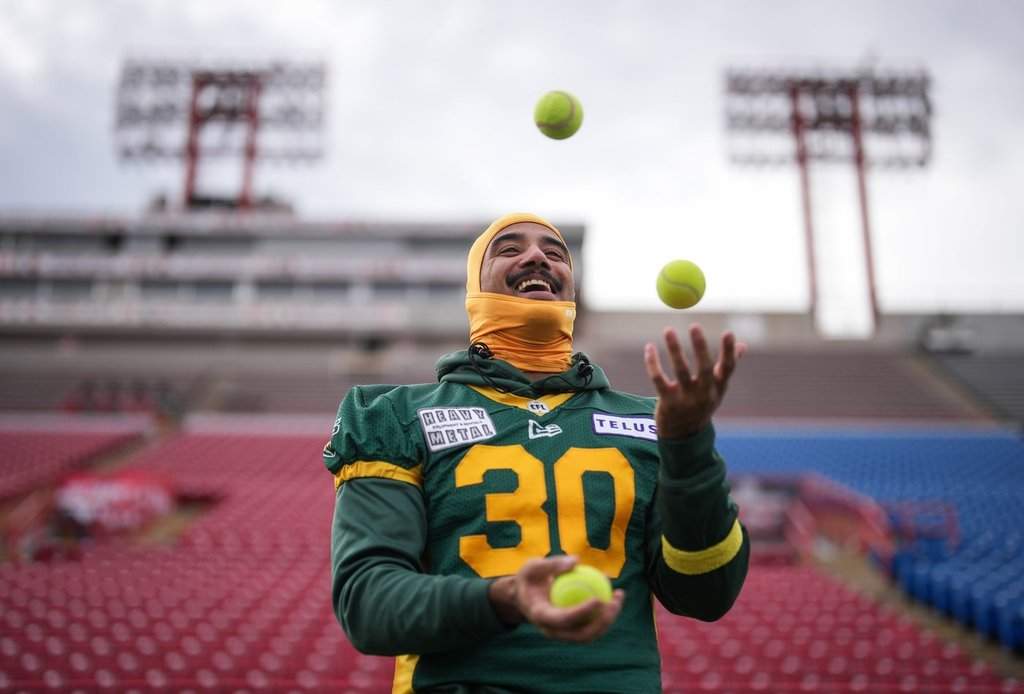
The Philpot-Ford matchup in the Grey Cup matters because it pits two explosive Canadian wide receivers against each other in a game where domestic ration rules, field dimensions, and quarterback decision-making amplify every single yard. Casual observers treat head-to-head receiver billing like a boxing marquee. It is not. Two pass-catchers rarely line up across from each other in direct man coverage for sixty minutes in three-down football. Instead, the Philpot-Ford matchup functions as a stress test of offensive geometry, secondary rotation, and how coaching staffs weaponize Canadian talent when the championship stakes peak.
After covering professional football across North America for decades, I have watched plenty of championship weeks turn on a single peripheral duel that television graphics oversimplify. The Philpot-Ford matchup is compelling precisely because it exposes how modern Canadian Football League offenses manufacture separation on a wider, longer field where motion rules let receivers build full speed before the snap.
Why the Philpot and Ford Matchup Is More Than a Receiver Duel
Broadcast graphics love to pair star pass-catchers side by side with highlight reels and season yardage totals. That framing sells commercials. It misses how three-down football actually works.
In the CFL, a 110-yard field with 20-yard end zones and a 65-yard width creates massive horizontal and vertical space that defenders must police with fewer players than in four-down football. Receivers can run waggle motion toward the line of scrimmage before the ball is snapped. When a dynamic receiver arrives at the hash marks already moving at top gear, a linebacker or defensive back playing off-coverage faces an immediate leverage problem.
Evaluating the Philpot-Ford matchup requires looking past raw target counts and examining how each player alters defensive structure. One receiver might stress a defense vertically along the boundary or take jet sweeps and quick screens into open grass, while the other stretches seams, exploits zone soft spots, or punishes single coverage when safeties shade elsewhere. Even when they play for opposing sides rather than trading blows as direct cornerback-versus-receiver counterparts, their usage shapes game scripts on both sidelines.
How Canadian Ratio Rules Shape Championship Rosters
Anyone analyzing the Philpot-Ford matchup without factoring in the Canadian ratio is missing the structural foundation of the league. CFL rosters and starting lineups are governed by rules requiring a set number of national players—athletes who meet league criteria as Canadians—on the field at all times.
That rule changes everything about how teams construct pass attacks and defensive packages. Starting productive Canadian receivers frees up American roster spots elsewhere, often along the offensive line, defensive front, or secondary. When a Canadian receiver commands heavy defensive attention, the defense cannot simply roll extra help without risking exposure somewhere else in a formation that already stretches defenders from sideline to sideline.
Consider a hypothetical example to see how ratio math plays out in practice. Suppose a coaching staff starts a high-output Canadian receiver on the boundary and pairs him with a Canadian slotback. If the defense drops a safety or nickel back to bracket the primary threat, a single blown assignment on the weak side can turn a routine intermediate throw into a 35-yard gain because there is so much open turf behind the second level.
Field Geometry and Three-Down Pressure
Three-down football leaves no room for sluggish offensive rhythm. If a drive stalls on first and second down, third-down conversions carry far higher risk than fourth-down gambles in other football codes.
That urgency changes how offensive coordinators call plays involving premier playmakers. Short passes into space act as extensions of the run game. Deep shots punish aggressive blitzes or man-to-man coverage when a cornerback gets caught flat-footed against pre-snap motion.
Spacing, Hash Marks, and Secondary Stress
The CFL's wider field and wider hash marks create distinct short-side and wide-side throwing windows. A receiver aligned to the wide side has a vast expanse of grass to attack horizontally and vertically, forcing defensive backs to cover ground quickly while reading the quarterback's eyes.
Defenses counter this with zone rotations, press bail techniques, or sub-packages that blur who is blitzing and who is dropping into coverage. When an offense moves a premier receiver across the formation, a defender who was aligned to the wide side can suddenly find himself defending a tighter space—or vice versa—changing the leverage angle in a split second.
- Pre-snap motion timing: Receivers in motion can time their arrival near the line of scrimmage to beat jam techniques at the snap.
- Second-level pursuit angles: Wide-field spacing punishes over-pursuit by linebackers and defensive backs on quick perimeter throws.
- Red-zone compression: Once an offense nears the 20-yard line, the extra end-zone depth still exists, yet horizontal room tightens and passing lanes shrink.
- Situational third-down calls: Coaches often design high-percentage rub concepts, sit routes, or vertical isolation plays for trusted playmakers when keeping a drive alive is non-negotiable.
What Overlooked Factors Can Decide the Contest
Most pregame previews fixate on highlight speed, acrobatic catches, and regular-season statistics. Those numbers tell you what a player can do in favorable conditions. Championship games rarely offer favorable conditions for long.
Weather in November can turn crisp passing lanes into a test of grip, footing, and ball security. Wind alters trajectories on deep throws and punts, shrinking field-position margins and making conservative, high-precision throws more valuable than low-percentage bombs. Even cold turf or a slick surface subtly affects how cleanly a receiver plants his foot out of a stem or out-breaking route.
Quarterback Timing and Protection Realities
A receiver is only as dangerous as the window his quarterback gets to throw the ball. Pass protection in the CFL faces relentless pressure schemes because offenses often throw early and often, inviting simulated pressures, corner blitzes, and line stunts.
If a quarterback faces quick interior pressure, hot routes and sight adjustments become critical. A receiver who reads blitz rotation the same way the quarterback does can turn a broken protection into an immediate completion into vacated space. If they read the coverage differently, a promising drive can end with a hurried throw or a sack.
- Protection integrity: Quick edge or A-gap pressure forces faster releases and limits deep-developing routes.
- Coverage disguise: Late safety rotation after the snap can turn a seemingly open lane into a trap.
- Special teams field position: A long return or pinned punt changes whether an offense plays aggressively or safely from deep in its own territory.
- Penalty discipline: Illegal procedure, holding, or pass interference swings momentum immediately in a three-down game where drives are shorter and every yard matters.
Evaluating the Philpot and Ford Matchup With Clear Eyes
Fans and analysts alike should resist turning the Philpot-Ford matchup into a simplistic scorecard of individual stats. Great receivers rarely win a championship alone, and a quiet box score does not always mean a player failed to impact the game. Sometimes drawing double coverage, clearing out a deep zone, or forcing a safety to stay back creates the exact opening another teammate needs to score.
Equally important, no analytical model or scouting report can predict every game-day variable. A single turnover, a gust of wind, a sudden injury, or a gutsy third-down call can tilt a tight championship game before either star receiver even gets a chance to take over.
The real intrigue of the Philpot-Ford matchup lies in how two high-impact talents interact with CFL tactics, roster construction, and championship pressure when every possession carries weight. Watch the space they open up as much as the balls they catch, because in November football, unseen leverage often decides who hoists the trophy.