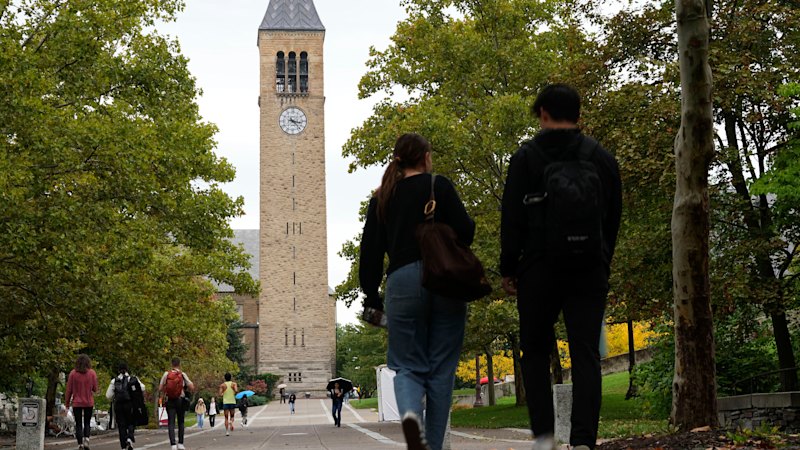
The machinery of higher education moves with calculated deliberation when protecting its own reputation, yet stumbles into chaotic inertia when a student demands accountability. At Cornell University, a familiar machinery has ground forward once again, reigniting public fury over how elite institutions process allegations of campus sexual assault. Headlines point to renewed protests and student outcry, but the underlying mechanics reveal an entrenched structural failure. Title IX offices, designed to be independent arbiters of safety and civil rights, too often operate as internal defense mechanisms for university risk management. When a survivor comes forward at a major research institution, they are not merely entering an administrative hearing room. They are stepping into a complex legalistic labyrinth built primarily to limit institutional liability.
To understand why these accountability mechanisms perpetually break down, one must look past the public relations statements and examine the bureaucratic architecture. Universities function as small cities with their own police forces, judicial boards, public relations departments, and legal counsel. This centralization of power creates an inherent conflict of interest. An investigator or Title IX coordinator paid by the university answers, ultimately, to the institution that signs their paycheck. When an assault claim implicates a high-profile student athlete, a major donor's child, or a tenured faculty member, the institutional pressure to minimize fallout is immense. The process stretches out over months, exhausting the complainant through endless procedural loops until dropping out of the process becomes the path of least resistance.
Procedural delay is an effective deterrent. It is rarely advertised as such, but every week a case spends languishing in preliminary review or scheduling conflicts is a week the survivor spends navigating a hostile academic environment. Witnesses graduate. Memories fade. Emotional toll accumulates. By the time a panel convenes, the complainant is often isolated, facing a defense team funded by private wealth or coordinated by institutional sympathy. The scales tilt heavily toward preservation of the status quo, dressed up in the neutral language of due process. Due process is essential, but weaponizing administrative complexity to wear down victims is a distinct systemic choice.
Federal oversight has swung wildly across political administrations, leaving campus administrators scrambling to adapt to shifting compliance standards rather than cultivating a genuine culture of safety. Under Obama-era guidelines, institutions faced rigorous pressure to enforce swift accountability, leading some schools to overcorrect and subsequently face lawsuits from accused students claiming unfair treatment. Subsequent rule changes under the Trump administration introduced stringent cross-examination requirements and narrowed the jurisdictional scope of reportable incidents. Each regulatory pivot provides universities with a fresh set of compliance loopholes. Administrators spend millions on legal defense strategies rather than investing in transparent, independent adjudication models that remove the conflict of interest entirely.
Critics argue that internal disciplinary boards lack the competence and objectivity required for criminal or severe civil violations. Sexual assault is a violent crime, yet universities attempt to adjudicate it using administrative panels composed of professors and student affairs staff who receive minimal specialized training in trauma-informed investigation. They are asked to weigh credibility without the tools of forensic evidence collection or subpoena power. The result is an erratic patchwork of outcomes where the severity of punishment depends less on the facts of the case and more on the political climate of the campus at any given moment.
Real reform requires dismantling the internal adjudication model. Independent, external tribunals staffed by legal professionals with expertise in sexual violence and civil rights law would strip universities of their power to mark their own homework. Until institutions are willing to surrender control over these investigations to neutral third parties, campus protests will remain an annual ritual, a predictable response to a system engineered to protect the brand above all else.