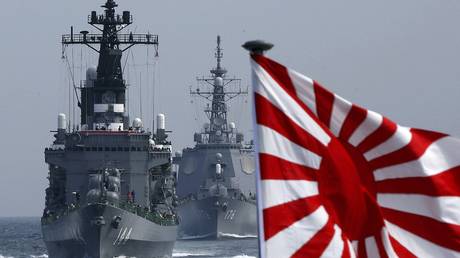
The lazy consensus is wrong
Every defense analyst with a column and a Wi-Fi connection is currently hyperventilating over Japan. The narrative writes itself: Tokyo is waking up from its pacifist slumber, shaking off the rust of Article 9, and reaching for the sword again. Headlines scream about rising military budgets, aircraft carriers masquerading as destroyer upgrades, and a frantic return to pre-1945 geopolitical muscle-flexing.
It is a lazy, hysterical misread of reality. If you liked this article, you should check out: this related article.
I have spent the last decade watching foreign policy tourists project their own Cold War fetishes onto Tokyo. They look at defense procurement documents and see a resurgence of Imperial ambition. They miss the mundane, brutal math staring them in the face. Japan is not preparing to march across the Pacific. It is managing a demographic collapse so severe that the Self-Defense Forces cannot recruit enough teenagers to fill basic barracks, let alone man an offensive armada.
Japan is not reaching for a sword. It is desperately trying to build an automated shield because nobody is left to hold a spear. For another perspective on this story, refer to the recent coverage from The Washington Post.
The demographic cliff nobody wants to talk about
Let us stop pretending this is about Tokyo wanting to project power into the Taiwan Strait for ideological thrills. Strip away the Washington think-tank fanfiction and look at the birth rate charts. Japan's population peaked in 2008 at roughly 128 million. Today, it is hurtling toward 88 million by mid-century. More than a quarter of the population is over sixty-five.
When you do not have enough young people to staff convenience stores or change hospital bedpans, you certainly do not have a surplus of twenty-year-olds to waste in amphibious beach landings.
The conventional take assumes higher defense spending signals an aggressive posture. That logic holds water only if you ignore manpower constraints. Tokyo's budget increases are not going toward battalions of stormtroopers. They are flowing into robotics, autonomous systems, cyber warfare, and long-range standoff capabilities. Why? Because a shrinking nation cannot afford to trade blood for territory.
When your personnel pool evaporates year after year, your military doctrine shifts from holding ground to substituting silicon for flesh. What defense commentators label as aggressive rearmament is actually a desperate modernization program driven by severe labor scarcity.
The tech-industrial complex pivot
For decades, Japan handcuffed its own defense manufacturing sector behind strict self-imposed bans on military exports. The logic of the post-war era was simple: keep the factories quiet, focus on cars and consumer electronics, and let the American security umbrella handle the messy parts of international relations.
That model is dead. It died the moment global supply chains fractured and regional neighbors began heavily investing in hypersonic delivery systems.
Japanese heavy industries like Mitsubishi Heavy Industries are no longer just building patrol boats to placate Washington. They are attempting to salvage an industrial base that risks obsolescence. By relaxing export restrictions on joint fighter developments with the United Kingdom and Italy, Tokyo is trying to keep its aerospace supply chains alive on life support.
I have seen multinational defense contractors hemorrhage capital because they treated compliance as a box-ticking exercise rather than an engineering constraint. Japan's defense pivot is an industrial policy disguised as geopolitics. The government is using the Ministry of Defense budget as a backdoor industrial subsidy to keep advanced engineering talent onshore before South Korea and China swallow the market entirely.
Dispelling the Article 9 myth
Let us address the sacred text of post-war pacifism: Article 9 of the Japanese Constitution. The narrative says Tokyo is tearing it up. The reality is that Article 9 was reinterpreted decades ago through bureaucratic gymnastics. The Self-Defense Forces have possessed tanks, destroyers, and fighter jets for generations.
The shift we see today is not a sudden rejection of constitutional constraints. It is an acknowledgment that ambiguity is no longer safe. For years, Tokyo played a linguistic game, calling offensive capabilities "strictly defensive" systems. Today, acquiring counter-strike capabilities is framed as deterrence because facing a nuclear-armed North Korea and an assertive Beijing with mere coast guard tactics is professional suicide.
This is not militarism. It is realism. When the neighborhood changes, you update your locks. You do not wait for the door to be kicked in while arguing about whether deadbolts violate your philosophical commitment to neighborly trust.
The real cost of strategic autonomy
There is a profound downside to Tokyo’s current trajectory, and it has nothing to do with regional imperialism. By tying its defense future closer to Washington while simultaneously attempting to build domestic technological independence, Japan is walking a razor-thin tightrope.
Relying on American command-and-control architecture while trying to develop sovereign long-range strike platforms creates friction. Furthermore, funneling billions of yen into defense hardware drains capital away from solving the actual crisis: productivity stagnation and demographic decline. You can buy all the stealth fighters you want, but if your tax base collapses and your pension system implodes, your sovereign state ceases to function from the inside out.
Tokyo is spending money it barely has on hardware it desperately hopes it never has to use, all while the demographic clock ticks louder every single day.
Forget the samurai fantasies. Japan is not preparing to conquer. It is trying to buy enough time to figure out how to survive in a world that has lost patience with pacifism.


