The ink on a nolle prosequi—the legal document used by a government to declare it will no longer prosecute a case—is thin, cold, and entirely devoid of the sweat, terror, and late-night whispers that brought it into existence.
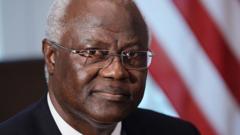
On a quiet Tuesday in July 2026, the Office of the Attorney-General of Sierra Leone issued a public notice. It declared that the criminal proceedings against former President Ernest Bai Koroma were officially discontinued. Just like that, the charge of treason, a crime that carries the weight of a life sentence under Sierra Leonean law, evaporated into the humid air of West Africa.
To the casual observer scanning international headlines, this is a standard piece of diplomatic housekeeping. An old leader, a failed coup, a quiet deal. But to understand the true gravity of this moment, one must step away from the sterile language of press releases and stand on the blood-slicked streets of Freetown.
The Night the Armoury Fell
To comprehend the stakes of Koroma’s sudden legal freedom, we have to go back to the night of November 26, 2023.
Imagine standing guard at the Wilberforce military barracks in Freetown. The Atlantic breeze is heavy, smelling of salt and incoming rain. Suddenly, the darkness ruptures. Gunfire, loud and chaotic, shatters the midnight peace. Men in mismatched uniforms, carrying assault rifles, storm the gates. They do not just want to make a statement; they want the keys to the kingdom.
They breached the main military armoury. They overran police stations and slammed open the gates of the Pademba Road central prison, releasing nearly 2,000 inmates into the night. By the time the sun rose over the hills of Freetown, twenty-one people were dead—including soldiers, police officers, and civilians.
For a country that still carries the collective, generational trauma of a brutal civil war that ended in 2002, the sound of gunfire in the capital is not just news. It is a physical sickness. It is the terrifying realization that the thin veneer of democratic stability can peel away in a single evening.
President Julius Maada Bio's government, freshly re-elected in a highly disputed and deeply polarizing June election, immediately called it what it was: an attempted coup.
And then, they pointed the finger at the man who had led the nation for over a decade before them: Ernest Bai Koroma.
The House Arrest of an Elder Statesman
In January 2024, the state officially charged the 70-year-old former president with treason and misprision of treason—the crime of knowing about a coup and failing to report it.
Think about the psychological shift of that transition. One day you are a retired global statesman, hosting international dignitaries in your country home in Makeni. The next, you are under heavily guarded house arrest, your movements restricted by the very security apparatus you used to command. Only specific political leaders can visit you, and even then, only with the explicit written permission of the Inspector-General of Police.
For the government, putting Koroma on trial was a show of strength, a warning that no one is above the state. But for the opposition and Koroma's supporters, it smelled of a political vendetta, a desperate attempt by President Bio to crush dissent after a highly criticized election.
The atmosphere in Freetown was thick with tension. The trials of other suspected mutineers went ahead, but Koroma's case became a volatile political lightning rod. To lock him up permanently would risk sparking a popular uprising; to let him go easily would make the government look weak.
The Invisible Hands of Diplomacy
This is where the quiet machinery of regional power came alive. Behind closed doors, far from the cameras, leaders of the Economic Community of West African States (ECOWAS)—specifically Nigerian President Bola Tinubu—began pulling levers.
They proposed a classic West African compromise: exile wrapped in the polite terminology of "medical leave."
In late January 2024, Koroma was granted bail on medical grounds. A Nigerian presidential jet touched down at the airport near Freetown. Koroma boarded, flying into a comfortable, secure exile in Abuja under the watchful eye of the Nigerian state. The treason trial in Sierra Leone was frozen in place, a sword of Damocles hanging over the retired leader’s head while he lived thousands of miles away.
For more than two years, this uneasy silence persisted. But a trial left hanging in limbo is a wound that cannot heal.
The Freedom Paper
On Tuesday, July 14, 2026, the Sierra Leonean government finally chose to close the book.
By filing the notice to discontinue all criminal proceedings, the state did something remarkable: they gave Koroma his life back. He is no longer on bail. He is no longer an accused traitor waiting for his health to fail in exile. The Attorney-General’s office explicitly stated that he is free to return to Sierra Leone at any time of his choosing.
The government offered no official reason for dropping the charges. They did not have to. In politics, silence speaks volumes. Insiders look at the move as a calculated act of political pragmatism—an attempt to lower the national temperature, promote reconciliation, and perhaps build a bridge between the deeply divided political factions.
For his part, Koroma released a statement expressing his "enduring conviction that peace, justice, and reconciliation must always triumph over adversity." He thanked President Bio, President Tinubu, and ECOWAS. It was the carefully crafted language of a survivor.
But what about the people of Sierra Leone?
The Unresolved Echoes
While the elite shake hands and sign discontinuance notices, the ordinary citizens are left with the complicated task of living in the aftermath.
If there is no trial, there is no public presentation of evidence. We may never truly know the depth of Koroma's involvement—or lack thereof—in the events of that bloody November night. The state’s dropping of the charges leaves a blank space where accountability should be. For the families of the twenty-one people killed during the coup attempt, the quiet resolution feels less like justice and more like a political transaction.
It is a reminder that in the grand theater of geopolitics, the lives of those on the ground are often the currency used to buy peace at the top.
Sierra Leone has avoided another spiral into chaos. The guns are silent, the former president is free, and the government can claim it took the high road of national unity. But the peace bought by this compromise is fragile. It is a peace built on agreed silences, on the understanding that sometimes, to keep a country from breaking apart, you have to let the most powerful men walk away from the wreckage.
As Ernest Bai Koroma prepares to eventually return home to the hills of Makeni, he returns not as a convict, nor entirely as a vindicated man, but as a living monument to the art of political survival.
The quiet exit is rarely clean, but in a region haunted by the ghosts of conflict, a quiet exit is often the best anyone can hope for.
Sierra Leone Drops Treason Case
This report details the official announcement from the Attorney General's office discontinuing the treason trial against former President Koroma.
http://googleusercontent.com/youtube_content/1