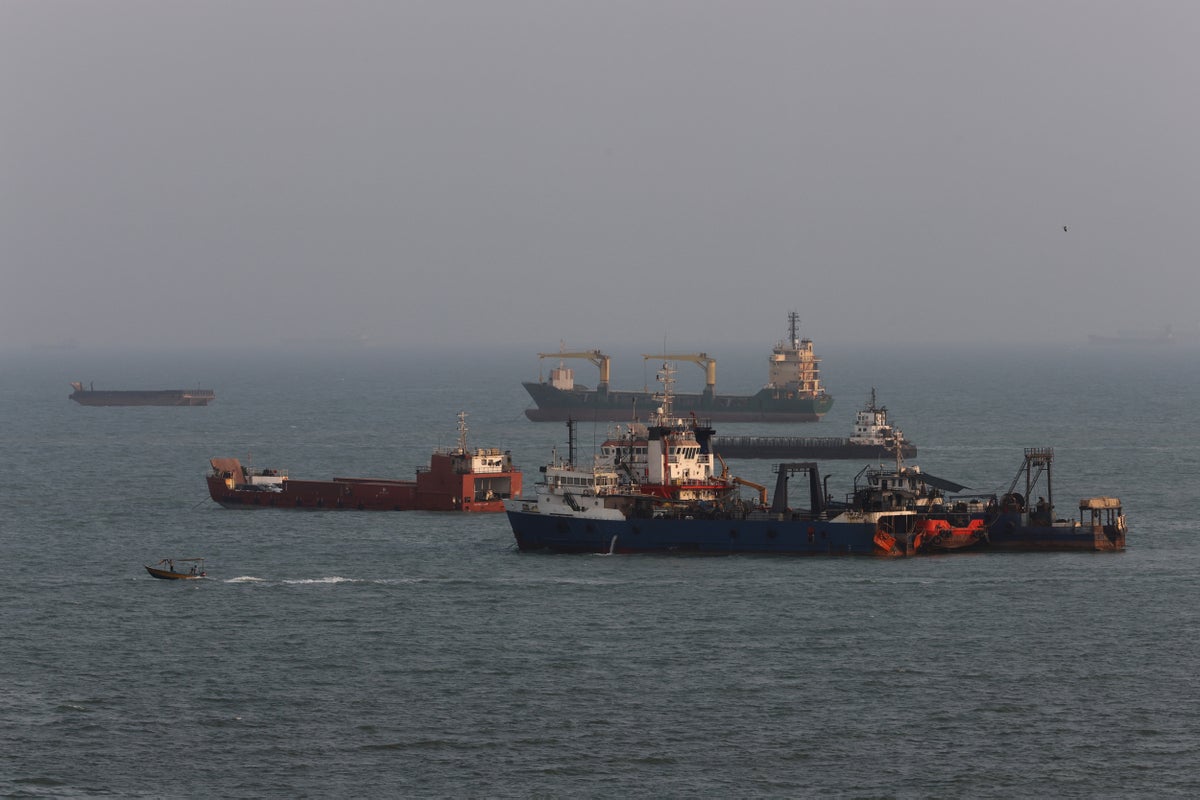
An unmanned American submarine drone spent more than a day floating completely dead in the water before Iran's Islamic Revolutionary Guard Corps claimed it as a major military prize. Tehran treated the recovery of the vessel near the Strait of Hormuz like a blockbuster trophy win, broadcasting footage of the craft across state media. Washington responded with a collective shrug, calling the device an older, broken model carrying zero classified tech.
Truth sits somewhere in the messy middle.
When you strip away the dueling press releases from CENTCOM and Iranian state television, a fascinating picture emerges about the reality of modern drone warfare at sea. Autonomous systems fail. Adversaries scavenge them. And both sides spin the narrative to fit their operational playbook. Here is what is actually going on beneath the surface of the latest US-Iran flashpoint.
Anatomy of a Marine Mishap
The vehicle in question is an Anduril Dive-LD, a large autonomous underwater vehicle stretching roughly 19 feet long and weighing nearly three tons. It is designed to map seabeds, scout for mines, and inspect critical underwater infrastructure like communication cables without putting human sailors in harm's way.
According to U.S. Central Command, the drone suffered a critical operational failure more than twenty-four hours before the IRGC intercepted it. It went dead in the water during routine regional surveillance. Because these autonomous units operate in dangerous environments, losing one isn't an unthinkable catastrophe; they are built to be attritable, meaning the hardware is replaceable.
Yet, the Pentagon's rapid downplaying of the incident tells only half the story. Downplaying the tech doesn't change the fact that an intact Western military drone fell straight into the lap of a primary adversary.
Why Iran Cares So Much
If you watch Iranian state media coverage of the event, you would think Tehran had captured a nuclear submarine. The IRGC proudly claimed they intercepted one of the most advanced, smart underwater systems in the American military arsenal through a complex operation at dawn.
Why the heavy propaganda push? Domestic optics matter immensely. Amid ongoing regional hostilities, economic pressures, and heightened maritime blockades, the regime desperately needs visual wins to project strength. Showing off a captured American robot submarine to the domestic audience provides an easy propaganda victory.
Beyond the PR spin, there is genuine tactical utility for Tehran. Iran builds its own asymmetric naval assets and supplies marine systems to regional proxies like the Houthis in Yemen. Getting their hands on a commercial-grade, highly sophisticated Western autonomous hull gives Iranian engineers a rare blueprint. Even if the onboard software lacks classified encryption, studying the material science, modular payload bays, and hull durability of a Dive-LD offers valuable reverse-engineering insights.
The Risk of Open-Ocean Autonomy
Naval warfare is shifting rapidly toward uncrewed fleets, but this incident exposes a glaring weak point in the strategy: retrieval failure.
When a multi-million-dollar drone loses power or steering in contested choke points like the Strait of Hormuz, recovery options are severely limited. If American forces knew the drone was drifting, they failed to scuttle or recover it before the IRGC swept in. Leaving expensive autonomous hardware adrift in enemy-controlled waters invites precisely this kind of intelligence compromise.
Anduril and the U.S. Navy are banking heavily on these systems to scale up ocean monitoring cheaply. But attritable systems only work if the adversary doesn't capture enough units to learn how to blind them. Military tech analysts note that even if the drone's data was wiped or unclassified, close physical inspection can reveal acoustic signatures, sensor limits, and operating frequencies that hostile navies can exploit to jam future missions.
This minor maritime salvage operation highlights the friction of modern unmanned deployments. As autonomous tech floods the world's oceans, losing control of a drone is bound to happen again. Next time, the Pentagon might not be able to brush it off quite so easily.



