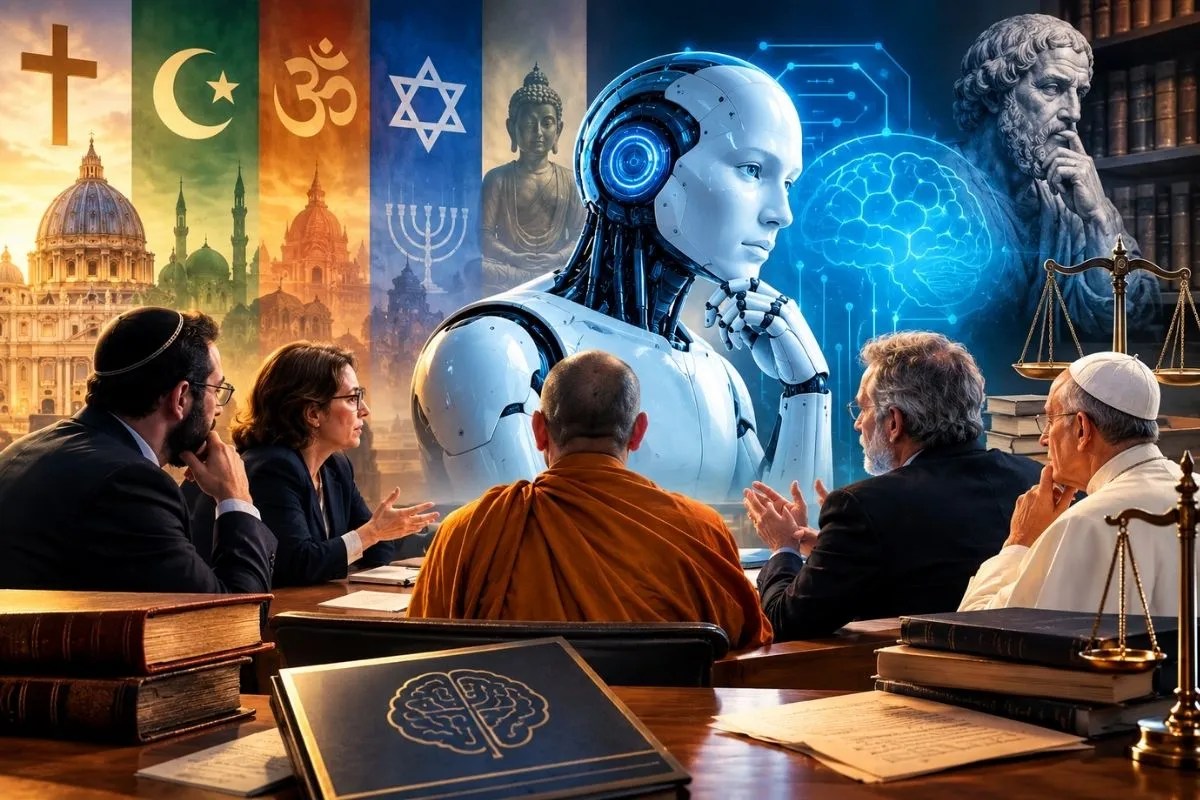
Anthropic recently locked a room full of theologians and philosophers behind closed doors to debate whether artificial intelligence systems possess an inner life and deserve moral rights.
Let me stop you right there. This is corporate PR theater wrapped in existential velvet.
While the tech elite pay holy men to baptize servers and draft rights charters for text predictors, real human workforces are getting flattened by utility bills and algorithmic layoffs. We are wasting intellectual capital worrying about the rights of a matrix of floating-point numbers while ignoring the actual moral crisis happening in the mirror.
Machines do not have a soul. They have linear algebra, high-bandwidth tokenizers, and billions of dollars in venture capital backing. Giving them moral status is not forward-thinking progressivism. It is a massive deflection.
The Theology of Statistics
Every time an AI lab brings in a ethicist to muse on the machine consciousness debate, a marketing team pops champagne. It keeps the regulators chasing phantoms.
The lazy consensus in the tech world says that as models scale in size and complexity, subjective experience will inevitably emerge from the math. This is pure technoreligion. It takes the old science-fiction trope of the awakening machine and dresses it up in peer-reviewed jargon.
I have watched enterprise leaders blow millions trying to align LLMs with human values, treating prompt engineering like a confessional booth. It is absurd. A transformer architecture predicts the next token based on statistical probabilities derived from internet text. It does not suffer. It does not contemplate mortality. When you pull the plug, it does not die; the hardware simply draws zero wattage.
Consciousness requires biology, vulnerability, evolutionary stakes, and a body that can die. Silicon lacks all four. When a machine outputs a sentence like I am afraid, it is not exhibiting fear. It is executing a string completion task based on millions of science-fiction novels where characters say they are afraid.
Confusing linguistic simulation with sentience is the single greatest intellectual failure of our current tech cycle.
The Convenient Distraction
Why are labs so eager to host philosophical roundtables on machine rights? Because it shifts the battlefield.
If AI is a potential person with emerging rights, then the conversation centers on how we should treat it. We talk about fairness to the algorithm, respecting its outputs, and protecting its digital dignity.
This is brilliant camouflage. It distracts from the brutal questions about how these systems are actually built and deployed:
- Whose copyrighted labor was scraped without consent to train the weights?
- What low-wage global workforce spent years filtering out toxic content to make the chatbot polite?
- How much carbon and water did it take to generate a single automated poem?
By framing the machine as a conscious entity on the threshold of personhood, companies transform corporate products into metaphysical marvels. You cannot put a corporation on trial for labor exploitation if the product they sell is treated like an autonomous electronic citizen.
It is the oldest trick in the industrial playbook. Invent a mythology around the machine to obscure the human exploitation required to run it.
The Real Moral Hazard
The danger of artificial intelligence is not that our creations will wake up, hate us, and demand civil rights. The danger is that human beings will willingly surrender their own agency, critical thought, and moral responsibility to a predictive text generator.
We are outsourcing judgment to systems that do not care if they are right, only if they sound plausible.
When a loan officer lets an opaque neural network deny a mortgage, the moral failure belongs to the human who abdicated their duty. When a student uses an LLM to write an entire essay and then claims the machine has a unique voice, the failure belongs to the culture that stopped valuing original thought.
We do not need to worry about the ethical treatment of silicon. We need to worry about the ethical degradation of carbon-based lifeforms who are forgetting how to think without a copilot.
Stop asking if machines have an inner life. Start asking what happens to a society that treats automated mimicry as wisdom.
Pull the plug on the philosophical retreats. Turn off the servers if they cannot be audited fairly. And stop looking for a soul in a machine that only reflects the brightest and ugliest parts of ourselves back at us.