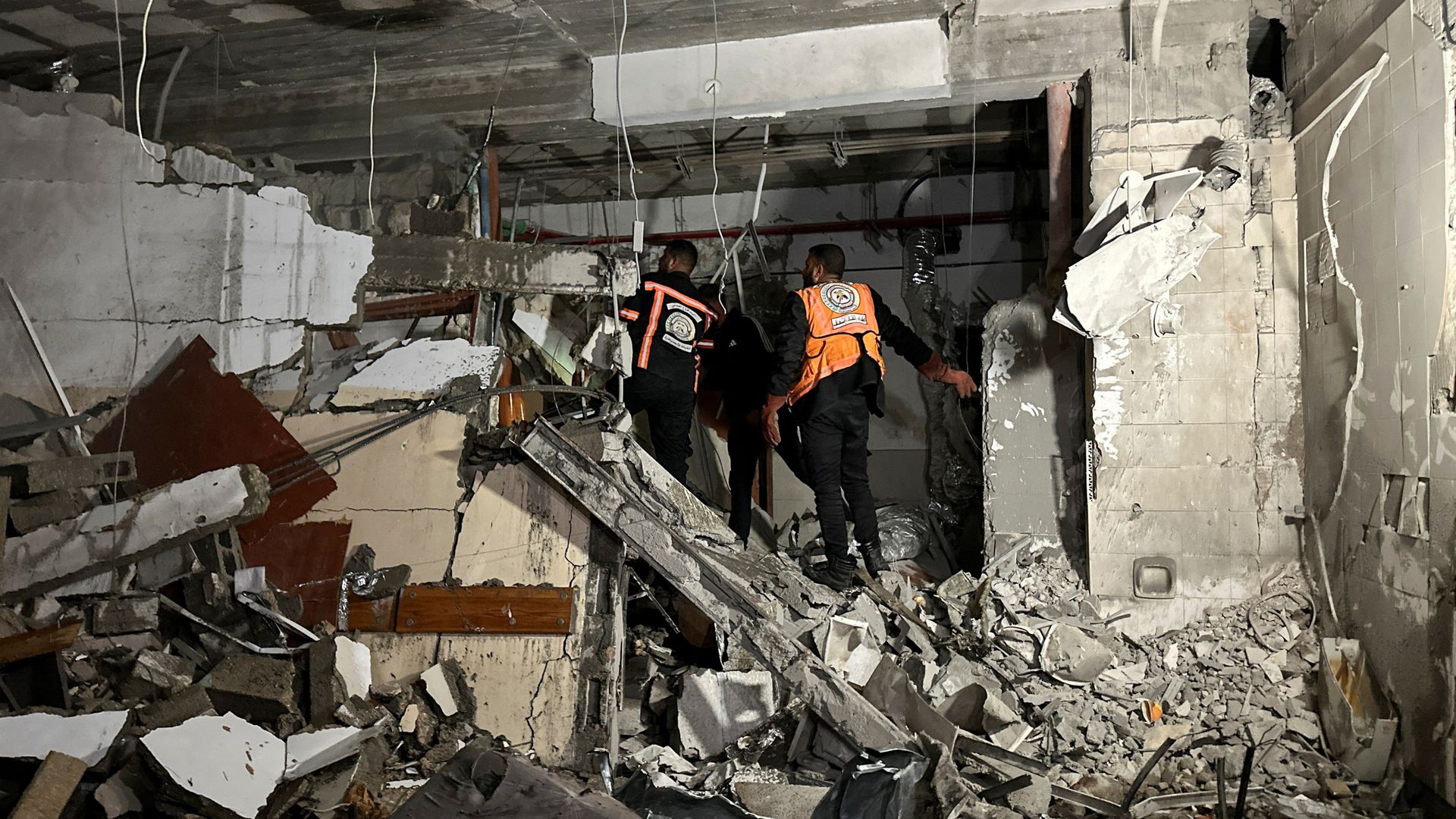
Targeted strikes against senior militant commanders operate on a deceptively simple premise: removing a high-value node degrades an organization's operational capacity faster than the group can regenerate it. When a militant group confirms the death of a senior commander in an airstrike, the public announcement represents the final stage of a complex intelligence, kinetic, and organizational chain. Understanding the true impact of such an event requires stripping away immediate tactical rhetoric and evaluating the underlying mechanics of asymmetric command structures, intelligence-to-strike latency, and organizational resilience.
The Architecture of Asymmetric Command Networks
To measure the operational cost of losing a senior commander, one must first map how militant organizations distribute authority. Unlike conventional state militaries that rely on rigid, hierarchical chains of command where a single severed link can paralyze an entire division, modern irregular forces utilize hybrid cellular networks. These structures balance centralized strategic intent with decentralized tactical execution.
A senior commander in such an apparatus rarely directs squad-level maneuvers in real time. Instead, their primary value lies in three distinct functional domains:
- Resource Allocation and Logistics: Senior figures control the distribution of heavy weaponry, munitions, and financial capital across regional brigades. They maintain the trusted personal networks required to move contraband through contested corridors.
- Inter-Cell Synchronization: While local cells operate autonomously to survive counter-intelligence sweeps, senior commanders synchronize multi-front operations. They ensure that localized ambushes, rocket salvos, and defensive fortifications align with a broader theater-wide campaign.
- Institutional Memory and Doctrine: These individuals serve as the living repositories of tactical adaptation. They understand how to counter specific adversary surveillance platforms, how to structure subterranean defenses, and how to enforce operational security among younger, less disciplined recruits.
When an airstrike eliminates an individual occupying this tier, the immediate kinetic effect is localized, but the systemic shockwave targets these three functions. The adversary is betting that the friction introduced into logistics, synchronization, and institutional memory will outweigh the propaganda value the group extracts from the commander's death.
The Intelligence-to-Strike Pipeline and Targeting Calculus
Executing a strike on a high-value target (HVT) is not a spontaneous tactical reaction; it is the culmination of a resource-intensive targeting cycle often referred to in military doctrine as Find, Fix, Finish, Exploit, Analyze, and Disseminate (F3EAD). The confirmation of a commander's death indicates that the attacking force successfully compressed the time between identifying the target's signature and delivering ordnance—a metric known as sensor-to-shooter latency.
The Intelligence Fusion Bottleneck
Senior militant leaders survive prolonged conflicts by enforcing strict compartmentalization. They avoid electronic emissions, utilize human couriers, and rely on subterranean transit networks. Penetrating this operational security requires multi-source intelligence fusion:
- Signals Intelligence (SIGINT): Intercepting anomalous bursts of encrypted traffic or identifying the unique electronic signatures of peripheral couriers rather than the commander directly.
- Human Intelligence (HUMINT): Recruiting assets within the logistical tail of the organization—drivers, medical personnel, or safe-house operators—who observe physical movement patterns.
- Imagery and Geospatial Intelligence (IMINT/GEOINT): Using persistent aerial surveillance to establish pattern-of-life baselines, identifying subtle deviations such as increased guard rotations or irregular supply deliveries to specific structures.
The convergence of these streams creates a narrow window of vulnerability. The targeting authority must then weigh the strategic value of the target against collateral damage estimations, intelligence source protection, and the risk of revealing surveillance capabilities.
The Attribution and Confirmation Dynamic
A critical variable in these events is the public confirmation by the militant group itself. Organizations frequently delay or withhold confirmation of leadership losses to prevent morale collapse and to deny the adversary battle damage assessment (BDA) verification. When a group rapidly acknowledges a commander's death, it usually signals one of two realities: either the physical evidence is undeniable to local populations, rendering denial counterproductive, or the organization has already activated a pre-designated succession protocol and seeks to pivot immediately toward a narrative of martyrdom and retaliation.
Quantifying Organizational Friction: The Decapitation Debate
In security studies, the efficacy of targeted killings—often termed leadership decapitation—remains heavily contested. Empirical analyses of insurgent and terrorist organizations reveal that the operational impact of removing a senior leader is non-linear and depends entirely on the maturity and bureaucratization of the targeted group.
The Succession Latency Cost
Every militant organization faces a succession latency cost: the time required for a deputy to assume command, establish secure communications with subordinate cells, and gain the trust of external financiers and suppliers. During this transition window, operational tempo typically drops. Subordinate commanders become risk-averse, hoarding munitions and suspending complex operations out of fear that their own communications networks have been compromised.
This risk aversion creates a compounding operational drag. Because modern counter-terrorism forces use the aftermath of a strike to monitor the frantic communication spikes of surviving leaders—the "Exploit" phase of the F3EAD cycle—surviving commanders must choose between maintaining operational silence (which paralyzes their forces) or communicating to reorganize (which exposes them to secondary strikes).
The Bureaucratization Threshold
The long-term efficacy of leadership strikes diminishes as an organization crosses a specific threshold of bureaucratization. Nascent, charismatic groups often collapse when their founder or primary strategist is eliminated, as authority is tied to a single personality rather than an institution. Conversely, deeply entrenched organizations operate like shadow states. They maintain formal military academies, standardized training manuals, and deep benches of mid-level deputies groomed specifically to step into senior roles.
In a highly bureaucratized militant structure, removing a senior commander rarely alters the group's strategic trajectory. The replacement may possess less tactical finesse or fewer personal connections, leading to short-term inefficiencies in resource distribution, but the overarching ideological commitment and baseline operational capacity remain intact. The organization absorbs the shock by flattening its command structure further, delegating greater autonomy to battalion- and company-level commanders.
The Asymmetry of Strategic Outcomes
Evaluating a strike solely on whether it degrades the militant group's military capability misses half the strategic equation. The event operates simultaneously in the physical theater and the cognitive domain, creating a divergence between tactical success and strategic resolution.
Tactical Gains vs. Strategic Blowback
For the state actor executing the strike, the immediate benefits are clear:
- Disruption of Imminent Plots: Eliminating a key planner can abort complex, multi-stage operations that require high-level coordination.
- Deterrence and Psychological Attrition: Forcing surviving leaders to dedicate up to 70% of their daily cognitive bandwidth to personal survival and counter-surveillance severely degrades their capacity to plan offensive campaigns.
- Domestic Political Signaling: Demonstrating intelligence penetration and kinetic reach reassures domestic constituencies and signals resolve to regional adversaries.
However, these tactical gains carry distinct strategic liabilities. Targeted strikes rarely address the underlying political, economic, or territorial drivers that sustain the insurgency. Furthermore, the death of a prominent commander provides the militant group with a powerful recruitment tool, hardening ideological resolve among rank-and-file fighters and potentially radicalizing a new generation of recruits who view the fallen leader as a symbol of resistance.
The Escalation Trap
Public confirmation of a senior commander's death locks both sides into a predictable escalation matrix. The militant organization faces intense internal and external pressure to demonstrate that its deterrent posture has not been broken. Failure to retaliate projects weakness to rivals and constituents alike. Consequently, the group will almost certainly attempt a symbolic or kinetic response, even if its operational capacity is temporarily degraded.
This retaliatory impulse often forces the militant group into suboptimal tactical decisions. Rushing an operation to meet a political timeline increases the likelihood of operational security failures, exposing additional cells to the defending force's intelligence apparatus. The state actor anticipates this surge, shifting its posture from offensive targeting to defensive interception and counter-battery operations, seeking to use the militant group's predictable retaliation to attrit further assets.
Evaluating the Operational Trajectory
To accurately forecast the trajectory of a conflict following the elimination of a senior militant commander, analysts and policymakers must ignore short-term rhetoric and track three concrete indicators over the subsequent 30 to 90 days:
- Variance in Attack Complexity: Monitor whether the militant group's subsequent operations shift from coordinated, multi-axis assaults requiring precise timing to crude, decentralized harassment tactics (such as unguided rocket fire or isolated small-arms engagements). A sustained drop in operational complexity indicates genuine degradation of command-and-control nodes.
- Communication Signature Shifts: Observe changes in the group's public messaging and internal operational security. A sudden cessation of video releases from specific sectors or a sharp decline in localized administrative governance signals that surviving mid-level commanders are prioritizing survival over territorial control.
- Succession Speed and Cohesion: Track how quickly the group names a successor and whether public fractures emerge among rival factions. Rapid, uncontested succession confirms a resilient bureaucratic structure capable of absorbing high-tier losses without systemic failure.
Targeted airstrikes on senior commanders function as a precise instrument of attrition, capable of buying time, disrupting specific operational timelines, and imposing severe cognitive friction on an adversary's leadership. Yet they remain a tactical mechanism, not a standalone strategy. Sustainable degradation of an entrenched asymmetric force requires pairing high-value targeting with persistent disruption of the group's financial arteries, logistical supply chains, and political legitimacy—ensuring that when a replacement commander steps into the vacuum, the apparatus they inherit is hollow.