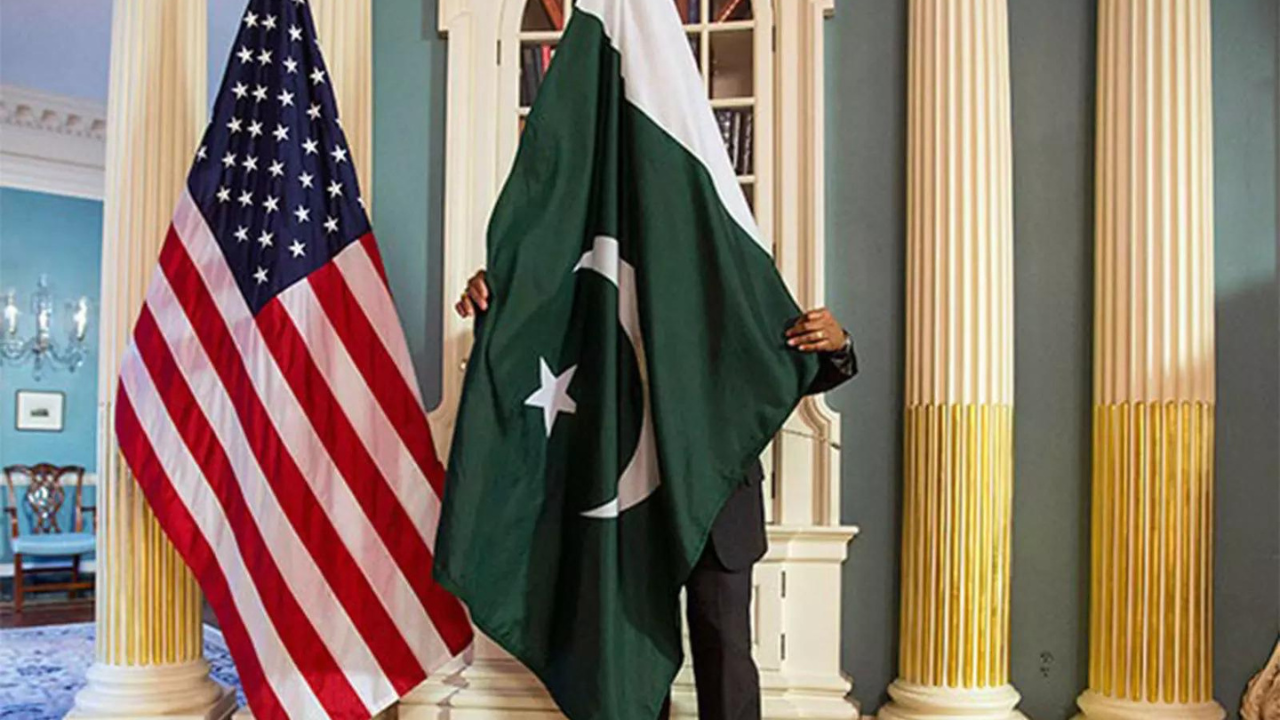
The indefinite suspension of operations at the United States Consulate General in Peshawar represents a shift from tactical security management to strategic geographical decoupling. While public rhetoric often emphasizes "soft" diplomatic engagement and counter-terrorism cooperation between Washington and Islamabad, the physical withdrawal from the Khyber Pakhtunkhwa (KP) capital signals a fundamental recalibration of the American risk-to-utility ratio in the region. This is not a temporary administrative pause; it is a permanent structural adjustment dictated by the erosion of the local security environment and the shifting priorities of the U.S. Central Command (CENTCOM) and Department of State.
The Security-Utility Calculus
Diplomatic outposts function on a specific utility function where the value of local intelligence, trade facilitation, and political influence must exceed the operational costs and security risks of maintaining the mission. In Peshawar, this equilibrium has collapsed.
The primary drivers of this collapse include:
- Asymmetric Threat Escalation: The resurgence of the Tehrik-i-Taliban Pakistan (TTP) and the operational presence of IS-K (Islamic State Khorasan) in the tribal borderlands have turned Peshawar from a high-threat environment into a high-volatility zone.
- Diminishing Returns on Local Engagement: With the U.S. exit from Afghanistan, the requirement for a forward operating diplomatic hub in Peshawar to manage cross-border logistics and intelligence coordination has plummeted.
- The Hardening Bottleneck: Securing a consulate in a dense urban environment like Peshawar requires a massive logistical footprint. The cost of "hardening" a legacy facility against evolving suicide-borne improvised explosive devices (VBIEDs) and complex multi-pronged assaults often exceeds the budget for the actual diplomatic work performed inside.
The decision to shut the consulate is the logical conclusion of a decade-long trend toward "fortress diplomacy," where the requirements for safety eventually render the mission’s original purpose—open engagement and public outreach—impossible.
Strategic Realignment of the Af-Pak Border Policy
The closure indicates that the U.S. has moved away from the "boots on the ground" civilian oversight model in KP. During the peak of the War on Terror, Peshawar served as a nerve center for monitoring the Federally Administered Tribal Areas (FATA). Today, that monitoring is conducted via remote sensing, high-altitude surveillance, and centralized intelligence hubs in Islamabad and the Gulf.
The Shift to Centralized Oversight
By centralizing operations in Islamabad, the State Department achieves three distinct strategic objectives:
- Risk Mitigation: Consolidating staff within the highly secure "Red Zone" of the capital reduces the number of high-value targets exposed to provincial volatility.
- Command Unity: It streamlines communication between the U.S. mission and the Pakistani federal government, removing the "noise" of provincial-level friction that often complicated high-level security negotiations.
- Resource Allocation: Budgetary assets previously dedicated to the massive security detail required for Peshawar are redirected toward regional counter-terrorism (CT) initiatives and broader economic aid frameworks.
Impact on Local Political Dynamics
The absence of a U.S. consulate in Peshawar creates a power vacuum in the local political and civil society landscape. Historically, the consulate acted as a bridge for the Pashtun political elite and civil rights activists seeking international recognition or mediation.
The withdrawal triggers a two-fold consequence for the province:
Erosion of Civilian Leverage
Local political actors in KP now lack a direct, local channel to the world’s most influential superpower. This forces them to mediate all international concerns through Islamabad, which inherently favors the federal government’s narrative and interests. The provincial administration loses its "special status" as a direct partner in international counter-terrorism discourse.
The Narrative of Abandonment
In the information space, the closure is being framed by local actors—including both militants and nationalist politicians—as a sign of American retreat. This perception matters. In the tribal belt, influence is often a product of perceived presence. A physical exit, regardless of technical explanations, is interpreted as a weakening of the U.S.-Pakistan strategic bond in the very region where that bond was most tested.
Logistics as Strategy: The Mechanics of Withdrawal
A consulate closure is an intensive technical operation. It involves the "sanitization" of sensitive data, the relocation of local staff (LE Staff), and the decommissioning of secure communications infrastructure.
The logistical sequence of this withdrawal provides insight into its permanence:
- Technical Sanitization: All classified servers and cryptographic equipment are either physically destroyed or extracted via secure military transport.
- LE Staff Liquidation: Local employees are often the most vulnerable during a closure. The management of their contracts—whether they are offered relocation to Islamabad or severance—dictates the long-term reputation of the U.S. as a reliable employer in the region.
- Facility Handover: The physical structure remains a potential target even when empty. The terms of the handover to the Pakistani government determine whether the site remains a secure zone or becomes a liability.
The methodical nature of these steps suggests that the U.S. is not planning for a "snap-back" capability. Once the specialized infrastructure of a Tier-1 consulate is dismantled, rebuilding it takes years of diplomatic negotiation and physical construction.
The Geopolitical Context of the Closure
The Peshawar decision must be viewed through the lens of the "Great Power Competition" (GPC). As the U.S. pivots its focus toward the Indo-Pacific and countering Chinese influence, it is aggressively cutting costs and reducing exposure in "legacy" conflict zones.
While Pakistan remains a critical player in regional stability, the U.S. no longer views KP as a primary theater for direct civilian investment. Instead, the relationship is transitioning back to a transactional security model managed through the military-to-military (mil-to-mil) channel. This effectively "re-militarizes" the U.S. presence in Pakistan, moving away from the "Kerry-Lugar-Berman" era of massive civilian aid and multi-city diplomatic presence.
Operational Limitations and Future Risks
There are inherent dangers in this retrenchment. The most significant is the "Intelligence Black Hole." Remote monitoring can track troop movements or major training camps, but it cannot replicate the nuanced, granular understanding of local tribal politics that comes from a physical presence in Peshawar.
The U.S. is betting that:
- The Pakistani military can sufficiently contain TTP spillover without direct U.S. civilian oversight in the province.
- The technological gap in intelligence gathering can be bridged by satellite and signals intelligence (SIGINT).
- The political fallout of "abandoning" the KP leadership is manageable compared to the risk of a high-profile attack on American personnel.
If any of these assumptions prove false—for example, if a major attack is planned in the KP heartland that goes undetected due to lack of local human intelligence (HUMINT)—the cost of this closure will be measured in more than just saved security budgets.
Strategic Play: The Integrated Security Hub
The State Department’s next logical move is the formalization of the "Integrated Security Hub" model. This involves concentrating all diplomatic, intelligence, and aid operations into a single, high-survivability location (Islamabad) while utilizing mobile "expeditionary" teams for short-term provincial missions.
This model prioritizes force protection over presence. For the regional stakeholder, the takeaway is clear: the United States is no longer a resident power in the frontier. It is an over-the-horizon observer. This shift necessitates that Pakistan’s provincial and federal governments assume 100% of the security and administrative burden of the border regions, a task they have historically struggled to achieve without significant American logistical support.
The closure of the Peshawar consulate is the final punctuation mark on the post-9/11 era of American diplomacy in South Asia. It signals a move toward a more clinical, detached, and security-focused engagement that prizes internal efficiency over local influence. The burden of stability now rests entirely on the local apparatus, while the U.S. observers from the fortress of the capital and the vantage of the sky.