The divergence between International Atomic Energy Agency (IAEA) technical reporting and sovereign state allegations regarding strikes on nuclear infrastructure is not a mere failure of communication; it is a manifestation of the Verification-Information Gap. When high-kinetic military actions intersect with hardened nuclear facilities, the window for objective truth narrows as both parties prioritize strategic ambiguity and domestic narrative control over transparent data sharing.
The core of the current tension lies in the distinction between Superficial Structural Impact and Functional Capacity Degradation. An IAEA assessment of "no sign of damage" typically refers to the integrity of containment structures and the presence of declared nuclear material. Conversely, an allegation of a "hit" may refer to the disruption of auxiliary systems—power grids, ventilation, or cooling loops—which are technically located outside the primary containment but are operationally vital.
The Triad of Nuclear Verification Constraints
Evaluating the veracity of claims regarding Iranian nuclear sites requires understanding the three layers of the IAEA’s operational framework:
- The Safeguards Agreement (CSA) and the Additional Protocol: The IAEA is limited by its legal mandate. Its inspectors are not forensic bomb experts or military intelligence officers; they are nuclear material accountants. Their primary metric is the "Significant Quantity" (SQ) of material. If the seals on a canister of UF6 (uranium hexafluoride) are intact, the IAEA’s technical report will reflect stability, regardless of whether a nearby administrative building or a power substation was neutralized.
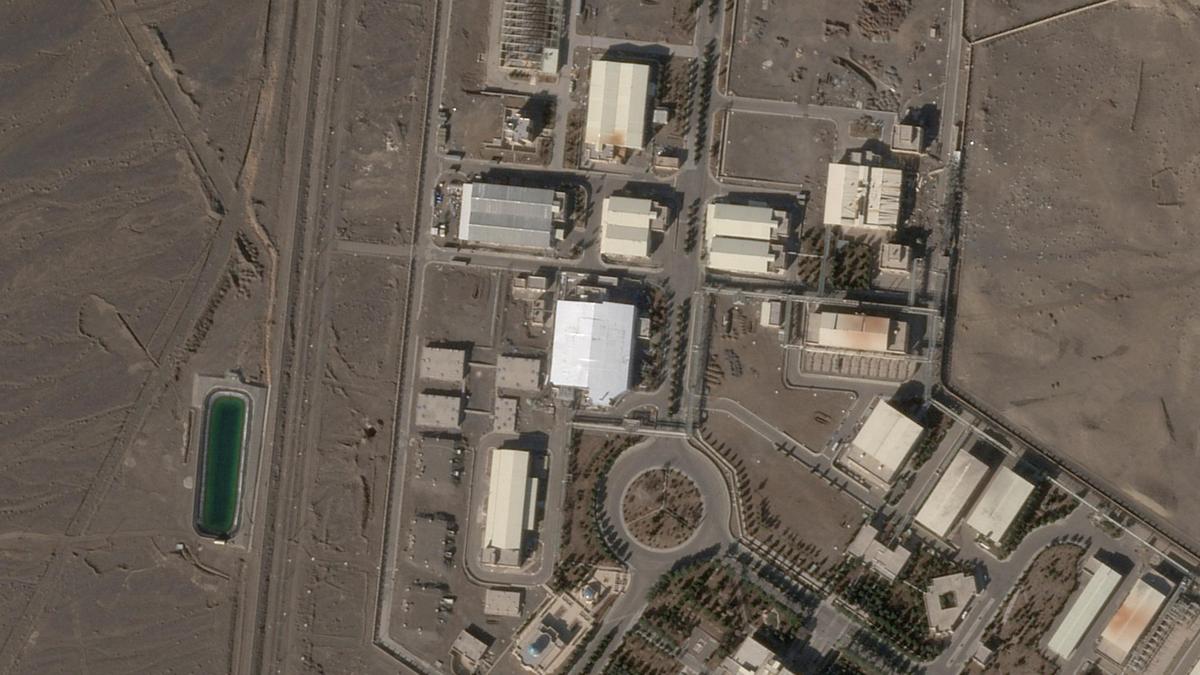
- Latency in Physical Access: There is a structural delay between an event and an on-site inspection. Satellite imagery provides immediate but low-resolution visual data, which can be fooled by camouflage or simple debris clearance. By the time an inspector walks the floor at Natanz or Fordow, the site may have been sanitized or repaired.
- The Signal-to-Noise Ratio in Dual-Use Infrastructure: Many systems supporting a nuclear site are dual-use. A strike on a radar array or a surface-to-air missile battery protecting a site like Isfahan does not constitute a "hit on a nuclear site" under IAEA definitions, even if it renders the site vulnerable to future kinetic action.
Analyzing the Mechanics of Hardened Site Protection
The Iranian nuclear program utilizes Vertical Stratification to mitigate strike risk. By moving the most sensitive enrichment processes, specifically those involving IR-6 centrifuges, into deep underground facilities like Fordow, the cost of a successful kinetic disruption increases exponentially.
- The Overburden Factor: The thickness of rock and reinforced concrete above the centrifuge halls acts as a physical filter. Conventional munitions may cause "surface scarring" without impacting the centrifuge cascades. This creates a disconnect where a satellite sees a massive explosion (confirming a strike to the world) but the internal enrichment process remains at a steady state (confirming no damage to the IAEA).
- Decentralized Support Systems: To ensure resilience, hardened sites employ redundant, localized power and cooling. A strike that targets the national grid fails to halt enrichment if the site-specific diesel generators or battery backups remain operational. This leads to conflicting reports: the attacker claims a successful disruption of the "facility's operations," while the IAEA reports no change in the nuclear material status.
The Cost Function of Strategic Ambiguity
For Iran, alleging a hit where the IAEA sees none serves a specific geopolitical utility. It allows the state to frame itself as a victim of "nuclear terrorism" while simultaneously signaling that its defenses are capable of absorbing such hits without a loss of technical capability. This is the Resilience Paradox: the louder a state complains about an attack, the more it might be attempting to obscure the fact that the attack was actually ineffective, or conversely, to hide the specific nature of a critical vulnerability that was exposed.
For the IAEA, the priority is the Maintenance of Continuity of Knowledge. If the agency were to validate unverified claims of damage, it would compromise its status as a neutral technical arbiter. This neutrality is the only currency the IAEA has to maintain access to Iranian sites. If they deviate into political or military speculation, they risk being expelled, which leads to a "black box" scenario—the ultimate failure of the non-proliferation regime.
The Logistics of Centrifuge Sensitivity
Centrifuges are high-speed rotating machines that operate at the edge of material fatigue. Even if a missile does not penetrate the ceiling of a facility, the Seismic Shockwave from a near-miss can be catastrophic.
- Vibrational Resonance: A kinetic impact nearby sends a shockwave through the bedrock. If the frequency of that shockwave matches the resonant frequency of the spinning centrifuges, it can cause the rotors to touch the casing, leading to a "crash" of the entire cascade.
- Vacuum Integrity: Centrifuges operate in a vacuum. A shock that causes even microscopic fractures in the piping or the centrifuge housings introduces air, which instantly destroys the UF6 gas and the machinery.
- Electronic Flux: Electromagnetic pulses or localized electronic warfare accompanying a strike can fry the logic controllers (PLCs) that manage the cascade's balance.
In these instances, the IAEA might report "no structural damage," yet the facility could be functionally dead for months. This is where "no sign of a hit" becomes a technically true but operationally misleading statement.
The Intelligence-Verification Gap
Most public discourse ignores the role of Open-Source Intelligence (OSINT) vs. On-Site Verification. OSINT analysts look for thermal signatures, debris piles, and changes in security cordons. While highly effective for identifying that an event occurred, these metrics are poor at identifying what happened inside the wire.
The IAEA’s reliance on environmental sampling—swiping surfaces for microscopic particles of uranium—is the gold standard of verification but has high temporal latency. Lab analysis in Seibersdorf, Austria, can take weeks. Therefore, the "no sign" statement issued immediately following a reported incident is almost always based on visual inspection and remote monitoring data, both of which are susceptible to the Shadow of Uncertainty.
Operational Recommendation: Decoupling Rhetoric from Enrichment Metrics
Decision-makers should ignore the surface-level "hit vs. no hit" debate and focus on the Enrichment Velocity.
If Iran’s stockpile of 60% Highly Enriched Uranium (HEU) continues to grow at its historical rate of approximately 3kg to 5kg per month following a reported strike, the strike was functionally irrelevant. If the growth rate plateaus or dips, a disruption occurred regardless of what the IAEA or the Iranian Ministry of Foreign Affairs says.
The strategic play is to monitor the Feed-to-Withdrawal Ratio. A sudden increase in the consumption of natural uranium feedstock without a corresponding increase in HEU output indicates a massive failure in the centrifuge cascades, likely caused by the "soft kills" of seismic or electronic disruption. This is the only data point that bypasses the narrative layers of both the IAEA and the sovereign actors involved. Use the IAEA's quarterly reports to calculate this ratio; any deviation greater than 15% from the projected output indicates a successful, albeit invisible, degradation of the facility's functional core.