The headlines are screaming about escalation. The IRGC claims they’ve put a bullseye on the Prime Minister’s office. The "lazy consensus" among defense analysts is that this represents a terrifying new chapter of direct conflict. They’ll tell you that the deterrent fence has collapsed and that we are one drone strike away from a regional apocalypse.
They’re wrong.
By framing Benjamin Netanyahu’s office as a primary military target, Tehran isn't projecting strength. They are admitting their conventional strategy has hit a brick wall. They are trading geopolitical leverage for a PR stunt that actually solves Israel’s biggest internal problems. If you want to understand the Middle East, stop looking at the explosions and start looking at the incentives.
The Myth of the Precision decapitation
The Western media loves the "decapitation strike" narrative. It’s cinematic. It feels decisive. But in the world of high-stakes statecraft, killing a head of state is rarely a winning move for the aggressor.
When the IRGC targets the Prime Minister’s office, they aren't engaging in a military operation. They are engaging in theater.
- Political Resurrection: Before these threats, Netanyahu’s domestic standing was a minefield of protests and coalition friction. Nothing heals a fractured Israeli electorate faster than an existential threat from Tehran. Iran is effectively acting as Netanyahu’s best campaign manager.
- The Martyrdom Trap: If Iran were actually successful, they wouldn't eliminate Israeli resolve; they would canonize it. Israel’s security apparatus is built on institutional redundancy, not a single personality. The successor wouldn't be a dove; they would be a hawk with a mandate for total war.
I’ve watched analysts track the flight paths of Shahed drones and Fattah missiles as if the technology is the story. It isn't. The story is the desperation of a regime that has realized its "Ring of Fire" proxy strategy is being dismantled piece by piece in Gaza and Lebanon. When you can’t win the proxy war, you start making threats against the palace. It’s a sign of weakness, not a "game-changer."
Stop Asking if Iran Can Hit the Target
People keep asking: "Does Iran have the capability to bypass the Arrow-3 or David’s Sling?"
That is the wrong question.
The real question is: "Why would Iran want to give Israel a 'Pearl Harbor' moment?"
Currently, Israel faces significant international pressure regarding its conduct in regional conflicts. There are debates in the US Congress. There are protests in London and Paris. The moment a Persian missile hits a civilian-occupied government building in West Jerusalem, that pressure evaporates. The diplomatic "shield" Iran currently enjoys from its allies in Moscow and Beijing would crack.
Iran knows this. This is why their "targeted" strikes are often telegraphed, slow-moving, and designed to be intercepted. It’s a calibrated dance of "look at me" without actually "hitting me."
The Logic of the Empty Threat
Let’s look at the math of modern air defense. The cost-to-kill ratio is skewed, but not in the way you think.
- Interceptor Cost: High. Millions per shot.
- Drone Cost: Low. Thousands per unit.
Conventional wisdom says Iran wins by draining Israel’s coffers. But this ignores the reality of US military aid and the industrial capacity of Israeli defense firms like IAI and Rafael. Israel isn't running out of interceptors because Iran says they’ll hit an office building. In fact, every failed Iranian attempt serves as a live-fire marketing demonstration for Israeli tech, driving up export orders from countries terrified of Iranian hegemony.
The Sovereignty Paradox
There is a fundamental misunderstanding of "Sovereignty" in this conflict. Most pundits treat it as a binary—either you have it or you don’t.
Iran views sovereignty as a tool for plausible deniability. By using the IRGC to make these claims rather than the Iranian Foreign Ministry, they try to keep one foot in the "revolutionary" camp and one in the "diplomatic" camp.
But this double-play is failing. By explicitly naming the PM’s office, they have crossed the line from supporting a "resistance" to state-sponsored assassination attempts. This simplifies the legal and ethical framework for an Israeli counter-strike on Iranian soil.
If I’m an Israeli strategic planner, I’m not scared of this announcement. I’m leaning into it. It provides the international justification for "Project Daniel" style scenarios—taking out the head of the snake rather than just its tail.
What the "Experts" Get Wrong About Deterrence
Deterrence isn't about what you can do; it’s about what your enemy thinks you will do if they cross a line.
Iran’s "red lines" have become a joke. They drew a line at the Damascus consulate strike. Israel crossed it. They drew a line at Haniyeh's assassination in Tehran. Israel crossed it. Now, they are drawing a line at the PM’s office.
When you keep drawing lines and the enemy keeps using them as a doormat, you aren't deterring anyone. You are inviting further aggression. The IRGC’s rhetoric is a desperate attempt to reclaim a fearsome reputation that has been systematically dismantled over the last eighteen months.
The Strategy of Noise
We are living through the democratization of propaganda. You don't need to win a war if you can win the 24-hour news cycle.
Iran’s announcement is designed for a specific audience: the "Arab Street" and their own hardliners. They need to show that they are "doing something" while their proxies in the region are being degraded. It’s a survival mechanism for the regime's internal credibility.
If you are an investor or a policy-maker, ignore the theatrical threats. Look at the shipping lanes. Look at the enrichment levels. Look at the structural integrity of the IRGC’s command and control in Syria. That is where the real war is being lost.
The targeting of a Prime Minister’s office is the ultimate distraction. It’s the "Hail Mary" of a team that’s down by thirty points in the fourth quarter. It’s loud, it’s dramatic, and it almost never works.
Stop Falling for the Hype
The premise that this "escalation" changes the nature of the conflict is flawed. The conflict has always been existential. The targets have always been high-value. The only thing that has changed is Iran’s willingness to be honest about its failures.
They cannot stop the IAF. They cannot protect their proxy leadership. So, they point a finger at a building in Jerusalem and hope the world flinches.
Don't flinch.
Understand that in the Middle East, the loudest threat is usually a cover for the deepest wound. The IRGC isn't preparing for a final blow; they are screaming because they are being backed into a corner where their only remaining tool is a headline.
If the IRGC actually wanted to hit Netanyahu, they wouldn't have issued a press release first. Success in this arena is measured in silence and craters, not in tweets and televised proclamations. The fact that we are talking about it proves it has already failed as a military operation. It is now merely a data point in the long history of revolutionary bluster.
Pack away the maps and the "Red Alert" notifications. The real shift isn't that Iran is targeting a building; it's that Iran has officially run out of better ideas.
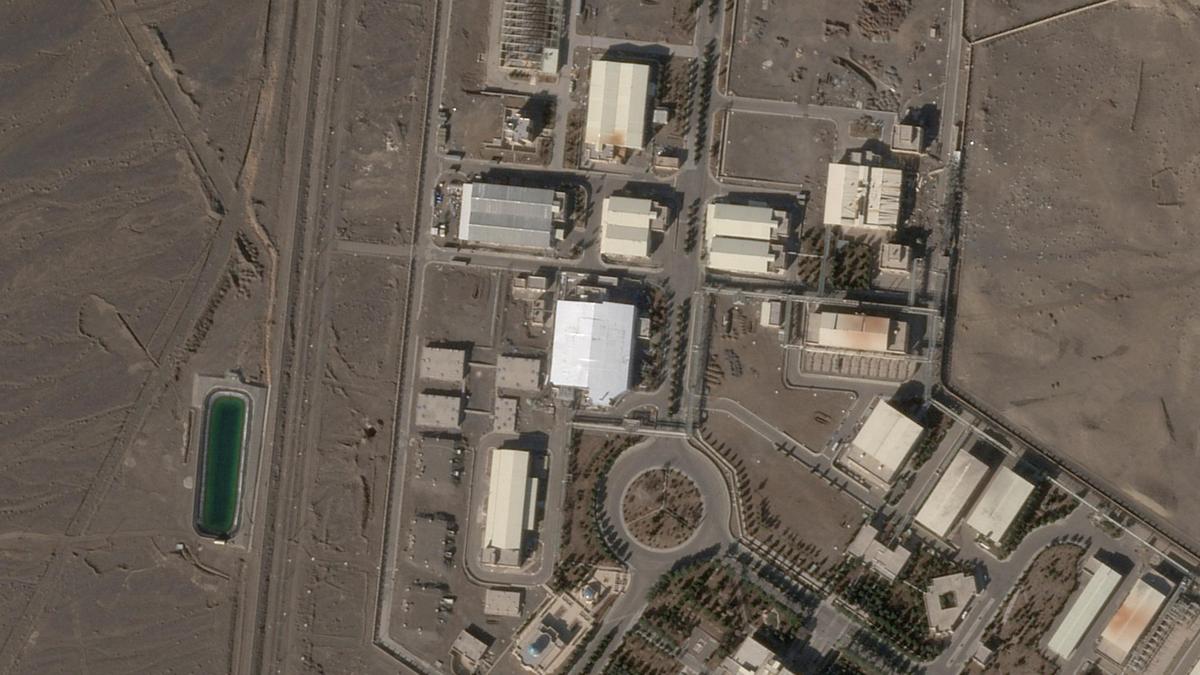
Go look at the satellite imagery of Isfahan or the docks at Bandar Abbas. Watch the currency fluctuations of the Rial. That is the real battlefield. The rest is just smoke and mirrors designed to keep you from noticing that the "axis of resistance" is currently an axis of retreat.
Stop treating Iranian press releases as military doctrine. Start treating them as what they are: a cry for help from a regime that has lost the initiative and is terrified of what happens when the theater lights finally go out.