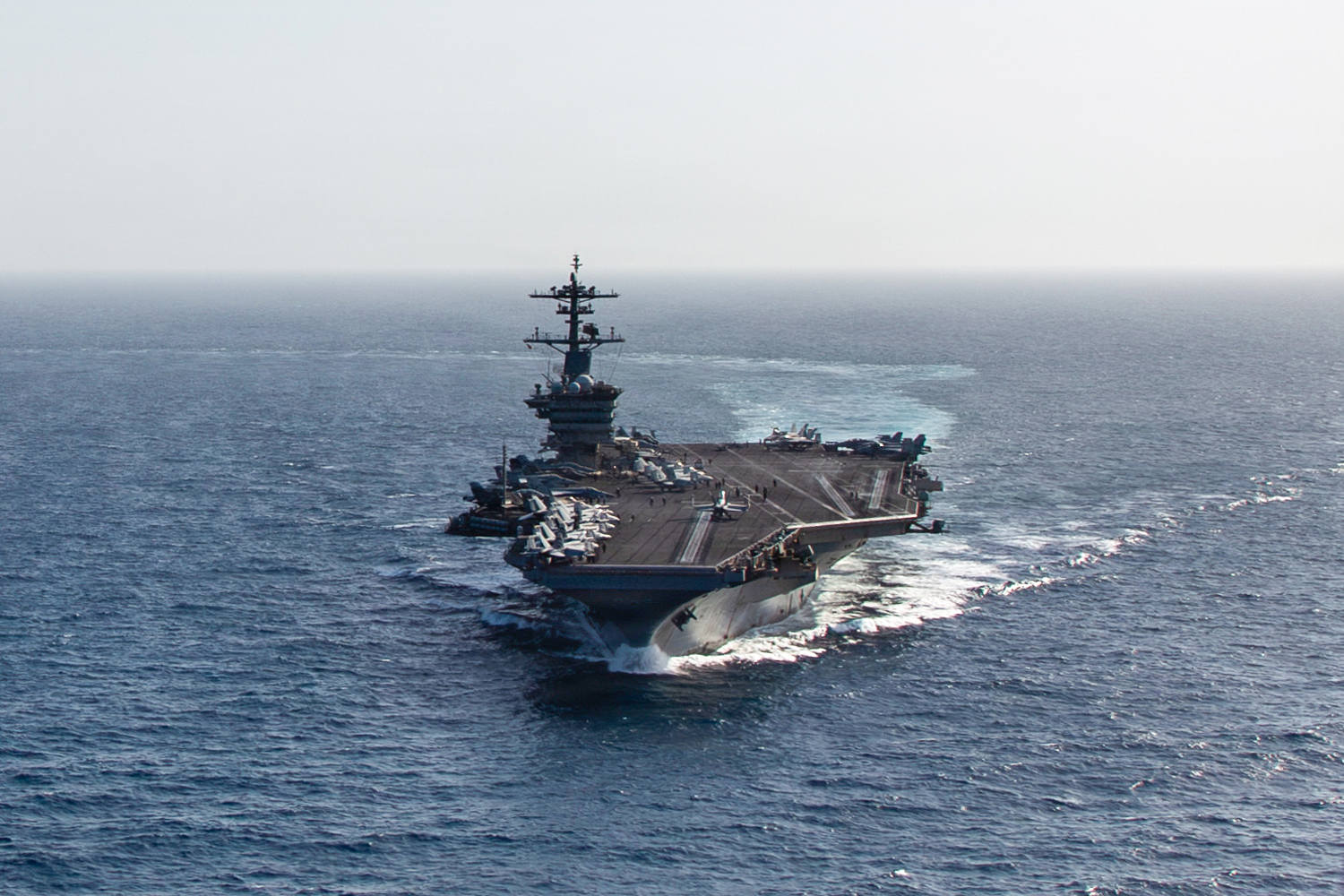
Military organizational stress operates under a distinct economic and operational calculus. When a naval strike group experiences an acute cluster of suicides, the institutional response typically defaults to behavioral health interventions at the tactical edge. This approach fundamentally misdiagnoses the failure mode. An isolated cluster of self-harm events across a single capital ship deployment is rarely an aggregation of individual psychiatric anomalies; it is a system-level failure of operational tempo, mechanical reliability, and feedback loops between tactical stress and command support structures.
Deconstructing the operational breakdown within the USS Abraham Lincoln strike group requires analyzing the structural variables that govern high-readiness naval deployments: extended operational extensions, deferred maintenance backlogs, chronic sleep deprivation, and the friction of modern naval warfare communications.
The Operational Cost Function of Extended Deployments
Naval readiness metrics prioritize presence over sustainability. When a strike group's deployment window is extended—often referred to as an "extension" or "plus-up"—the institutional objective is to maintain regional deterrence. However, the internal cost function of this decision is borne entirely by the enlisted and officer personnel through accelerated fatigue accumulation.
Operational Strain = (Deployment Duration × Operational Tempo) / (Maintenance Infrastructure + Rest Architecture)
In environments where deployment extensions occur without a proportional increase in personnel rotation or rest cycles, the psychological depreciation follows a predictable curve. The initial phase of a deployment absorbs normal operational friction. As the timeline stretches past the standard six-to-nine-month threshold, cognitive reserve depletes.
The primary structural drivers of this depletion include:
- Continuous Watchstanding Schedules: The traditional five-section or three-section watch rotation degrades REM sleep cycles over weeks and months, impairing prefrontal cortex functioning, emotional regulation, and risk assessment capabilities.
- Maintenance Deficits at Sea: When critical equipment degrades—such as propulsion systems, combat systems, or environmental control units—the burden falls on shipboard engineering and technical divisions to execute depot-level repairs in an operational environment. This introduces high-stress micro-deadlines and extreme physical labor under hazardous conditions.
- Communication Friction: Modern connectivity allows personnel to maintain real-time awareness of domestic stressors while being physically isolated and operationally constrained. This juxtaposition creates a persistent psychological tension known as boundary blurring, where home-front crises cannot be acted upon and deployment anxieties cannot be escaped.
Command Climate Mechanics and the Reporting Loop
A frequent point of failure in military institutional analysis is the assumption that communication flows upward with absolute fidelity. In hierarchical organizations governed by fitness reports and career progression incentives, a localized command climate often functions as an echo chamber.
When operational demands outstrip available resources, middle-tier leadership—department heads, executive officers, and commanding officers—face a structural bind. Reporting severe personnel degradation or systemic fatigue risks signaling mission failure or operational incompetence to flag officers. Consequently, the incentive structure encourages local absorption of risk.
This dynamic generates three distinct systemic vulnerabilities:
- The Threshold Paradox: Personnel do not seek help until performance degradation crosses a visible threshold. By the time an individual's operational output drops enough to trigger formal intervention, the underlying clinical distress has usually progressed past early-stage mitigation.
- Stigma as an Operational Risk: Despite institutional campaigns to normalize mental health care, the informal culture of high-performance technical units often equates psychological seeking with operational liability. Sailors fear that reporting depressive symptoms or suicidal ideation will result in administrative reassignment, loss of qualification, or professional marginalization.
- Peer Support Overload: In the absence of accessible formal support systems during high-tempo operations, junior leadership and peers absorb the psychological triage load. This leads to secondary trauma and collective burnout across entire divisions.
The Mechanical Relationship Between Readiness and Resilience
Resilience is frequently discussed as an individual trait, but in a military context, it is an organizational asset derived from predictability and control. When sailors lose control over their schedules, their living conditions, and their career trajectories, perceived helplessness increases.
The physical environment of a supercarrier exacerbates this dynamic. High ambient noise levels, crowded berthing compartments, limited personal space, and restricted access to natural light create chronic physiological arousal. The sympathetic nervous system remains in a low-grade state of activation for the duration of the deployment.
When external stressors compound—such as extended watches, hostile regional environments, and uncertain return dates—the physiological system loses its baseline for recovery. The intervention models deployed by the military—such as mandatory resilience training briefs or post-incident stand-downs—often fail because they address cognitive awareness while leaving the underlying physiological and operational stressors untouched. True mitigation requires structural adjustment: hard caps on deployment lengths, rigorous enforcement of crew rest standards, and the decoupling of operational presence from personnel retention limits.
Strategic Realignment for High-Tempo Operations
Addressing institutional self-harm crises within naval forces requires moving away from reactive psychological post-mortems and toward predictive operational design.
The military must decouple readiness targets from sustained operational extensions. If a strike group requires continuous presence in a theater, the force structure must provide overlapping relief mechanisms rather than stretching single hulls and crews past their physiological breaking points. Furthermore, administrative reporting channels must be redesigned to decouple safety reporting from command evaluation metrics, ensuring that tactical commanders are rewarded, rather than penalized, for identifying and surfacing human capital degradation before it manifests as a crisis.