Smoke smells like wet charcoal and burnt plastic long after the sirens stop.
I know this because I have stood outside too many scorched doorways with notebooks in my hand, watching adults try to look strong while their children stare at a crack in the pavement as if it might open up and swallow them whole. In the wake of a devastating fire—like the kind that tears through a dense residential district such as Tai Po—adults immediately begin counting things. They count square footage. They count insurance forms, replacement clothes, temporary hotel nights, and lost documents. Expanding on this topic, you can find more in: Closing Twenty Maternity Units Is Not a Tragedy It Is Math.
Children count differently.
They notice that the red firetruck on the shelf is gone. They notice that their mother’s voice sounds thinner when she answers the phone at night. They notice that the air still feels heavy, even when the sky above the New Territories turns a clean, ordinary blue. Experts at WebMD have also weighed in on this situation.
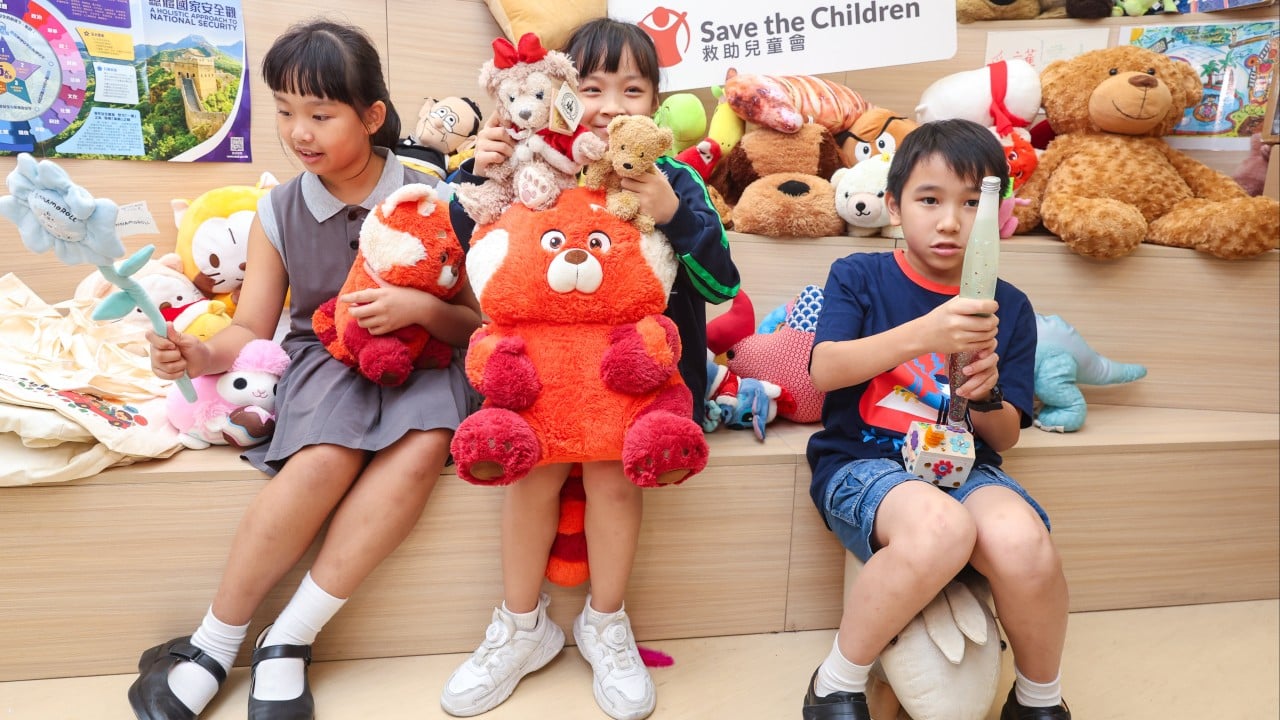
When a fire strikes a community, the visible damage is stark and immediate. Blackened concrete. Melted window frames. Tape fluttering in the wind. Yet the deeper fracture happens out of sight, inside young nervous systems that were never built to process sudden terror on that scale. For many children affected by a major blaze, recovery does not look like a neat upward line on a chart. It looks like a slow, uneven thaw—and often, it begins on a low wooden table surrounded by blocks, clay, and miniature figures.
The Quiet Aftermath of a Blaze
Adults tend to ask children direct questions when something terrible happens. Are you scared? Do you want to talk about what happened?
To a grown-up, those questions feel gentle and open. To a six-year-old whose world just turned loud, hot, and chaotic, they can feel like walking into a dark room without a flashlight. Children often do not have the vocabulary—or the emotional bandwidth—to put terror into neat sentences. Sometimes they don’t even know what they are feeling until their body forces the issue: a stomachache before school, a refusal to sleep with the door closed, a sudden burst of anger over a spilled cup of milk.
Trauma in childhood rarely announces itself with a single dramatic speech. More often, it hides in small shifts. A child who used to chatter on the walk to school goes quiet. Another child becomes hyper-alert, jumping every time a siren wails three streets away or stiffening when a neighbor drops a heavy bag in the hallway.
To make this concrete, let me introduce a hypothetical child—let’s call him Leo, seven years old, living in a high-rise block near Tai Po when an alarm shatters the evening routine. (This is a composite, hypothetical scenario created to illustrate common post-disaster reactions rather than any single real person’s private medical record.) In the hypothetical story, Leo isn’t physically burned. Physically, the triage sheet says he is fine. Yet two weeks later, in a crowded temporary shelter, Leo refuses to sit near the exit doors—or conversely, clings so tightly to his mother’s sleeve that she cannot walk to the restroom without him panicking.
Why does a child who escaped without a scratch act as though danger is still standing right behind him?
Because the brain’s alarm system does not run on calendars or property lines. When a sudden threat overwhelms a child, the amygdala—the brain’s early-warning center—records the sensory signature of danger: heat, shouting, flashing lights, strangers in helmets, the smell of smoke. Long after the immediate hazard is gone, a harmless trigger can set that alarm ringing again.
That is confusing. It can also be frightening for parents who are already exhausted, grieving lost belongings, and trying to figure out where they will sleep next month. I have sat across from parents who felt guilty because their child was acting "difficult" or "babyish" after a crisis, not realizing that regression is often a sign of a nervous system trying to regain footing.
Why Play Is Not Just Child’s Play
When people hear the phrase play therapy, some picture a room full of toys where a counselor simply watches a kid push a toy car around for forty-five minutes. It can look deceptively simple from the outside.
A helpful metaphor here is translation. (This is an analogy to explain how symbolic play works in trauma care.) If a child’s distressing memories are locked inside a vault with no key in spoken language, play acts like a translator that lets those feelings move safely into the open without overwhelming the child all at once.
In structured therapeutic play, a toy ambulance isn’t just plastic wheels and a siren. It can become a way for a child to re-enact rescue, control, and survival—this time at their own pace. A tower of wooden blocks built up and knocked down repeatedly might be a child testing whether things can break and still be rebuilt. Burying small figures in sand and digging them out might be a quiet rehearsal of finding what was lost.
Notice what is happening in those moments. The child is the director.
During a real emergency, children have almost zero control. Adults lift them, move them, tell them where to stand, and carry the heavy decisions. Play therapy restores a vital sense of agency. When a child decides whether the toy firefighter arrives early or late, whether the door stays shut or opens, or whether the clay animal hides in a cave, they are practicing mastery over fear in a protected space.
Progress is rarely dramatic. You do not usually get a movie moment where a child sets down a block, takes a deep breath, and announces they are cured. Instead, you see incremental shifts:
- A child who wouldn’t enter the room steps across the threshold and stays for ten minutes.
- A child who knocked over every structure in frustration begins leaving one small wall standing.
- Nightmares still happen, perhaps twice a week instead of every night, or the child wakes up and finds words they couldn’t find before.
Slow and steady sounds modest on paper. In lived life, after a terrifying event, steady is everything.
What Parents and Caregivers Run Into
Here is the part nobody talks about enough: supporting a traumatized child while you are carrying your own shock is grueling work.
Consider what happens next when a parent is trying to hold everything together. You might be filling out endless forms, dealing with housing uncertainty, worrying about income, and mourning a home that held years of family memories. Then your child melts down over socks that feel "wrong" or refuses to go to sleep unless a lamp stays on all night.
It is easy to feel depleted. It is also easy to wonder whether you are doing enough—or whether pushing your child to "be brave" is helping or hurting.
From what clinicians and disaster-response practitioners consistently observe after fires and displacement, pushing a child to forget or move on too quickly often backfires. Saying “You’re safe now, there’s nothing to worry about” comes from love, yet to a frightened child it can feel like their fear isn’t allowed to exist. Validating the feeling without feeding the panic works far better: “That fire was really scary, and right now you’re safe with me in this room.”
Another common trap is assuming that younger children don’t understand enough to be deeply affected. Toddlers and preschoolers may not grasp news reports or long-term housing plans, but they read emotional weather like barometers. They feel tension in a caregiver’s jaw, hurry in footsteps, and sorrow in quiet silences. Even very young children need steady routines, predictable faces, and age-appropriate reassurance.
And what if a child doesn’t seem affected right away?
Delayed reactions happen. Sometimes a child stays remarkably calm during the immediate scramble—almost like a soldier on duty—and only unravels weeks later once things appear to settle down. That doesn’t mean the earlier calm was fake; it often means their nervous system saved the processing for when it felt slightly safer to let go.
Looking Closely at Recovery
When reports say children are making slow, steady progress through play therapy after a fire like the one in Tai Po, what should a reader actually picture?
Think less about a single magic technique and more about an environment of safety built brick by brick. A skilled play therapist creates clear boundaries—so the child knows they cannot hurt themselves, the therapist, or the room—while giving emotional room for anger, grief, confusion, and silliness.
Sometimes the play is loud and messy. Paint gets spilled, monsters battle, alarms go off in imaginary scenarios. Other times it is remarkably quiet. A child might spend twenty minutes lining up small animals in neat rows, checking that every single one has enough space.
Why line up animals in neat rows?
Order. When outer life feels unpredictable, creating order on a tabletop is one way a young mind says, Here, at least, things are where they belong.
Over time, those small moments accumulate. A child begins talking a little more openly about what frightened them. Sleep stretches a little longer. Appetite returns. Laughter sneaks back in—sometimes catching a parent off guard, followed by a brief wave of guilt at laughing after tragedy, before the parent realizes that joy is proof of life returning, not disrespect for what was lost.
Recovery after a major fire isn’t a race back to who a child was before the smoke. That version of childhood saw a world where walls didn’t burn. The child moving forward carries more awareness, and sometimes more sensitivity, than before. The goal of play therapy isn’t to erase history; it is to help the child carry it without being crushed by it.
How a Community Heals Around Its Youngest Members
A single therapy session cannot fix a shattered neighborhood or replace a lost home. Healing happens inside a web of support—parents, teachers, neighbors, social workers, and counselors all holding steady enough for the children to lean on.
Schools and community spaces play a quiet, essential role here. When a classroom keeps familiar songs, clear expectations, and warm check-ins, it gives children a second anchor outside the home. When teachers watch for subtle signs—a child drawing dark smoke repeatedly, flinching at loud noises, withdrawing from friends—they can connect families with support earlier rather than waiting until distress turns into a crisis.
Most of all, children watch how the grown-ups around them handle hard things. They don’t need parents or helpers to be superheroes without cracks. They need adults who tell the truth simply, stay present when emotions run high, and keep showing up tomorrow.
Weeks pass. Months pass. The smell of smoke fades from clothes and hair. Scaffolding goes up, repairs move forward, and life tries to stitch itself back together.
One afternoon, a child sits on a cushion, picks up a small wooden block, and sets it gently on top of another—not to knock it down this time, just to see how high it can stand before evening comes.