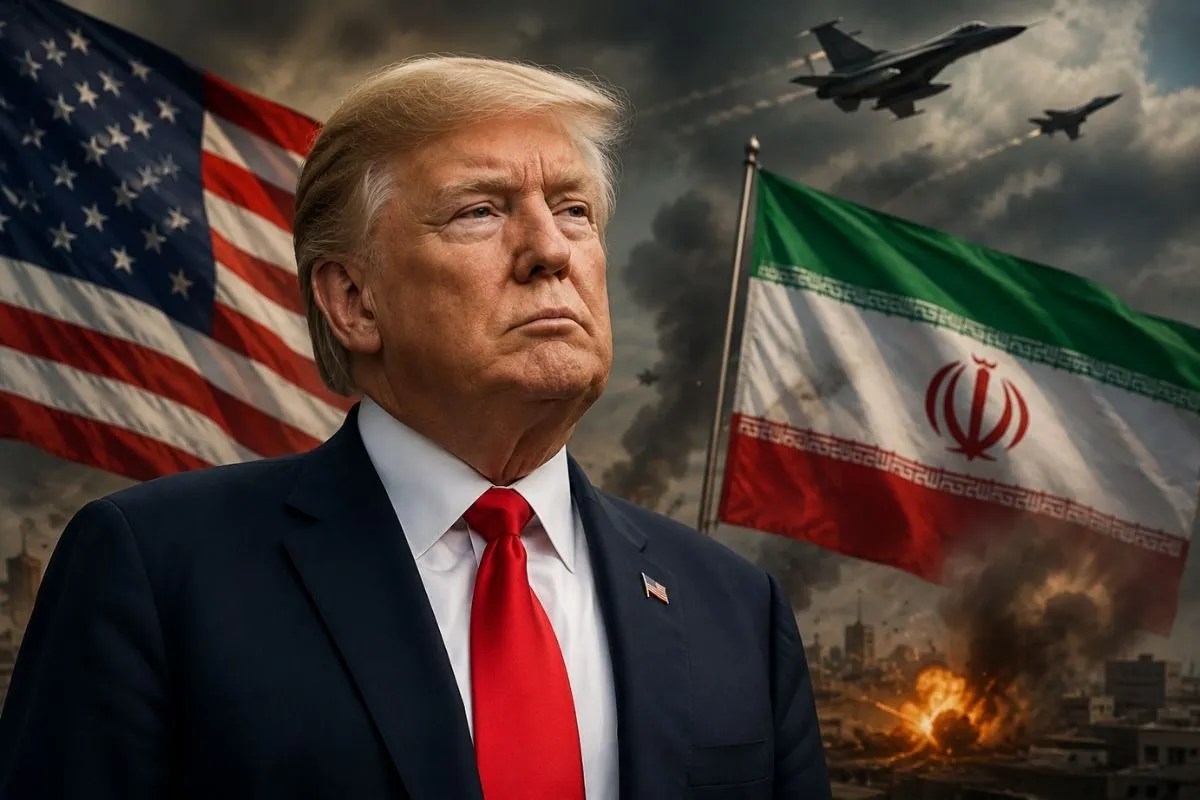
The conventional punditry loves a neat narrative. They look at Donald Trump declaring the military campaign effectively over, look at Tehran tossing out a grandiose list of seven preconditions, and immediately try to fit it into the standard diplomatic playbook. They write pieces asking when negotiations will resume, assuming both sides are desperate to shake hands and sign a parchment.
It is a completely manufactured fantasy.
Trump does not need a deal with Iran, and Tehran knows its leverage is tied entirely to a blockade it cannot maintain forever. Stripping away the theatrical ultimatums reveals a brutal structural stalemate that neither side is incentivized to break through traditional diplomacy.
The Myth of the Desperate Negotiator
Mainstream coverage treats statecraft like a corporate merger where both parties share a baseline desire to close the file. That model collapses entirely when applied to Washington and Tehran in late 2026.
Look at the mechanics of the current deadlock. The White House is sitting on hundreds of billions of dollars in frozen Iranian assets and exercises functional control over crucial maritime choke points. When Trump states that a formal agreement is unnecessary, he is not posturing for a future bargaining table; he is stating an economic and military reality. Washington has contained the immediate threat matrix, locked down strategic assets, and shifted political bandwidth elsewhere.
Conversely, the Iranian regime is selling a domestic audience the illusion of victory. Hardliners in Tehran claim the recent U.S. domestic political shifts validate their strategy of escalation, pointing to restricted gasoline output and inflation soaring near 77 percent as mere friction on the road to anti-imperialist glory. They issue demands for reparations, the immediate lifting of naval blockades, and the return of every frozen cent, knowing full well that no American administration can accept those terms without looking completely defeated.
It is performative defiance masking profound structural decay.
The Strait of Hormuz Trap
The central leverage point for Iran remains the Strait of Hormuz, where tankers risk maritime mines and inspections if they attempt to bypass Tehran's transit fees. Pundits point to this disruption as proof that Iran holds the cards.
This view ignores basic economic gravity. Choking the flow of regional oil and driving up insurance rates might cause short-term global pain, but it acts as a slow-acting poison for the Iranian economy itself. A state dependent on exporting its hydrocarbons cannot survive indefinitely by blowing up the very maritime lanes required to move them. When tankers catch fire after ignoring warnings, it signals desperation, not strength. It is the tactical thrashing of an economy pinned beneath a heavy sanctions regime, trying to weaponize chaos because it has run out of legitimate diplomatic currency.
Why Stagnation Suits the White House
For months, backchannel talks mediated through Oman and Qatar offered the illusion of a grand bargain modeled after past nuclear accords. Those efforts stalled permanently because Washington realized that any text negotiated with a regime facing intense internal factionalism is functionally worthless.
The smarter play—and the one currently being executed—is managed containment. By normalizing a permanent stalemate, the U.S. avoids the trap of lifting sanctions prematurely or releasing liquidity that would immediately fund regional proxy networks. The freezing of assets combined with a dominant naval presence creates a permanent ceiling on Iranian power. Tehran is left shouting about surrender terms into an empty room while Washington pivots its primary focus elsewhere.
Stop waiting for a white smoke summit or a signed treaty. There will be no grand ceremony, no historic handshake on the South Lawn. There is only the cold, unyielding reality of a new regional order where containment replaces diplomacy, and Tehran’s ultimatums remain nothing more than noise against a closed door.