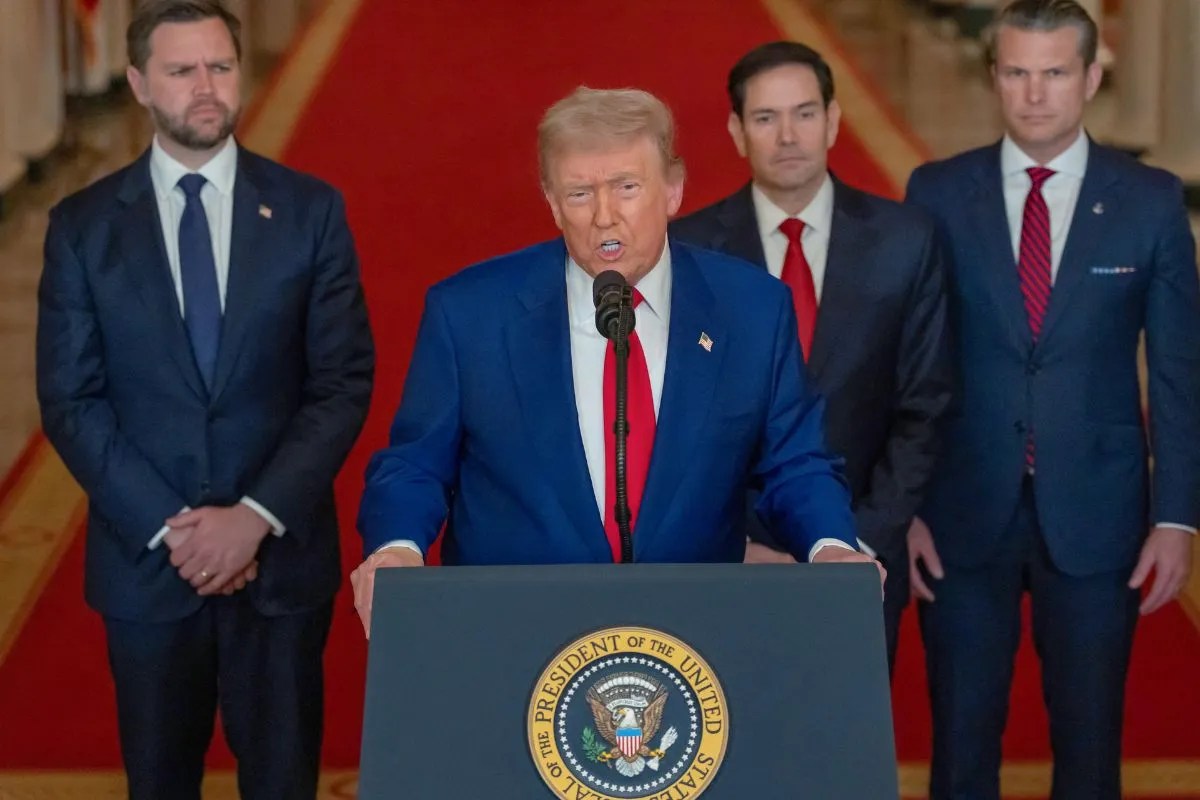
The media machine loves a neat, cinematic narrative. Give them a weekend golf trip, a distant missile strike in the Bab el-Mandeb strait, and a sudden motorcade back to the White House, and they will draw a straight line through the chaos. The lazy consensus dominating the headlines right now insists that escalating Saudi-Houthi tensions forced Donald Trump to cut his weekend short, sprint back to the Situation Room, and manage a brewing Middle Eastern crisis.
It is a fantastic story. It is also fundamentally wrong.
I have watched foreign policy reporting devolve into a lazy theater of optics for over a decade. Journalists mistake theatrical urgency for actual strategic necessity. When a world leader pivots abruptly, the instinct is to point at the nearest flashy geopolitical flare-up and declare cause and effect. But looking at statecraft through a lens of immediate, reactionary firefighting ignores how modern executive power actually operates. Trump did not rush back to Washington because a Houthi drone rattled a refinery or a proxy militia fired another ineffective ballistic missile. Supply chains in the Red Sea have been absorbing asymmetric harassment for years, and Washington has automated responses for that specific friction.
The real driver behind that sudden return was not tactical panic in Yemen. It was domestic leverage, internal bureaucratic positioning, and a calculated refusal to let domestic opponents control the news cycle while he was out of pocket.
Let us dismantle the mythology piece by piece.
The Myth of the Midnight Crisis Room
The standard reporting treats the presidency like an action movie where the commander-in-chief drops their golf club, stares grimly at a red telephone, and barks orders to intercept incoming threats. That is how television writers imagine power. In reality, a modern head of state has encrypted communications arrays, mobile secure video teleconferencing units, and dedicated military attachés wherever Air Force One lands or a motorcade stops.
If a serious tactical emergency occurs in the Red Sea, nobody needs Trump sitting physically in the West Wing chair to authorize a defensive strike or coordinate with Riyadh. The Department of Defense and Central Command operate on standing rules of engagement and pre-delegated authorities that do not require an impromptu weekend dash across state lines.
When a leader abandons a weekend retreat, you have to look past the smoke of the immediate headline and analyze the power dynamics shifting on home turf.
Saudi Arabia and the Houthis have been locked in a grinding stalemate punctuated by periodic escalations for years. Riyadh manages that border through a mix of back-channel diplomacy, Omani mediation, and calculated air power. The Saudi leadership does not need a panicked white-house intervention every time a drone buzzes a tanker. In fact, the Saudi crown prince spends a considerable amount of energy trying to decouple his kingdom's economic transformation projects from erratic American political theater.
So why the abrupt departure? Because the threat wasn't coming from Sanaa. It was coming from Capitol Hill and the domestic media ecosystem.
Follow the Domestic Incentive Structure
To understand why a politician acts, stop looking at their enemies abroad and start looking at their domestic vulnerabilities.
While the headlines screamed about Houthi escalation forcing an emergency return, critical budget negotiations, intelligence committee leaks, and internal party realignments were reaching a boiling point in Washington. Being out of town while a narrative spins out of control in the capital is a rookie mistake. Trump is no rookie.
If you are optics-conscious, the worst thing you can project during a domestic political knife-fight is detachment. A weekend getaway while economic or legislative fights loom gives your opponents an open microphone to paint you as disengaged or indifferent. The Houthi escalation made for a convenient, high-stakes cover story. It allowed a tactical domestic maneuver to be dressed up as an urgent national security imperative.
This is the dirty secret of foreign policy reporting: international crises are frequently weaponized for domestic consumption. A sudden presidential pivot signals urgency, projects strength, and completely crowds out negative domestic news cycles. Within twelve hours of touching down in Washington, the news feeds were dominated by emergency briefings, military readiness updates, and speculation about Middle Eastern stability. The domestic friction that triggered the trip in the first place vanished from the front page.
The Structural Reality of the Red Sea Stalemate
Let us look at the actual mechanics of the Saudi-Houthi conflict to see why an emergency intervention makes zero strategic sense.
The Houthis are not a conventional state military with a central command structure that panics when the American president changes his weekend plans. They are a decentralized, insurgent force deeply embedded in rugged terrain, sustained by external grey-market supply lines, and hardened by a decade of asymmetric warfare against superior air forces.
Throwing more American naval assets or issuing stern warnings from the Oval Office does not alter the fundamental calculus of the region. The Houthis trade on persistence. They calculate that the cost of their low-tech harassment is disproportionately high for global shipping, while the cost of their own operations remains near zero.
Riyadh knows this better than anyone. That is why Saudi Arabia spent the better part of recent years trying to extricate itself from direct ground combat in Yemen through direct talks with the Houthi leadership. The last thing the Saudi foreign ministry wants is an impulsive American escalation that short-circuits their fragile bilateral peace talks and drags the region back into all-out regional war.
When analysts claim Trump rushed back to save the Saudis from an imminent onslaught, they are projecting a paternalistic, outdated view of Middle Eastern alliances. Modern Gulf states practice multi-alignment. They talk to Tehran, negotiate with local militias, and hedge their bets against American political volatility. They do not sit by the phone waiting for a rescue mission from Washington.
The Cost of Lazy Analysis
Why does this misreporting matter? Because it keeps the public trapped in a permanent state of manufactured urgency.
Every time a politician makes a logistical adjustment, the media invents a grand geopolitical chess match to explain it. This narrative laziness prevents citizens from asking the harder questions about how foreign policy is actually formulated, how intelligence is leveraged for domestic political gain, and how corporate media outlets amplify state-sanctioned theater without verification.
When you accept the premise that a regional skirmish in the Arabian Peninsula can instantly dictate the personal schedule of the American executive, you buy into an illusion of total central control that simply does not exist. The world is messier, more fragmented, and far more cynical than the headline writers care to admit.
Stop swallowing the narrative that world leaders are reacting to the world. Most of the time, they are just reacting to each other, using the world as a backdrop for a domestic game you are not supposed to notice.
The next time a sudden presidential return is blamed on a distant foreign threat, look past the geography. The real fire is almost always burning right behind the West Wing.