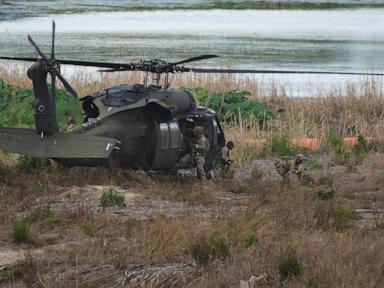
When you picture a military border operation, you probably imagine roaring engines, blinding searchlights, and constant commotion. Heavy boots kicking up dust. Helicopters thumping overhead at all hours. It's loud, expensive, and frankly, pretty easy to spot from miles away.
That’s why the recent pivot by the US Army along the Rio Grande caught a lot of people off guard. Instead of making noise, they decided to turn down the volume.
Military engineering and logistics units stationed along the southern border quietly swapped out their thunderous tactical generators for hybrid power systems, upgraded thermal optic arrays, and whisper-quiet surveillance equipment. They didn't do it to save the environment for its own sake. They did it because noise discipline is a fundamental tactical advantage, and the old way of running border support was leaving an acoustic footprint a mile wide.
If you've spent any time tracking how defense technology trickles into domestic security operations, you know that loud gear is a liability. When you're trying to monitor vast stretches of unpredictable river terrain, broadcasting your exact GPS coordinates via acoustic signatures makes you an easy target for evasion or interference. The Army realized that a quieter Rio Grande footprint wasn't just a nice PR win. It was a tactical necessity.
Rethinking Acoustic Footprints in the Field
Border security isn't just about manpower. It’s about sensor endurance and operational surprise. For decades, standard operating procedure meant parking diesel generators next to mobile command posts and letting them run twenty-four hours a day. The constant thrum could be heard across the brush long before anyone actually saw the patrol.
Troops started using tactical micro-grids and battery banks paired with portable solar arrays. These systems keep essential radar, cameras, and communication relays humming without waking up the local wildlife or alerting everyone within a three-mile radius.
Let's be real. Diesel fuel is a logistical nightmare to haul down remote dirt tracks. By shifting toward hybrid power setups, logistics officers cut down fuel convoy runs significantly. Fewer fuel trucks on rough border roads means less wear and tear on suspension systems, lower maintenance costs, and fewer civilian disruptions. It solves two problems at once: you quiet down the operational footprint, and you stop wasting money on heavy logistics.
What Changed on the Ground
The shift isn't just about swapping a generator. It involves a total redesign of how units deploy surveillance nodes.
Instead of heavy, stationary watchtowers that require permanent concrete pads and massive power lines, engineering units started relying on rapid-deployment modular kits. These rigs can be set up by a small crew in a fraction of the time, and they run silently on stored energy during peak observation hours.
- Solar-assisted battery arrays replace continuous generator burning.
- Low-signature acoustic dampening on tactical vehicles keeps patrols from announcing their arrival.
- Fiber-optic communication lines replace radio frequencies that can be easily jammed or intercepted.
This operational stealth changes the game for situational awareness. When you're sitting in a blind spot along the riverbank, you don't want your own equipment giving away your position.
The Logistics Problem Nobody Talks About
We talk a lot about the high-tech gear, but the real story of a quieter Rio Grande comes down to logistics fatigue. Operating in the brush country along the Texas border is brutal on equipment. Extreme heat ruins batteries. Fine silt gets into every mechanical joint. Flash floods wash out supply roads overnight.
When units rely on traditional loud power sources, they tie themselves to a constant umbilical cord of fuel supplies. If a fuel tanker gets stuck in the mud, half the outpost goes dark. By decentralizing power and making units energy-independent, the Army built resilience into the mission.
I’ve spoken with logistics specialists who spent years dealing with border supply chains, and the headache of fuel transport is always the bottleneck. Moving diesel through rough terrain eats up personnel hours that should be spent on actual mission support. Reducing that burden frees up troops to focus on reconnaissance, infrastructure maintenance, and rapid response coordination.
Environmental Realities Meet Tactical Needs
Critics often assume that military shifts toward quiet, green technology come from top-down bureaucratic mandates. That misses the point entirely. The military doesn't adopt hybrid tech to feel good about carbon offsets. They do it because tactical efficiency demands it.
The Rio Grande ecosystem is fragile and heavily scrutinized. Operating heavy equipment through sensitive riparian zones creates legal and logistical friction with local landowners, state agencies, and environmental regulators. By lowering noise pollution and minimizing physical ground disturbance, the Army avoids a lot of unnecessary friction.
When you don't disrupt the local habitat, you also stop creating false alarms. Wildlife moving through the brush used to trigger legacy motion sensors because those systems couldn't filter out background noise and vibration properly. Upgraded, quiet sensor packages use smarter processing that differentiates between a human trespasser and a stray javelina. That means fewer false callouts for exhausted soldiers and a much more efficient deployment of resources.
What This Means for Future Domestic Operations
The quiet transformation happening along the Rio Grande offers a clear preview of how military engineering units will operate in domestic support roles moving forward.
We are moving away from the loud, heavy-handed footprint of the past. The future belongs to units that can blend into their environment, sustain themselves off-grid for weeks at a time, and operate without leaving a massive acoustic or logistical trail.
If you want to understand where defense logistics are heading, look at the riverbanks. The units that master quiet, self-sufficient operations are the ones setting the standard for everything that comes next. Don't look for the loudest base to find where the work is happening. Look for the one you can't hear at all.