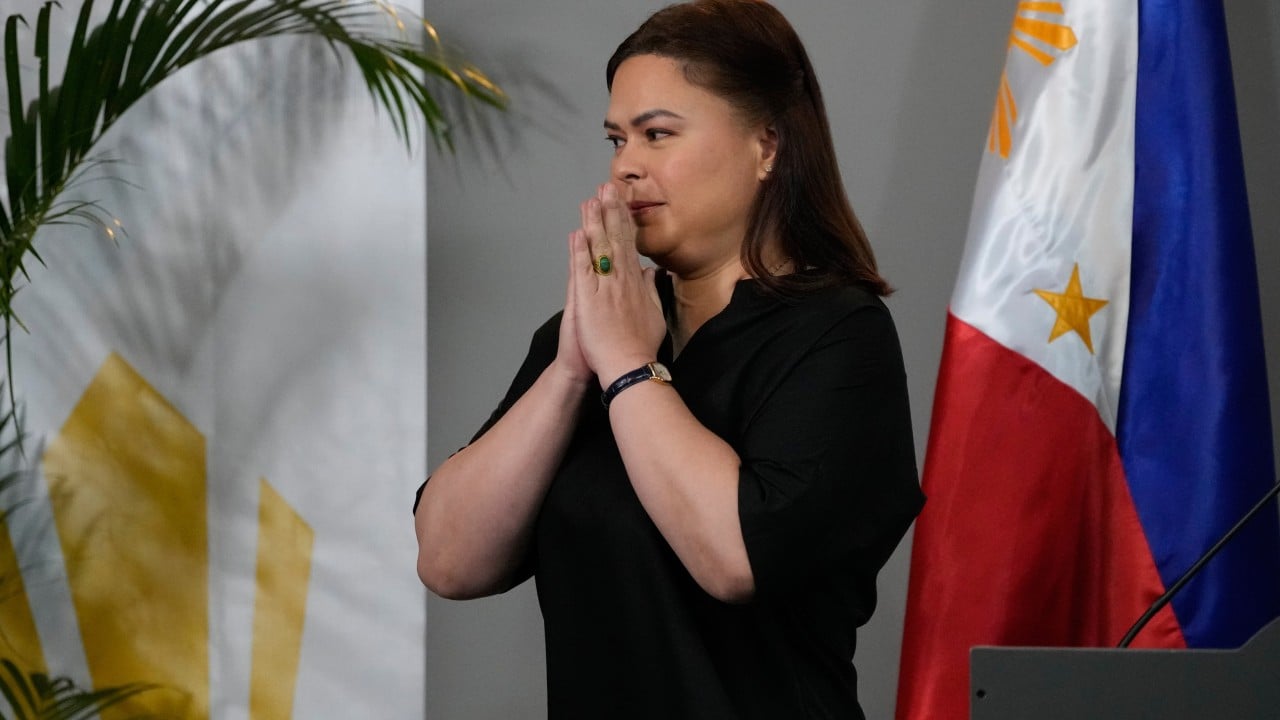
Vice President Sara Duterte just hit a massive roadblock in her Senate impeachment trial. The presiding officer, Senator Francis "Chiz" Escudero, handed down a critical ruling that opens up her financial trail. The impeachment court granted prosecution motions to subpoena her bank accounts, Anti-Money Laundering Council (AMLC) documents, and Bureau of Internal Revenue (BIR) filings. This includes financial records involving her husband, lawyer Manases Carpio.
If you've been following the ongoing drama in Manila, you know this decision shifts the entire dynamic of the trial. The defense team tried hard to block these requests. They argued that digging into financial transactions going back to 2007 was way too broad. They claimed it breached privacy rules and covered years when she wasn't serving as Vice President.
The court didn't buy that defense. Escudero pointed straight to Section 2 of Republic Act 1405, reminding everyone that bank secrecy laws explicitly carve out exceptions for constitutional impeachment cases.
The Senate Ruling Strips Away Financial Secrecy
For months, the legal strategy surrounding Sara Duterte centered on keeping her financial history out of the public record. That strategy just collapsed. The Senate court ruled that prosecution lawyers demonstrated enough relevance and specificity to justify opening those vaults.
The subpoena doesn't give prosecutors total free reign. Escudero put specific parameters on what can be pulled into evidence. Foreign currency accounts remain off-limits for now. Specific corporate accounts connected to the JTC Group and Pikimong Pikimong Philippines Corporation were also carved out.
The baseline logic behind allowing older records from 2007 to 2021 is where things get tricky for the defense. The court explained that looking at earlier financial records isn't meant to charge her with past offenses. Instead, those older numbers create a financial starting point. You can't figure out if someone accumulated unexplained wealth while in higher office without knowing what they owned before stepping into it.
Philippine civil law automatically merges a married couple's assets into an absolute community of property. That legal reality made it impossible to evaluate the Vice President's actual net worth without reviewing her husband's financial filings too. When a couple shares a single estate under the law, examining one spouse while ignoring the other makes zero legal sense.
How The Prosecution Built Its Case On Article IV
While the financial subpoenas dominated headlines, the prosecution panel led by figures like Representative Leila de Lima spent recent days closing out their arguments on Article IV. That specific charge focuses on alleged grave threats made against President Ferdinand Marcos Jr., First Lady Liza Araneta-Marcos, and former House Speaker Martin Romualdez.
Witnesses took the stand to unpack those claims. National Bureau of Investigation Chief Melvin Matibag testified about agency records regarding public statements and alleged threats. Defense attorneys pushed back hard during cross-examinations, trying to dismiss the remarks as political rhetoric or emotional outbursts rather than actionable offenses.
The trial moved at a breakneck pace compared to earlier legislative stalls. The prosecution wrapped its presentation of Article IV evidence in six actual trial days, comfortably under their allotted timeframe.
The defense keeps maintaining that public opinion polls and political grandstanding shouldn't dictate a constitutional trial. Their legal team insists that the charges lack actual substance and represent a deliberate effort by political opponents to neutralize Duterte before the next major election cycle.
A Second Impeachment Built On Complex History
To understand how we arrived at this moment in July 2026, you have to look back at the messy legal back-and-forth that got us here. This isn't the first time the House of Representatives tried to push impeachment articles against Sara Duterte.
Early last year, the House voted to impeach her based on four primary complaints. Those charges involved controversial uses of confidential funds in the Office of the Vice President and the Department of Education, alongside alleged security threats. That original effort stalled when the Senate remanded the articles back to the lower chamber in mid-2025.
The Supreme Court threw a massive wrench into the machinery in July 2025. The justices ruled that the fourth impeachment complaint violated the constitutional one-year bar rule, which prohibits multiple impeachment proceedings against the same official within a single year. The high court reaffirmed that ruling with finality in January 2026, forcing lawmakers to wait until the constitutional timer reset.
Once that one-year clock ran out in early 2026, critics in the House didn't waste time. Multiple fresh complaints were filed, vetted through the House Committee on Justice, and ultimately approved in May 2026. That second push set up the current Senate trial that started on July 6, with Escudero presiding over the high-stakes hearings.
What Opening Tax and Bank Records Actually Means
Opening bank files and BIR filings alters how both sides have to handle their arguments moving forward. Financial records don't rely on memory or political spin. Numbers on a bank statement either match declared Statements of Assets, Liabilities, and Net Worth (SALNs) or they don't.
The BIR Commissioner was directed to submit official tax returns to the clerk of court. Once those documents arrive, the court will inspect them to decide which specific files get admitted as public evidence.
Here is what the prosecution gains with this ruling:
- Direct evidence to test against official SALN disclosures submitted from 2022 to 2025.
- Transaction records to trace any alleged movement of unexplained cash.
- Clear data on shared marital properties and business interests tied to Carpio Lawyers and related entities.
The defense, on the other hand, faces a much harder burden of proof. They can no longer simply object on privacy grounds. They now have to provide clear, documented explanations for any sudden jumps in asset balances or cash flows that prosecutors highlight.
Convicting a sitting Vice President requires the explicit support of at least 16 out of 24 senators. That's a steep mountain to climb in a political chamber where alliances shift quickly. With financial paper trails entering the evidentiary pool, senator-judges who were on the fence suddenly have hard data to justify their votes either way.
Real Steps To Track As The Trial Continues
If you want to track where this trial goes next without getting lost in the daily legal noise, watch these specific operational steps:
- Monitor the BIR submission deadline at the end of July. Watch which specific tax records the presiding officer allows into the official record after the in-camera review.
- Track the AMLC report releases. The court authorized suspicious transaction reports, which will show whether large cash transfers occurred during critical fiscal years.
- Pay attention to how the defense handles cross-examination when financial experts take the witness stand. The battle will move from political posturing to forensic accounting.
- Keep an eye on the Senate vote count. Watch how key independent senators react as financial evidence gets presented line by line.
The court's decision to break through bank confidentiality sets a heavy legal precedent for future constitutional trials in the Philippines. With the prosecution's financial subpoenas active and Article IV testimony winding down, the defense has to retool its strategy fast. Political rhetoric won't be enough to counter sworn tax returns and bank ledgers once they hit the Senate floor.