The siren does not care about political schedules. When metal meets metal on an Italian asphalt road, the sound is identical whether parliament is in session or adjourned for the summer. It is a sharp, brief crack, followed by the terrifying, suspended silence of a community holding its breath.
In Modena, that silence broke into pieces. A car incident—the kind that standard news feeds reduce to a three-line brief buried beneath sports scores and weather updates—left behind a wake of shattered glass, fractured bones, and upended lives. To the outside world, it was data. A statistic for the transport ministry. A traffic delay for commuters. But inside the sterile, fluorescent reality of a hospital ward, it was an entirely different universe.
Then, the motorcade arrived.
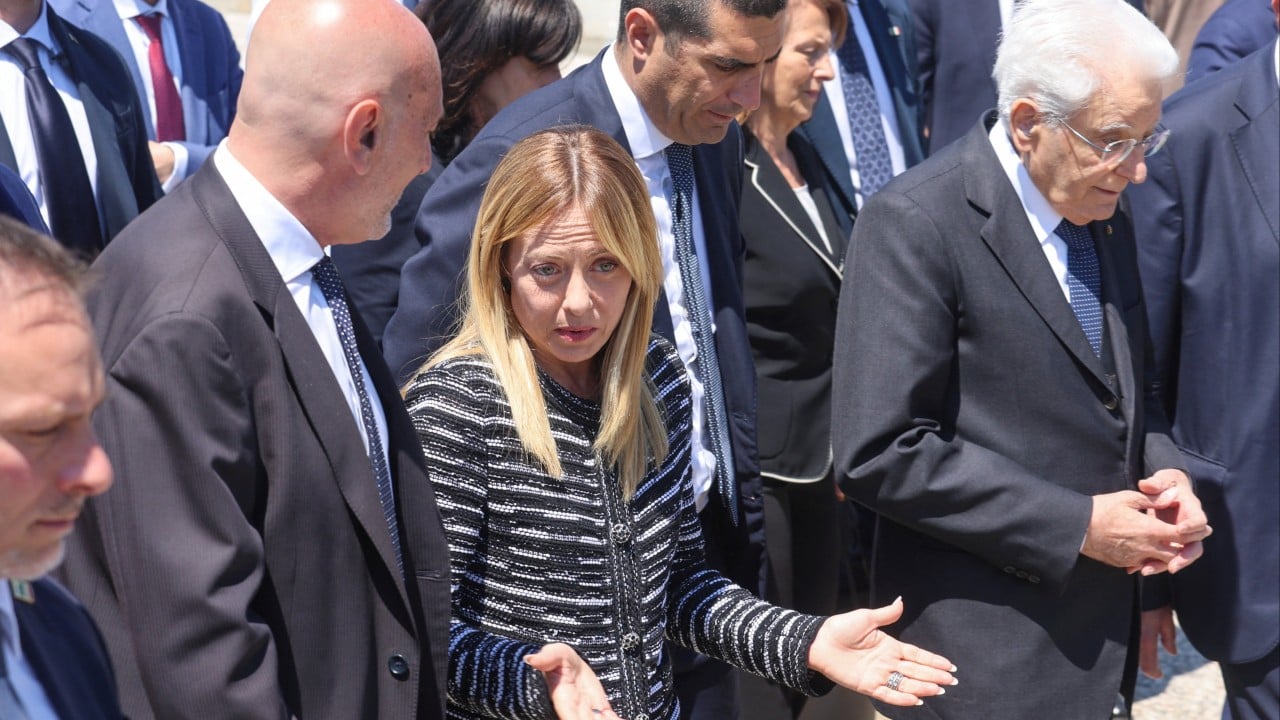
When Italian Prime Minister Giorgia Meloni walked through the doors of the hospital to meet the victims, the air in the room shifted. It was a moment stripped of the usual theatricality of statecraft. There were no podiums. No teleprompters. No carefully curated backdrops designed to broadcast raw power. Instead, there was only the stark, uncompromising reality of human suffering, and the leader of a nation forced to look it directly in the eye.
The Anatomy of the Unexpected
We live our lives under the comforting illusion of predictability. We buy groceries, we schedule meetings, we argue about politics over espresso. We assume the ground beneath us will remain solid.
But tragedy is a master of ambush.
Consider the mechanics of a sudden vehicular crisis. In a fraction of a second, a routine drive transforms into a chaotic blur of kinetic energy. The human body, fragile and unprepared, absorbs forces it was never designed to withstand. When the dust settles, the immediate aftermath is not filled with grand pronouncements or political debates. It is filled with the smell of deployed airbags, the distant wail of emergency vehicles, and the overwhelming shock of survival.
For the victims in Modena, the days following the incident were measured not in hours, but in medical charts and pain management. The world outside continued its frantic spin, but inside their rooms, time slowed to a agonizing crawl. Every breath was an achievement. Every night survived was a victory.
When a head of state enters that kind of space, the stakes are invisible but immense. A cynical public expects a photo opportunity—a rehearsed handshake, a solemn nod for the cameras, and a swift exit back to the comfort of Rome. The script is predictable.
This time, however, the script failed to materialize.
The View from the Bedside
To understand what happened in Modena, one must look past the official press releases. Imagine sitting by the bedside of a loved one, the constant hum of the heart monitor serving as the metronome of your anxiety. You are exhausted. Your clothes are wrinkled from days of waiting. Your mind is a tangle of fear and unanswered questions about the future.
Suddenly, the security detail clears the corridor. The Prime Minister approaches.
Meloni’s presence in the ward was not characterized by the rigid posture of a politician delivering a manifesto. Observers noted a distinct quietness. She sat on the edge of the chairs provided for family members. She leaned in close to catch whispered words from patients whose throats were raw from medical tubes.
This is where the true burden of leadership reveals itself. It is easy to govern from a distance, signing decrees and debating policy in the grand halls of the Palazzo Chigi. It is entirely different to sit in the presence of raw, unvarnished grief and offer nothing but your attention.
The conversations were not about macroeconomics or European Union regulations. They were about the terrifying moments of impact, the fear of permanent injury, and the simple, profound relief of still being alive. In those moments, the titles of "Prime Minister" and "Citizen" blurred. There was only one human being listening to the survival story of another.
The Broken Infrastructure of Our Daily Lives
Behind the emotion of the visit lies a harder, more frustrating truth. Italy’s roads tell a story of ancient beauty and modern neglect. Anyone who has driven through the sweeping hills of Emilia-Romagna knows the duality of the experience—the breathtaking vistas juxtaposed with narrow lanes, unpredictable blind spots, and infrastructure that groans under the weight of contemporary traffic.
Every incident is a symptom of a larger, systemic vulnerability. We patch potholes and adjust speed limits, but the fundamental relationship between driver, machine, and road remains fraught with danger.
- The psychological trauma of a crash outlasts the physical healing by months, sometimes years.
- Families are often thrust into financial uncertainty, navigating insurance labyrinths while unable to work.
- The societal cost of traffic incidents ripples outward, affecting local economies and straining healthcare systems.
The victims in Modena were not politicians; they were teachers, artisans, students, and parents. Their sudden removal from the daily rhythm of their community creates a void that is felt far beyond the hospital walls. When Meloni acknowledged them, she was, by extension, acknowledging a vulnerability that every Italian faces the moment they turn an ignition key.
The Currency of Presence
What is the actual value of a political visit during a crisis?
If it is treated as a tactical maneuver to boost approval ratings, the public senses the inauthenticity instantly. The modern electorate possesses a highly sophisticated radar for political theater. We have seen too many politicians nod solemnly at disasters only to forget them the moment the news cycle shifts to the next scandal.
But presence can also be a form of accountability.
By placing herself in the room with the victims, Meloni tied her leadership to their recovery. She allowed the abstract concept of "public safety" to take on specific faces, names, and voices. It is a dangerous move for a politician, because it creates an unspoken promise. It says: I have seen your pain, and I am now responsible for ensuring fewer people experience it.
The power of the encounter did not come from words spoken to reporters outside the hospital doors. It came from the quiet moments inside, where hands were held and promises of support were made without the glare of television lights. It was an acknowledgment that before a nation can be led, its people must be seen.
The monitors continued to beep. The doctors moved from room to room, executing the quiet, heroic work of healing. The Prime Minister eventually departed, her motorcade slipping back onto the highway, returning to the complex machinery of government.
But something remained behind in that Modena ward. It was the fleeting, stubborn realization that despite the cynicism of our age, despite the divisions that fracture our culture, the most powerful force we possess is the willingness to look at another person’s suffering and refuse to turn away.