The English Channel in the dead of winter does not care about international law. It is a gray, churning expanse of water, thick with freezing spray and blinding mist. On a night like this, the crew of a 460-foot cargo ship feels entirely small. The vessel, painted in utilitarian tones and heavy with the scent of diesel and sea salt, cuts through the waves, its hull vibrating with the steady, deep thrum of a massive engine.
For the men on board, this was supposed to be just another routine transit. They were moving steel, machinery, or cars from one port to another, watching the radar blips and sipping lukewarm coffee.
Then came the lights.
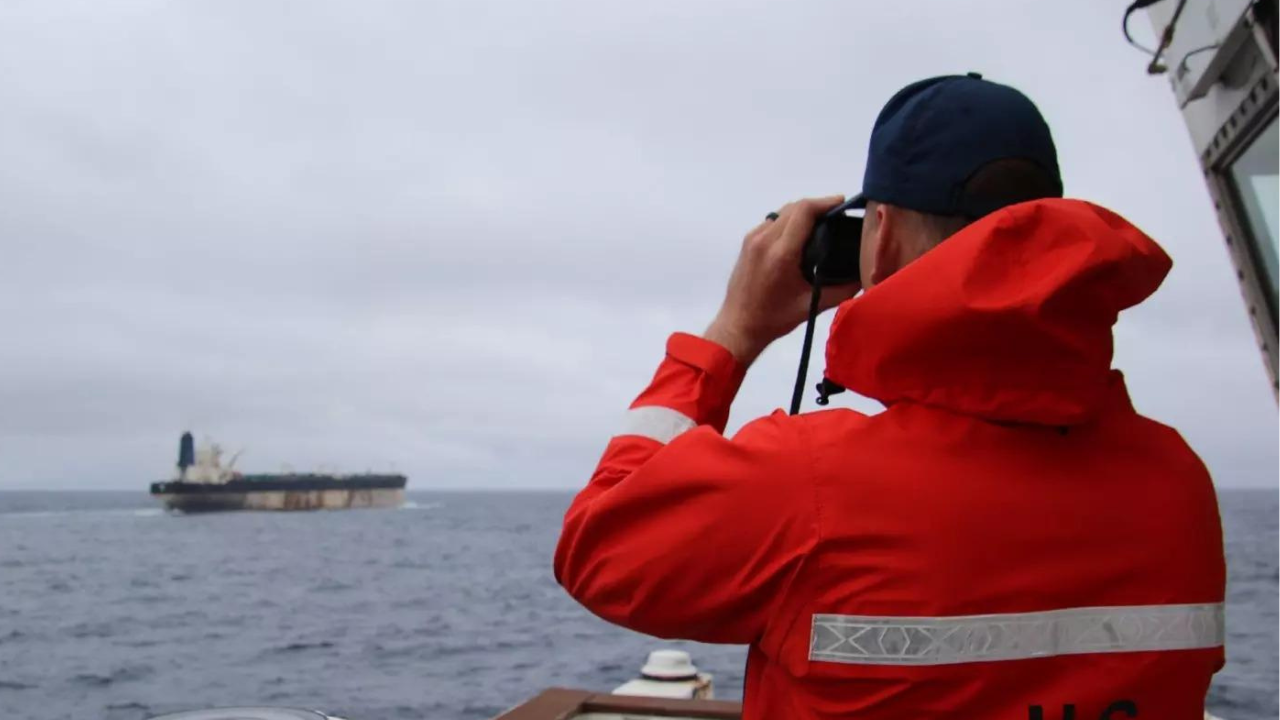
Out of the gloom, the sleek, dark silhouette of a French maritime patrol boat materialized. Blue lights flashed, cutting through the fog. Over the radio, a commanding, accented voice ordered the merchant ship to halt. Within minutes, French commandos, faces obscured and weapons at the ready, boarded the deck.
This was not a standard customs check. It was an act of economic warfare disguised as a maritime intercept. The ship was the Baltic Leader, flying a Russian flag, and its seizure signaled that the invisible lines of global conflict had officially spilled into the open ocean.
The Ghostly Architecture of Global Trade
To understand why a single ship in the English Channel could cause the walls of the Kremlin to shake with rage, we have to look past the steel hull. We have to look at the invisible networks that keep the modern world alive.
Every day, thousands of massive cargo ships crisscross the globe. They are the red blood cells of the global economy. Most of the time, we never think about them. We buy our groceries, fuel our cars, and order our gadgets, oblivious to the staggering complexity of the supply chains that brought them to our doorsteps.
But these ships do not operate in a vacuum. They are bound by a complex web of ownership, financing, and registration. A ship might be owned by a company in Cyprus, managed by a firm in Greece, flagged in Panama, and crewed by sailors from the Philippines. This labyrinth of paperwork isn't accidental. It is designed to obscure. It creates a layer of deniability, allowing wealth and goods to move across borders with minimal friction.
When Western nations decided to hit Russia with unprecedented economic sanctions, they didn't just target oligarchs' yachts or bank accounts. They targeted this ghostly architecture. They went after the shipping lanes.
The Baltic Leader was targeted because of its alleged ties to a sanctioned Russian bank. By cutting off the vessel, France didn't just stop a shipment; they proved that the invisible shield of maritime bureaucracy could be shattered in an instant.
The Anatomy of a Fury
The reaction from Moscow was instantaneous. It was loud. It was venomous.
The Kremlin called the seizure "international terrorism."
It is a phrase heavy with irony, thrown into the diplomatic arena to shift the narrative from violation to victimization. For a state accustomed to projecting power through military might and energy manipulation, the realization that its commercial fleet could be plucked from the water like a toy boat was deeply unsettling.
Think of it as a high-stakes game of chess where one player suddenly realizes the other isn't playing by the old rules. For decades, the global elite operated under the assumption that trade was sacred. Money, they believed, would always find a way to flow. The rules of the World Trade Organization and maritime tradition were supposed to protect commerce from the messy realities of geopolitical friction.
That illusion is gone.
When the French authorities escorted the Baltic Leader into the port of Boulogne-sur-Mer, they weren't just impounding cargo. They were demonstrating a new reality: in the current geopolitical climate, every merchant ship is a potential target, and every trade route is a front line.
The Human Cost in the Balance
It is easy to get lost in the grand language of diplomacy, sanctions, and international law. We talk about states as if they are monolithic entities with feelings and desires. "Russia fumes." "France acts."
But states do not feel. People do.
Consider the crew of that seized vessel. They are not politicians. They are not billionaires. They are merchant mariners, men who spend months away from their families, enduring isolation and dangerous conditions to earn a living. Suddenly, they find themselves trapped in the gears of a geopolitical machine far larger than themselves. They are confined to a harbor, surrounded by foreign authorities, their futures uncertain, their ship a pawn in a game they have no say in.
On the other side, consider the French port officials and coast guard officers. They are individuals executing orders, knowing that a single misstep on a slippery deck could trigger an international incident. They operate under the crushing weight of knowing that their daily actions are being scrutinized by intelligence agencies in Paris, Washington, and Moscow.
The tension in that French harbor is palpable. It is the quiet, suffocating anxiety of waiting for the next shoe to drop.
The Broken Blueprint
For generations, the global community relied on a specific blueprint for stability. It was built on interdependence. The theory was simple: if our economies are deeply intertwined, war becomes unthinkable because it would mean economic suicide for everyone involved.
We built pipelines. We signed trade agreements. We allowed ships to move freely across the seas.
But that blueprint contained a fatal flaw. It assumed that all actors would always prioritize economic rationality over historical grievance and ideological ambition. It failed to account for the moments when a nation decides that pride, territory, or historical legacy matters more than GDP.
When that happens, interdependence stops being a shield. It becomes a weapon.
The seizure of the tanker is a manifestation of this inverted reality. The very tools designed to connect the world—shipping lanes, financial networks, maritime law—are being weaponized to isolate and punish. The global commons are being carved up into zones of alignment and exclusion.
The Expanding Ripple
The ripples of that single intercept in the English Channel extend far beyond the coast of France. They reach into the boardrooms of shipping companies in Tokyo, the insurance offices of London, and the government ministries of Beijing.
Every maritime logistics company is now forced to ask terrifying questions. Is our cargo safe? Will our insurance cover a seizure based on evolving sanction lists? Can we trust the flags our ships fly?
The cost of shipping will rise. Insurance premiums will skyrocket. Route planning will become a logistical nightmare as captains avoid territorial waters of nations deemed hostile. And as always, the ultimate price will not be paid by the politicians giving the speeches or the diplomats drafting the protests. It will be paid by ordinary people all over the world, reflected in the rising cost of fuel, food, and basic goods.
The world is becoming smaller, more fractured, and significantly more dangerous.
The Baltic Leader now sits idly against the concrete pier of Boulogne-sur-Mer. The gray northern sky hangs low over its superstructure, and the French flags on the nearby government buildings flutter sharply in the wind. The ship is static, but the forces it set in motion are accelerating, moving across the globe like a silent, unstoppable current.