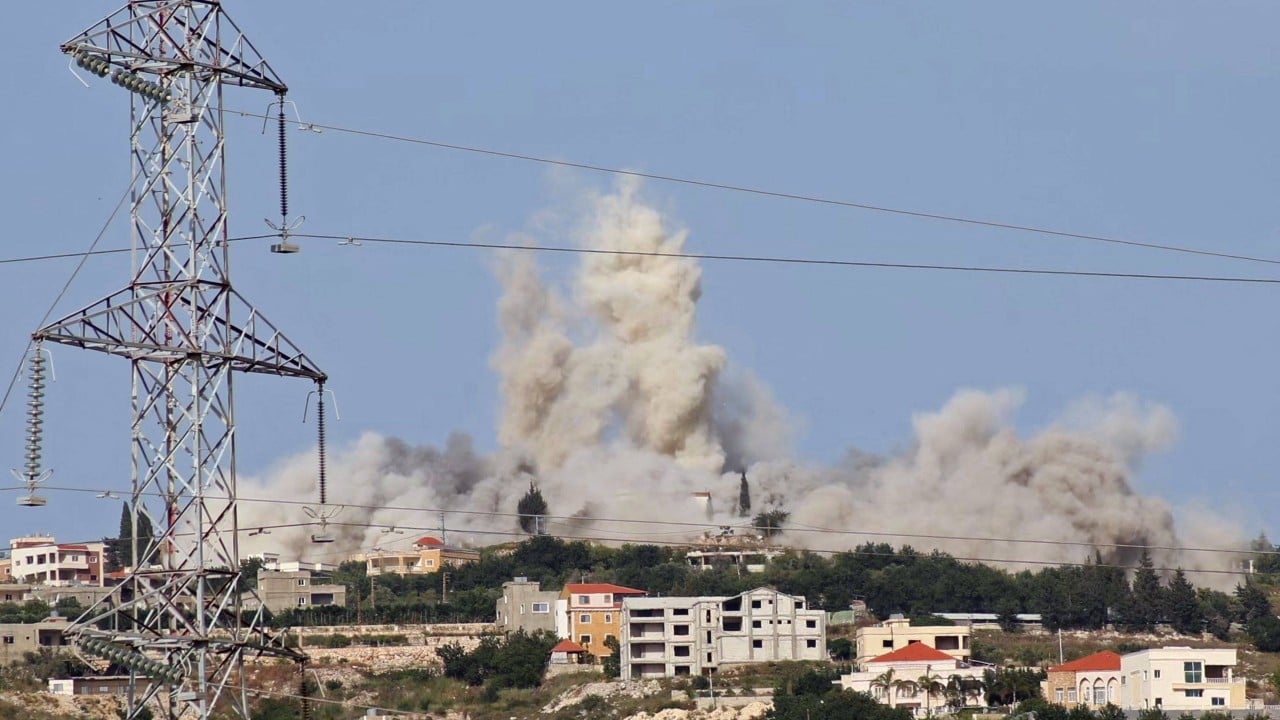
The escalation of kinetic operations in Southern Lebanon and the Bekaa Valley represents a failure of traditional deterrence and a shift toward a high-frequency war of attrition. While news cycles focus on immediate casualty figures—such as the seven deaths reported in recent Israeli strikes—these events are symptoms of a deeper structural misalignment between military objectives and diplomatic frameworks. The current conflict is governed by three primary pressures: the degradation of Hezbollah’s middle-management leadership, the displacement-return cycle of civilians on both sides of the Blue Line, and the collapse of the 2006 security architecture.
The Mechanics of Kinetic Escalation
The recent strikes targeting Lebanese territory function as part of a broader Israeli strategy to decouple Hezbollah’s operations from the ongoing conflict in Gaza. Israel’s operational logic relies on a pressure-cooker model. By increasing the frequency and depth of strikes into Lebanon, the Israel Defense Forces (IDF) aim to force a physical retreat of Hezbollah’s Radwan Force beyond the Litani River.
The effectiveness of these strikes is measured not by body counts, but by the disruption of Hezbollah’s command and control (C2) infrastructure. Hezbollah operates as a hybrid actor—a state-like military with insurgent flexibility. When strikes hit specific residential or logistical nodes, they force the organization to reorganize its communications, which creates windows of vulnerability for further intelligence gathering.
The Hezbollah Veto on Diplomacy
Hezbollah’s condemnation of ongoing ceasefire talks is a strategic necessity for the group’s internal and regional legitimacy. The organization has tethered its operational end-state to the cessation of hostilities in Gaza. This "Linkage Doctrine" creates a binary outcome:
- Hezbollah maintains a perpetual front to exhaust Israeli domestic patience.
- Hezbollah accepts a de-escalation that would be perceived by its constituency and Iranian patrons as a retreat under fire.
By condemning talks, Hezbollah signals that it is not yet at a point of exhaustion where the cost of continued combat outweighs the political risk of compromise. This stance creates a diplomatic bottleneck. Negotiations cannot proceed when one of the primary combatants views the very act of negotiating as a concession of weakness.
The Failure of Resolution 1701
The United Nations Security Council Resolution 1701, which ended the 2006 war, was designed to create a buffer zone free of any armed personnel other than the Lebanese Army and UNIFIL. The current reality reflects a total systemic breakdown of this mandate.
- The Enforcement Gap: UNIFIL lacks the Chapter VII authority to actively disarm or physically prevent Hezbollah’s presence. This turns the peacekeeping force into an observation mechanism rather than a deterrent.
- State Sovereignty Paradox: The Lebanese state is technically the sovereign party responsible for the south, yet the Lebanese Armed Forces (LAF) lack the political mandate and technical capacity to challenge Hezbollah’s military hegemony.
- Technological Erosion: In 2006, the primary threat was short-range Katyusha rockets. In 2026, the threat includes precision-guided munitions (PGMs), loitering munitions (suicide drones), and sophisticated anti-tank guided missiles (ATGMs). The physical geography defined by 1701 is no longer sufficient to provide security when the reach of modern weaponry exceeds the width of the buffer zone.
The Economic and Civil Cost Function
The human cost—the seven lives lost in recent strikes—is the most visible variable in a complex cost-benefit equation. However, the strategic weight of these casualties is magnified by the mass displacement of civilians.
Israel faces a domestic crisis with over 60,000 citizens unable to return to northern communities. Lebanon faces a mirrored crisis, with tens of thousands fleeing the south. This "Symmetric Displacement" creates a political ticking clock for both governments. For Israel, the inability to secure the north undermines the core social contract of the state. For Lebanon, an already failing economy cannot absorb the social or financial burden of a long-term internal refugee crisis.
Operational Risk and Miscalculation
The primary danger in the current exchange is the "Threshold of War." Both sides are operating under the assumption that they can calibrate their violence to stay just below the level that triggers a full-scale ground invasion. This calibration is inherently flawed because it relies on the accurate interpretation of the opponent's "red lines," which are often non-linear and subject to change based on domestic political pressure.
A strike that hits a high-value target or results in high civilian collateral damage—even if unintentional—can force an escalatory response to maintain credibility. This creates a feedback loop where each act of "measured" retaliation moves the baseline of acceptable violence higher.
Structural Bottlenecks in the Negotiation Process
Diplomatic efforts led by the United States and France are currently stalled by two irreconcilable demands. Israel requires a physical guarantee that Hezbollah will remain north of the Litani River, likely involving an international monitoring mechanism with "teeth." Hezbollah requires a complete Israeli withdrawal from disputed border points and a cessation of overflights, all while maintaining its status as a "resistance" force.
The "Border Demarcation" issue is frequently used as a tactical stalling point. While the maritime border was settled in 2022, the 13 disputed points on the land border (including the Shebaa Farms and Ghajar) remain unresolved. These geographic disputes provide Hezbollah with the legalistic cover to justify continued armed presence as a defense of Lebanese territory.
The Regional Alignment Variable
The conflict is not a localized border dispute; it is a critical node in the "Axis of Resistance" strategy orchestrated by Tehran. The Iranian objective is to maintain a multi-front threat against Israel to ensure regional leverage.
- Attrition as a Tool: Iran benefits from a controlled escalation that drains Israeli military resources and international political capital without leading to a direct confrontation that might threaten the survival of the Iranian regime or Hezbollah’s core leadership.
- The Gaza Tether: By keeping the northern front active, Hezbollah forces the IDF to maintain high troop concentrations in the north, preventing a total focus on the southern campaign in Gaza.
Strategic Forecast and Necessary Pivots
The current trajectory indicates that a return to the status quo ante is impossible. The 2006 framework is dead. Any future stability requires a fundamental shift in the security architecture of the Levant.
The primary requirement for de-escalation is a "New Security Tier" that does not rely on the Lebanese state's non-existent ability to disarm Hezbollah. This would likely involve:
- A phased withdrawal of heavy weaponry monitored by a third-party technological surveillance grid (sensors and satellite monitoring) rather than just physical patrols.
- A "Land for Silence" swap that addresses the 13 disputed border points to remove the pretext for armed resistance.
- An international financing package for the Lebanese Armed Forces contingent on their deployment to the border, essentially buying the political space for the LAF to act as the sole sovereign entity.
Without these structural changes, the cycle of strikes and condemnations will inevitably result in a "Strategic Overflow," where a single tactical event triggers a theater-wide war that neither side can financially or politically afford, yet neither side knows how to prevent. The immediate strategic priority must move away from "managing" the conflict toward a "Hard-Line Demarcation" that physically separates the combatants through a verified, non-porous buffer.